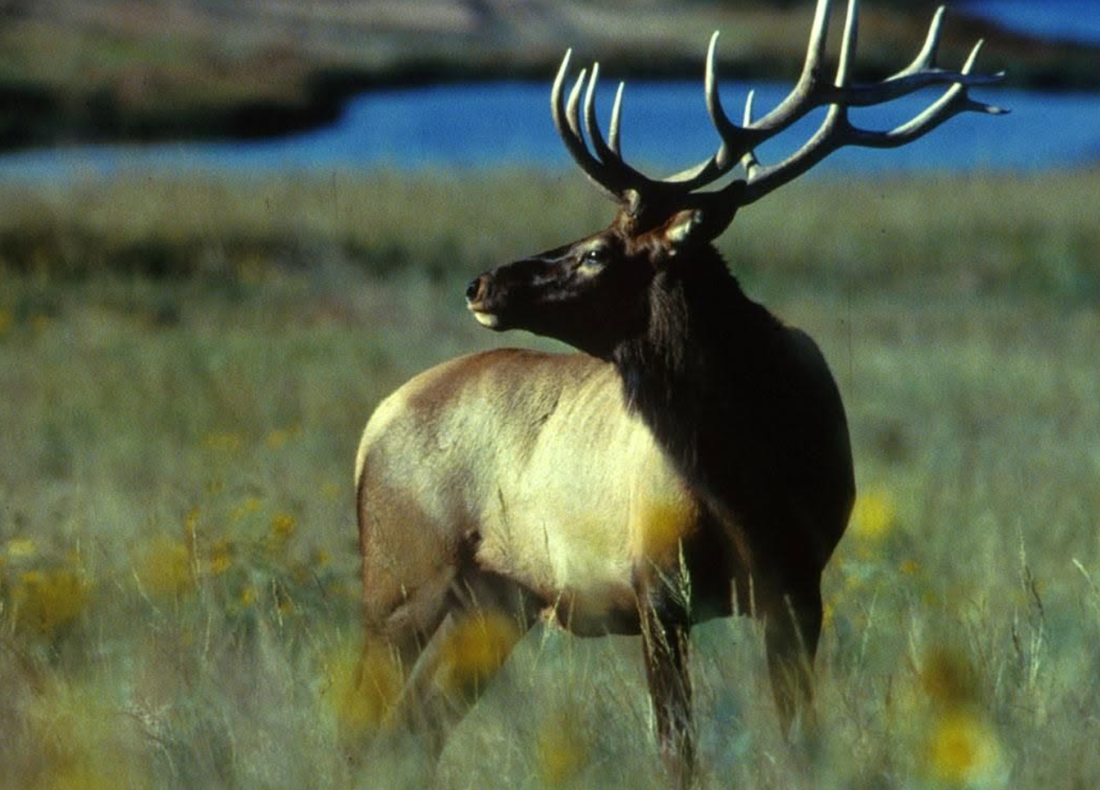
 It was once the done thing to gift animals to different countries.
New Zealand has received everything from lions to elephants and many were given by one ruler of the country to another. So when America President Theodore “Teddy” Roosevelt agreed to give New Zealand 20 Wapiti - massive deer - it was a big deal. It had come about as Thomas Edward Donne, the head of the New Zealand Government Tourism Department and big game hunter St.George Littledale who had met when the hunter became enthusiastic about New Zealand as a potential hunting ground. Littledale approached Roosevelt and arranged for the deer to come from the National Zoological Park in Washington in exchange for native birds and tuatara. Donne travelled to America in 1905 to get 20 wapiti deer, along with whitetail and mule deer, Canadian geese, and five raccoons. A huge steam powered wagons were designed for the animals for the long overland trip to San Francisco. After a short delay the animals were loaded onto a boat for the even longer trip to New Zealand. At first things went ok, the animals were on the deck of the ship and well cared for but as they got closer they ran into bad weather and two wapiti died when their backs were broken. When they arrived the animals were transferred to the Hinemoa and taken to the head of George Sound in Southland. At the time it was very secluded with only fishermen visiting. The small herd was released and began to thrive although it was slow. It was in 1922 when the first hunting season was held. Deer introduced into New Zealand were protected except for a hunting season but that changed in 1934 when all protections were removed. Now it is possible that there are no pureblood wapiti left - many interbred with other deer in the area. So what happened to the five little raccoons since we don’t have them running round the countryside? They were taken to Rotorua. By the time they arrived their number had dwindled to two and no one really knew what to do with them. They were taken to the Sanatorium to be exhibited. They weren’t popular though - they were not game animals and were not to be kept as pets, so the only reason to have them was to have them available to be seen by the public. But only a couple of weeks after they arrived, the clever little buggers staged an escape. That led to a raccoon hunt. They were accused of breaking into chicken hutches and killing them. But by the end of 1905, all news of them vanished and it appears they were never found again. American president Teddy Roosevelt died on January 6, 1919 and is buried in Youngs Memorial Cemetery in Nassau County, New York.
0 Comments
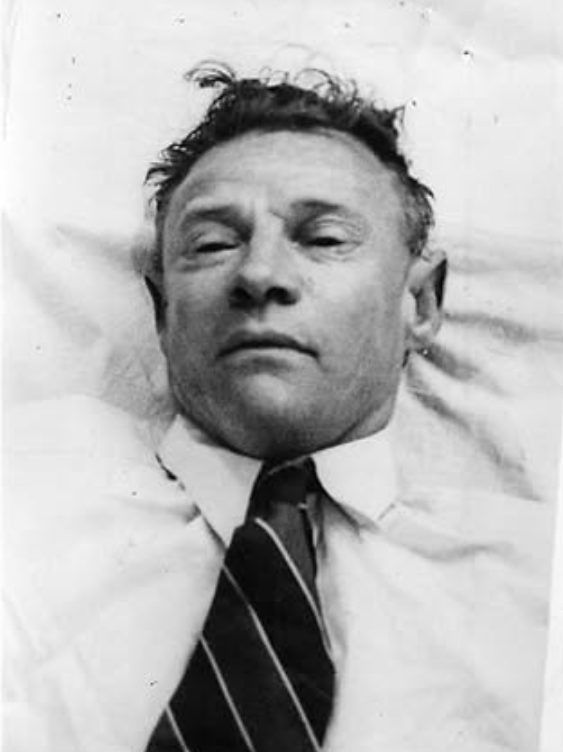 The discovery of a body sitting against the seawall near Somerton Park beach out of Adelaide began a strange story where the man has never been completely identified.
And it has a weird New Zealand connection. A couple found the body on December 1, 1948, lying in the sand. His head was resting against the seawall with legs extended and feet crossed. A search of the body found a rail ticket, a bus ticket, a comb, chewing gum , a cigarette packet and matches. He had been seen the night before by witnesses but no one investigated. The police launched an investigation. In a post mortem he was described as a Britisher, 180cm tall with broad shoulders, in a white shirt, tie, trousers and a brown knitted pullover, clean shaven and with no identification. Finally, his dental records were not able to be matched to any known person. The pathologist could not be sure what killed him but suspected it might be poison. Six weeks later, a suitcase was found at the Adelaide railway station that was believed to belong to the man. There was little to indicate that but a tie had a name T Keane in it. But a search for someone with that name who was missing turned up nothing. An inquest was delayed while a pathologist re-examined the body. He concluded several things. The man’s shoes were remarkably clean which could have indicated the body was placed at the beach. There were also no physical signs of poison. With no other way to identify him, a plaster cast was made of his face and shoulders. His clothing was also reexamined and a tiny sewn shut pocket was discovered - and in it was a scrap of paper with the words Tamám Shud on it. It was identified as a phrase meaning ended or finished and was from the last page of a book called Rubaiyat of Omar Khayyam. Police went to the public to find out about it and the copy that it was ripped from was found - a rare translated copy that had been published by Whitcombe and Tombs (which would become Whitcoulls) in Christchurch, New Zealand. The book had been found at the beach and also had indentations of a number of letters that at first glance looked like a foreign language but was then thought to be a code. But mostly promisingly, a phone number was in the book - to nurse Jessica Thomson. But she denied knowing the man despite others thinking she was lying. She did, however, say she had once owned a copy of the book that she had given to Alf Boxall which led to police suspecting that was the identity of the dead man until they found him alive in Sydney. There were other possible identifications: E C Johnson who was also found to be alive, woodcutter Robert Walsh who was missing - but had a scar the body did not have. An international hunt began but no overseas agency could help. The body was buried and flowers began appearing on the grave. The case went cold. Years later it was reconsidered and an expert believed the poison used was digitalis. Other theories were brought up, including that the man had been a spy. Years after Jessica Thomson’s daughter said her mother had told her she lied about knowing the man. There were in fact similarities between the man and Jessica’s son Robin. The body was exhumed in 2021 to take DNA samples but failed to make a link between the unidentified man and the Thomson family. But the DNA instead connected to distant relatives of a man called Carl Webb, a man whose wife had fled their violent relationship in 1946. It was not the definitive identification the police had wanted. Since then there have been other possibilities but nothing has been considered the final say. The body was buried in Adelaide West Terrace Cemetery. 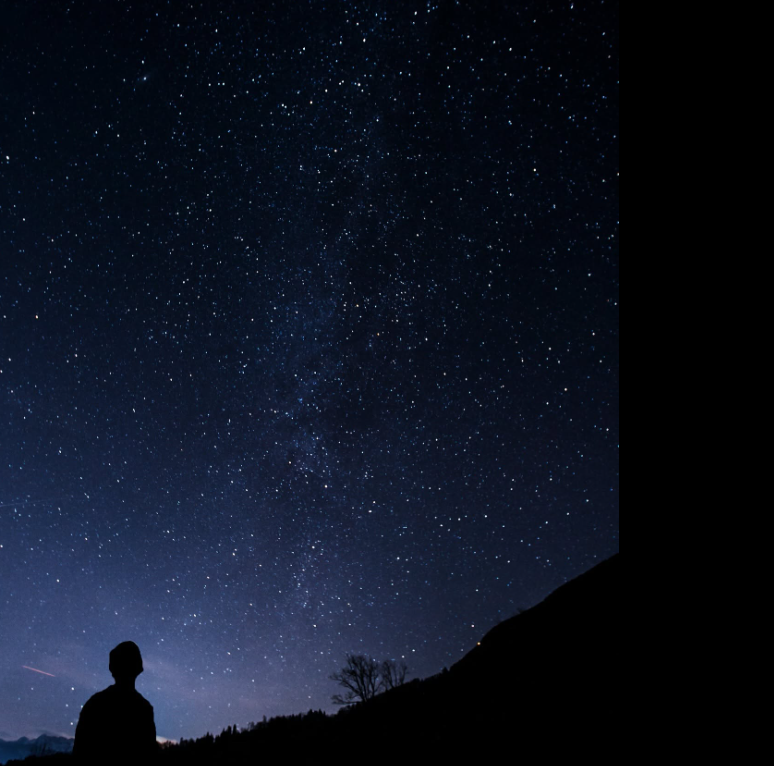 Joseph Ward was a quiet man whose gaze was fixed on the stars.
On May 3, 1901, he was watching through a refractor - a type of telescope - when he saw, for the first time, a comet. In fact it was the first view of the Great Comet on 1901 in New Zealand. He showed it to several others who suggested he form a society of those interested in similar things. It would be the beginning of Joseph’s career as New Zealand’s pioneer telescope maker. Joseph was born in Chelsea, London on January 25, 1862 to Mary and Francis Ward. His intelligence was evident early and he received a good education aiming to him going in the Catholic priesthood. Instead, Joseph went to sea, working on a merchant ship until he migrated to New Zealand. He worked various jobs, as a shepherd and shearer then a saddler. He married Ada Evelyn Wright in 1894. By then he was already interested in astronomy and when the couple settled in Whanganui he set up his refractor in the back yard of his bookshop and stationery business. After the interest in the great comet he helped organise some public lectures and one featured Professor Richard Maclaurin from Victoria College talking about astronomy. Joseph then set up the Whanganui Astronomical Society and was elected president. One of the main aims was to set up an observatory. And they asked for a site in Cook’s Gardens. Joseph bought a refracting telescope from England for £450 which was installed in the new observatory and opened by Premier Richard Seddon in 1903. It is still the largest telescope of its type in the North Island. By 1926 the society gifted the observatory to the council to be held in trust for all citizens and it is now known as the Ward Observatory. Between Joseph and his assistant, local lawyer Thomas Allison, they began searching the southern sky for new double stars. In the course of the next six years they catalogued more than 200; unbeknown to Ward, some had previously been detected by others. However, 88 are recognised as 'Ward doubles' and appear with New Zealand Observatory listings in international double star catalogues, thereby serving as a memorial to Ward's international contribution to this specialised field of astronomy. He also observed sunspots, Mars and more comets. Joseph also began making mirrors for telescopes and many are still being used today. His largest mirror, was completed in 1924, and for more than 40 years remained the largest telescope made by a New Zealand amateur astronomer. Ward died of peritonitis in Wairoa on January 4, 1927, after becoming ill during a visit to a daughter. He is buried in Aramoho Cemetery in Whanganui. Photo by Klemen Vrankar. 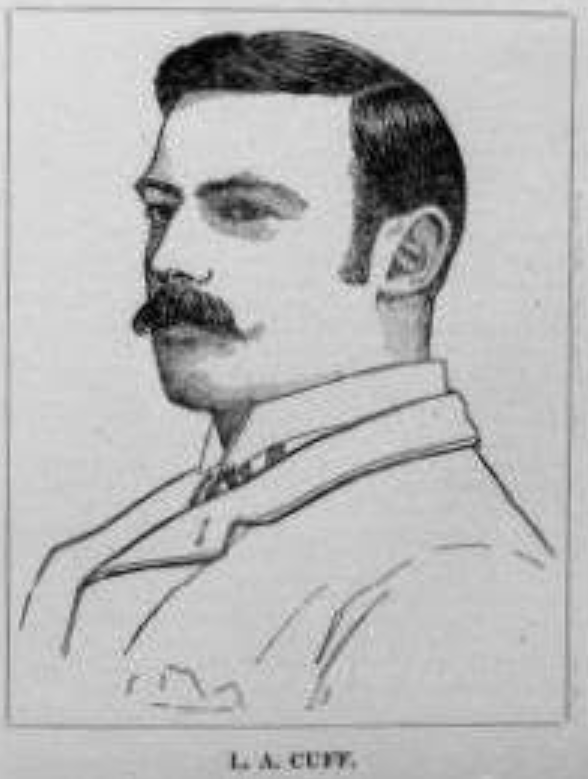 The modern Olympic movement officially started in 1894 with the founding of the International Olympic Committee and a Kiwi was one of 13 who started it.
Leonard Albert Cuff was born in Christchurch on March 28, 1866, to Albert and Ellen Cuff. From the start he was a sportsman, excelling in athletics and cricket, captaining the first New Zealand cricket team while he played for both Auckland and Canterbury. At the same time he also played rugby for Canterbury. In 1887, he became a founder and secretary of the New Zealand Amateur Athletics Association. Cuff won the New Zealand long jump title in 1889, 1896 and 1897 then led the five man team that went to England and Paris in 1892, where he also won a silver medal at the hurdles in an international event. He then became a member of the New Zealand Cricket Council. Along with all those sports he loved and was good at golf and also lawn bowls. He was the New Zealand representative at the conference in Sydney in 1897 when the Australian Amateur Athletic Union was formed. And all of this was before he moved to Tasmania in 1899 where he continued to play cricket where his best season was 1100 runs with an average of 77 as well as founding the Northern Tasmanian Golf Association and the Golf council. He even won the Tasmanian open golf championship. Cuff however also worked in insurance and showed his other talents, working out and laying out five golf courses. It had been his job - managing the Phoenix Assurance Co in Launceston in Tasmania, that led him to move. He later also managed the Ocean Accident and Guarantee Corporation for Tasmania. He took over the management of W. T. Bell and Co. in 1916, and continued to control the two insurance companies. He retired from W. T. Bell and Co. to take over the management of the Commercial Assurance Co. for Northern Tasmania and of the Ocean Corporation for Tasmania. Along with all that he was a founding member of the Launceston Rotary club and honorary treasurer of the St John’s Ambulance Association. He married Ella Kathleen Maddox in Launceston, in 1901, and had one daughter and two sons. Cuff, however, is most remembered as one of the fathers of the modern Olympic movement, signing as the 12th member of the Founding Members of the International Olympic Committee that brings us the Olympic Games every four years. He died in Australia on October 9, 1954, and was cremated at the Carr Villa Memorial Park in Tasmania. A Leonard Cuff medal for contributions was established but later discontinued. 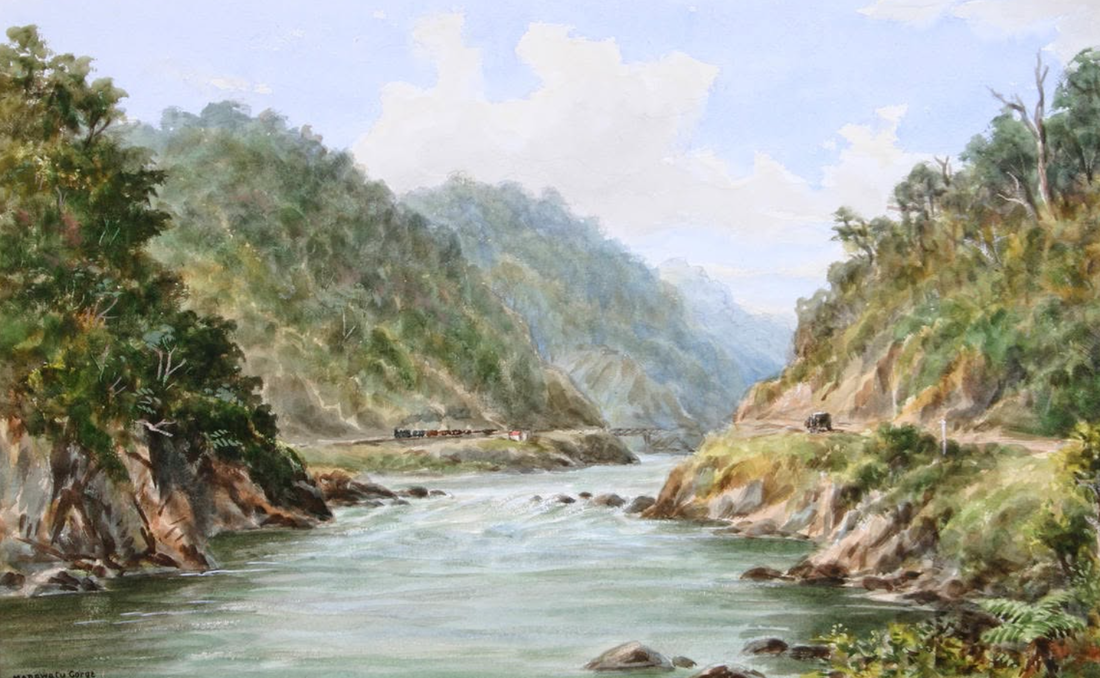 We often think of artists in a studio surrounded by canvas and paints but William George Baker was more likely to be found on the road carrying all his paints with him.
William was born to George and Emma in 1864 in Wellington, New Zealand, the eldest of 10 children. He was apprenticed as an upholsterer but his employer discovered his artistic talent by letting him decorate cabinet panels. In 1889, he married Ellen King, the daughter of a prominent landowner in Greytown and they moved into their first home there. They would shortly begin travelling, looking for scenes to paint. Baker was looking for his favourites - landscapes which the majority of his works were, in both oil and watercolour. He captured scenes now long gone such as the Pink and White Terraces before their destruction and the southern lakes and fiords. Quite a number of his scenes also feature Maori settlements. As the pair travelled they funded their life by selling the paintings and they were popular. But it was only with the public. Although he never received any formal art training, Baker first exhibited with the Fine Arts Association when he was only 19. The Association became the New Zealand Academy of Fine Arts in 1889, and Baker was a member from 1892-1909. He exhibited throughout New Zealand as well as at international exhibitions, including the Louisiana Purchase Exposition in Missouri in 1904. Even so, he got mixed critical success. An 1897 critic for the Evening Post wrote rather scathingly of his painting, “the trail of the common-place is over most of the pictures of W.G. Baker”, saying of even his more highly regarded work that it “is too familiar in design”. Baker made no secret of the fact he was a commercial artist - selling his works wherever possible - at exhibitions, local auctions, agricultural fairs - even the hotels he stayed at during his travels. Even though critics were not that fond of his work, the public was. Baker sold countless works, often selling hundreds during an exhibition, despite his paintings being called common and at one exhibition it was recorded that 100,000 people went to it. In 1893 the couple moved back to Wellington and then in 1919 to Titahi Bay where they lived for the rest of their lives. Baker’s paintings, although popular, would not have been considered high art - he worked to an almost standardised composition and often added things to his paintings to create perspective and did not always accurately record the landscape he was painting. Many of the paintings, along with his sketch books and paintbrushes are now in the Wellington Museum. Baker died on June 21, 1929, and his memorial is at the cabinet niche in the small chapel at Karori Cemetery. With thanks to Te Papa and Wellington Museum. 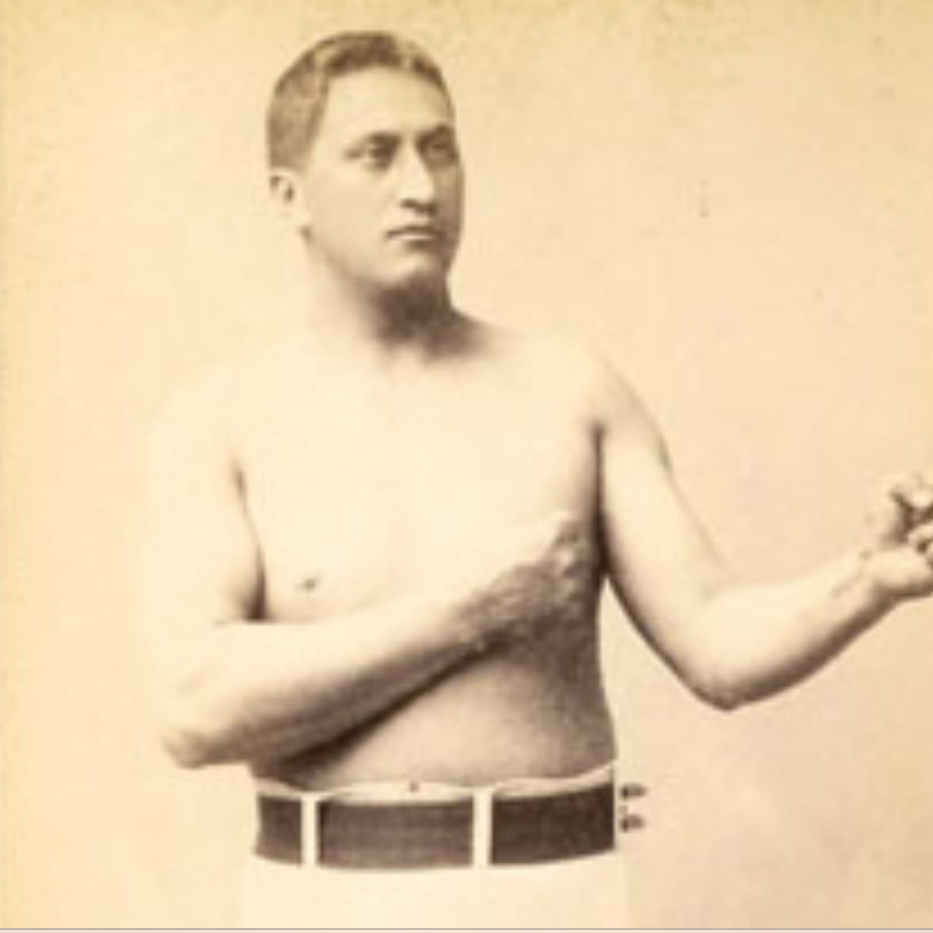 One of the first international Māori sportsmen didn’t actually win a championship in New Zealand but his talent was enough to get him noticed by bare knuckle champion Jem Mace.
Herbert Augustus Slade was born on January 10, 1852, of Ngāpuhi and Irish descent at Kaikino near Awanui in Northland. He was one of eight children of Irish whaler James Slade and Te Paea Rupu "Sophia" Kopiri. Mace noticed him as a wrestler rather than a boxer but thought he had potential and took him to America - where he was a curiosity. At the time African Americans were not allowed in the boxing ring and the Māori boy was of great interest. In 1883, Slade fought John L Sullivan for the heavyweight championship of the world at Madison Square Garden in front of 10,000 people. Bare knuckle fighting was full on combat with no padding. Sullivan is generally considered the last heavy weight champion before the sport began using gloves. Sullivan won the match in the third round. It was the first time a non-white contender had been allowed to vie for the title. Despite the loss, there was plenty of interest in Slade who went on an exhibition tour of the States with Mace as his sparring partner. He was called the Māori Mauler by the media and one of the cleverest sparrers to enter a ring. In 1886 he was in Salt Lake City and put on a sparring match with Duncan McDonald after which they were arrested for prize fighting and received short prison sentences which were promptly pardoned. He retired from boxing in 1891 to become a manager and director, before he tried to make a comeback but lost. Slade had married Estelle Armenta Swasey, the daughter of a man he worked for and they had five children. He opened a boxing school in Salt Lake City, worked as a boxing referee in Eureka, Utah and opened an athletics club. He was also the part owner of the Last Chance gold mine in the Wasatch Mountains near Salt Lake City. In 1990 was appointed as a deputy sheriff at Knight’s Smelter in Utah. Slade died in Mona, Utah in 1913 and is buried in the Mona Cemetery. While he never won a world title, Slade is important as one of the first international Māori sportsmen on the world stage. He was introduced into the Māori Sports hall of fame in 2011. 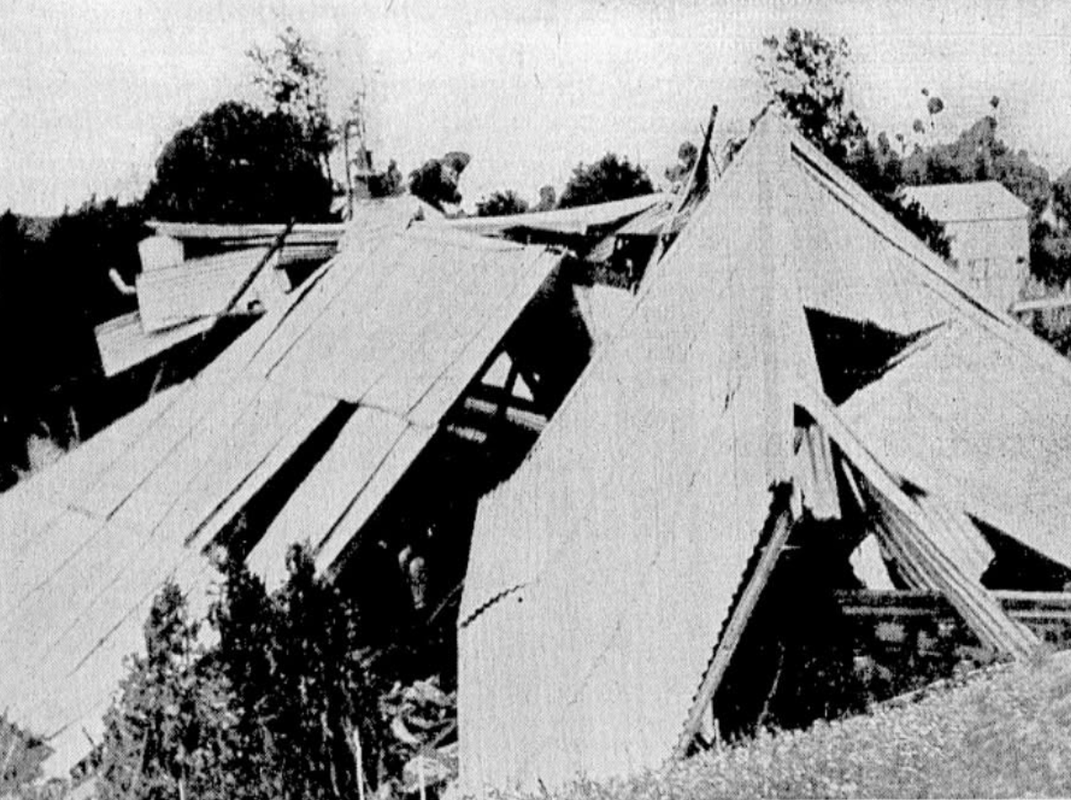 On February 1, 1936, it was a cool night and everyone went to bed knowing there was a storm coming. They could not have predicted what happened next.
As the unnamed cyclone hit New Zealand, the rainfall and hurricane level winds caused havoc. Nearly every major river in the North Island flooded, buildings were uprooted and destroyed, footpaths were torn up and power went out. Near Shannon, a train was blown off the tracks. In Helensville, a train was cut off by floods and the passengers spent two nights stranded in the carriages until they were rescued. In remote areas people were cut off, boats sunk and crashed into rocks and there was damage on a massive scale. What had started as a storm at sea near the Solomon Islands bore down on New Zealand, hitting Auckland overnight and moving on down the country. Whangarei had 290mm or rain in 24hrs, Russell had 301mm and Warkworth 275mm. Auckland City recorded 162mm. It finally moved off, leaving before the worst hit the South Island but by the 12 people were dead. Walter Frederick Botterill had gone out into the weather, trying to help others in Kaitaia. He had been helping get things out of a house when he was swept into a drainage canal and drowned. Sixteen-year-old Eric Groves had also been trying to help - he was trying to clear a tree that had storm damage when a branch hit him on the head and killed him. William McLeod and his son Angus were on their launch ‘Mokau’ of New Plymouth when the storm hit. They were never found. In Palmerston North 72-year-old Benjamin Arthur Miller had climbed up to his roof to try and fix it. Roofs had been torn off all over Palmerston North in winds that reached 140kmh. A piece of iron from the roof tore off and struck him as he was working. William Alfred Joseph Soutar Montgomery is believed to have drowned in the Piako River in Ngatea. However what actually happened is unclear, as he was never found. Ralph Wood and James Wilson had been deer stalking in the Tararua Ranges when the storm passed over - both died of exposure. George Webster hopefully never knew what happened - he was sleeping in his hut at the Zeehan Mine near Thames where he was the caretaker. The hut was swept away in the storm. Both Francis Alexander Mikoz and William George Smith also drowned - in the Mangatangi Stream near Pokeno when it overflowed its banks. And as dreadful a toll as that is, it could have been even worse. In Wellington the steamer John broke its moorings and was swept into the Hutt river mouth and the Rangitira, a passenger ferry, hit a submerged rock as it tried to enter the Wellington harbour and was badly holed although managed to make it to port. There were 793 people on board. The storm was estimated to have caused well over $1 billion in damage in today’s money and farmers lost thousands of heads of cattle and sheep across the country. The victims are buried in several places, Mikoz is is the Waikumete Cemetery, Botterill in Hillsborough Cemetery, Groves in Tinui Cemetery, Miller in Kelvin Grove Cemetery, Smith in Pukekohe Cemetery, Webster in Shortland Cemetery, Wood in Terrace End cemetery and Wilson in Archer St Cemetery. There are memorials for the McLeod’s at Te Henui Cemetery in New Plymouth. |
AuthorFran and Deb's updates Archives
October 2025
Categories |
 RSS Feed