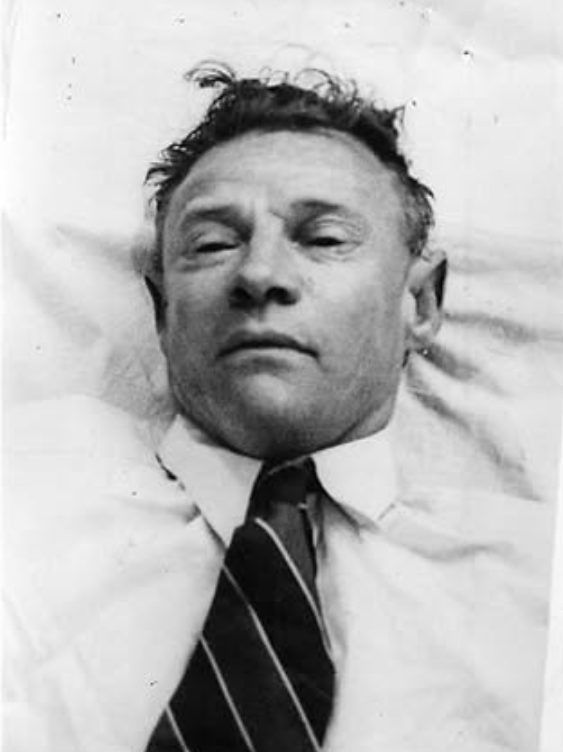
 The discovery of a body sitting against the seawall near Somerton Park beach out of Adelaide began a strange story where the man has never been completely identified.
And it has a weird New Zealand connection. A couple found the body on December 1, 1948, lying in the sand. His head was resting against the seawall with legs extended and feet crossed. A search of the body found a rail ticket, a bus ticket, a comb, chewing gum , a cigarette packet and matches. He had been seen the night before by witnesses but no one investigated. The police launched an investigation. In a post mortem he was described as a Britisher, 180cm tall with broad shoulders, in a white shirt, tie, trousers and a brown knitted pullover, clean shaven and with no identification. Finally, his dental records were not able to be matched to any known person. The pathologist could not be sure what killed him but suspected it might be poison. Six weeks later, a suitcase was found at the Adelaide railway station that was believed to belong to the man. There was little to indicate that but a tie had a name T Keane in it. But a search for someone with that name who was missing turned up nothing. An inquest was delayed while a pathologist re-examined the body. He concluded several things. The man’s shoes were remarkably clean which could have indicated the body was placed at the beach. There were also no physical signs of poison. With no other way to identify him, a plaster cast was made of his face and shoulders. His clothing was also reexamined and a tiny sewn shut pocket was discovered - and in it was a scrap of paper with the words Tamám Shud on it. It was identified as a phrase meaning ended or finished and was from the last page of a book called Rubaiyat of Omar Khayyam. Police went to the public to find out about it and the copy that it was ripped from was found - a rare translated copy that had been published by Whitcombe and Tombs (which would become Whitcoulls) in Christchurch, New Zealand. The book had been found at the beach and also had indentations of a number of letters that at first glance looked like a foreign language but was then thought to be a code. But mostly promisingly, a phone number was in the book - to nurse Jessica Thomson. But she denied knowing the man despite others thinking she was lying. She did, however, say she had once owned a copy of the book that she had given to Alf Boxall which led to police suspecting that was the identity of the dead man until they found him alive in Sydney. There were other possible identifications: E C Johnson who was also found to be alive, woodcutter Robert Walsh who was missing - but had a scar the body did not have. An international hunt began but no overseas agency could help. The body was buried and flowers began appearing on the grave. The case went cold. Years later it was reconsidered and an expert believed the poison used was digitalis. Other theories were brought up, including that the man had been a spy. Years after Jessica Thomson’s daughter said her mother had told her she lied about knowing the man. There were in fact similarities between the man and Jessica’s son Robin. The body was exhumed in 2021 to take DNA samples but failed to make a link between the unidentified man and the Thomson family. But the DNA instead connected to distant relatives of a man called Carl Webb, a man whose wife had fled their violent relationship in 1946. It was not the definitive identification the police had wanted. Since then there have been other possibilities but nothing has been considered the final say. The body was buried in Adelaide West Terrace Cemetery.
0 Comments
Leave a Reply. |
AuthorFran and Deb's updates Archives
October 2025
Categories |
 RSS Feed