 Oswald Laurence Coulton lived a short life, dying before the age of 30 when he was shot trying to rob a Remuera bank.
But was he also guilty of murder? Coulton was born in 1909 in Tamworth, New South Wales, to a reasonably well-off family - but even with his financial advantages he wasn’t happy. He had delusions of fame, particularly as a writer or an airman. He started training to be a pilot, but his family had been unable to continue to pay for the lessons. Then he ended up in prison in 1929 for forgery and uttering (actually using the forgery), serving two years. After his release he came to New Zealand. For 14 months in 1930 and 31 Coulton worked on a Papakura farm. He was also a member of the Papakura League football team, but by the time of the bank robbery in November 1931 he was unemployed. But Coulton had not given up his dreams of fame - he wrote a letter to the New Zealand Press Association in January saying he proposed an attempt to beat the record flight time between England and New Zealand and was trying to raise £2000 to do it. Then on November 25, 1931, out of nowhere, Coulton walked into the Remuera branch of the Bank of New Zealand and presented the manager Fred Youngs with a note - he wanted £250 to go to another account. The note gave a fake name and address. When Mr Youngs bent over to read the letter, Coulton hit him with a sandbag in which there was a fire brush. But Mr Youngs was a stalwart chap, he grabbed a loaded revolver and yelled "Stop Thief". Youngs had been a sniper during WWI - exactly the type of man Coulton did not want to encounter. Coulton ran but Mr Youngs was quicker, he shot Coulton in the back. Coulton died shortly after. Police searching Coulton’s home found a fake airman’s certificate. They also discovered he had been trying to get a film script, entitled Scotland Yard and the Underworld, accepted for production - ironically it was about a bank robbery. But what prompted him to actually try a bank robbery is unknown. The search of his room also uncovered a motor jack. It was just the type of weapon police had been looking for in the murder of chemist Arthur Blomfield, who had been found bludgeoned to death behind his Auckland shop a month before. The find saw Coulton become a prime suspect in his murder. A witness, who saw a man believed to be the murderer, in a nearby fish and chip shop before Blomfield's killing, could not positively identify Coulton. But nothing ever came of it, there was not enough evidence to connect Coulton to the crime. Coulton was buried in the Papakura Cemetery while Mr Youngs is in Waikumete. The murder of Arthur Blomfield has never been solved.
0 Comments
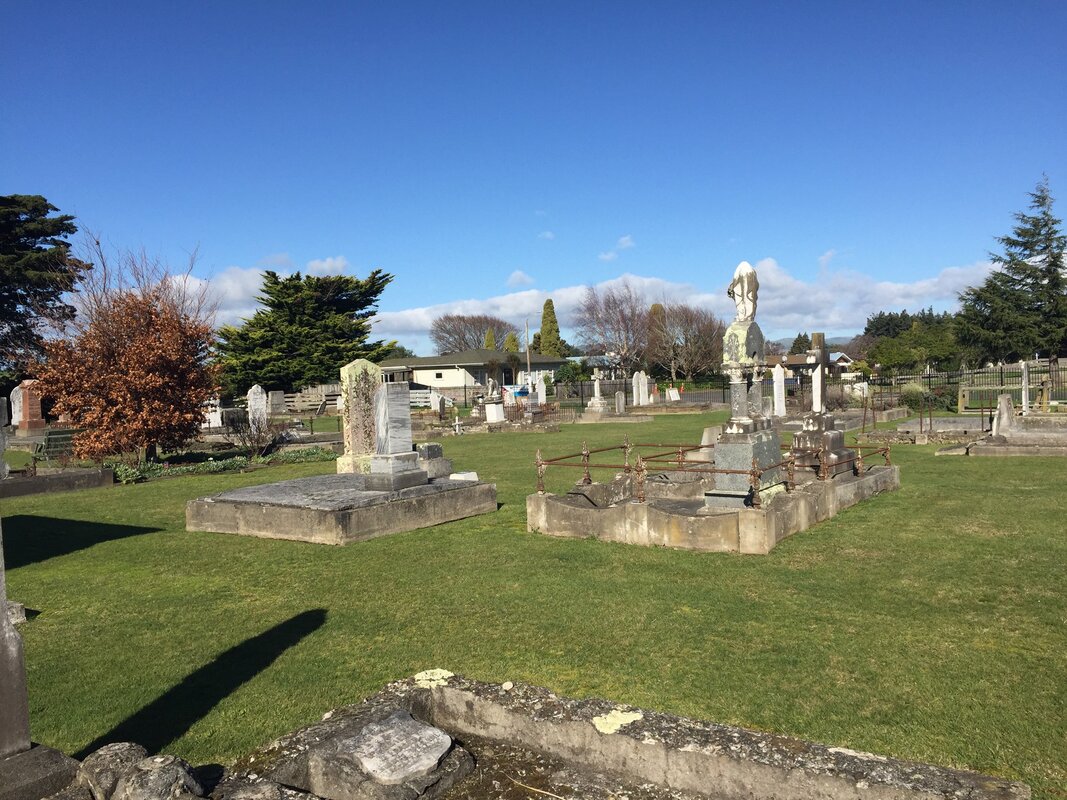 Finding out who someone is after death - and especially after many years - is part detective work and part guess work.
You might have to take a leap of faith or you might get lucky. At Genealogy Investigations we are constantly surprised at how little things add up. This is a great story of how doing just that led to the discovery of who an earthquake victim was. Sister Ignatious died in the collapse of a building at the St Joseph’s convent in Hawke’s Bay’s 1931 earthquake but no one knew who she really was. Initially only identified by the name she took on joining the Catholic religious order, little was known about her other than her father was a farmer in Dannevirke called Mr Walsh. In 2016 Ancestry began a project using every scrap of archives, records and previous research done to look at who the earthquake victims were. Detective work by the Ancestry project bringing together genealogists and historians uncovered a local girl whose parents were settlers in Hawke’s Bay. They found Sister Ignatious’ name but not who she was. With just two small pieces of information - a last name and a location they began the hunt. A Barbara Walsh, buried in the Dannevirke Settler’s Cemetery, was a possible clue. They used a technique we also use. Sometimes you have to go back before going forward. Barbara Walsh was born Barbara Lumsden Pratt in 1851 in Kirkcaldy, Fife, Scotland to James and Isabella Pratt. By 1901, records showed she married James Walsh in St Patrick’s Church in Masterton and in 1907, on January 15, she had a daughter Mary Deeley Walsh. Sadly, just two years later Barbara died, leaving her young daughter and husband. Researchers scoured records but could find nothing to suggest Mary Walsh ever married or died. With few public records to go on, they reached out to the Catholic Archives who referred them to the Religious Order of Our Lady of the Missions who usually undertook to educate women and children around the world. It had been four Mission sisters who arrived in Napier to begin the Mission’s work in New Zealand. They did know about Sister Ignatious but little about Mary Walsh herself. Crucially they knew her date of birth - January 15, 1907 matching rural girl Mary Walsh - with Sister Ignatious. She is buried in the Taradale Cemetery under the name Mary Ignatious Walsh. Her father, who survived her by seven years, is buried in Mangatera cemetery.  A floating suitcase might not have been cause for concern, but the headless and legless torso inside was.
The suitcase was found underneath Picton's wharf on May 7, 1938 and investigating officer Detective Sergeant Bill McLennan must have expected the worst. He could see part of a hand sticking out. Stuffed inside was the torso of a man. There was an unemployment levy book in his coat pocket, revealing him to be Edwin Norman Armstrong from Wellington. How did his dismembered body come to be in a suitcase in Picton? Within days a second suitcase, with a head and legs in it, was found on the seabed. People at the time remembered Mr Armstrong as a man who abused his wife, drank and treated his family terribly, swore and did not like to work. He was not well liked and, as it turned out, he was hated even more by his son Douglas who saw the ruin of the family in his father’s behaviour. Mr Armstrong had been in Australia for about seven months but moved back into the family home in Wellington two months before his death and the family, including youngest son William, found him difficult to live with. Douglas was especially close to his mother, Mary Robb Armstrong, and when he had finally had enough he confronted his father, trying to give him money to leave. In a later statement to police, Douglas said he started in on his father with his fists and “think I went berserk”. He cut up the body, put it in two suitcases, took a taxi to the ferry Tamahine and left for Picton. In his book No Remedy for Death pathologist at the time Dr Philip Patrick Lynch said “At Picton it was raining and dark. Douglas later told police 'I got off the boat with my suitcases and went down towards the stern of the ship after walking towards the end of the wharf. I heaved the suitcases into the water'.” But the police did not know this when they went to Mr Amstrong’s Hinau Road home. Instead, Mrs Armstrong astonished them when she told them that not only was her husband missing, but her eldest son was too. Douglas had left his mother a note saying he was going to Auckland, but a taxi driver told police he took a young man to the ferry early that morning. He had two heavy bags with him and when the driver asked Douglas what it was, he said, “venison meat”. Examination of the house revealed blood stains and a tenon saw with meat clinging to its teeth. The first news of Douglas was in a private letter to his mother confessing all and asking her to meet him privately which she did. A week later he was caught in Auckland about to board a train to Wellington. He initially gave the police the name Dave Lyon but quickly came clean. He was found guilty of manslaughter and sentenced to 10 years in prison. His mother stood with him throughout the trial but sadly died before her son left prison. Douglas left New Zealand when he was released. However, it was not the end of Mr Armstrong’s story. He was not buried for many years. Instead, his remains stayed in the care of the police museum to be used for training purposes. But in 2015 the museum decided the remains should be properly and respectfully interred. A special ceremony and memorial plaques were put up for Edwin Armstrong at Karori cemetery. 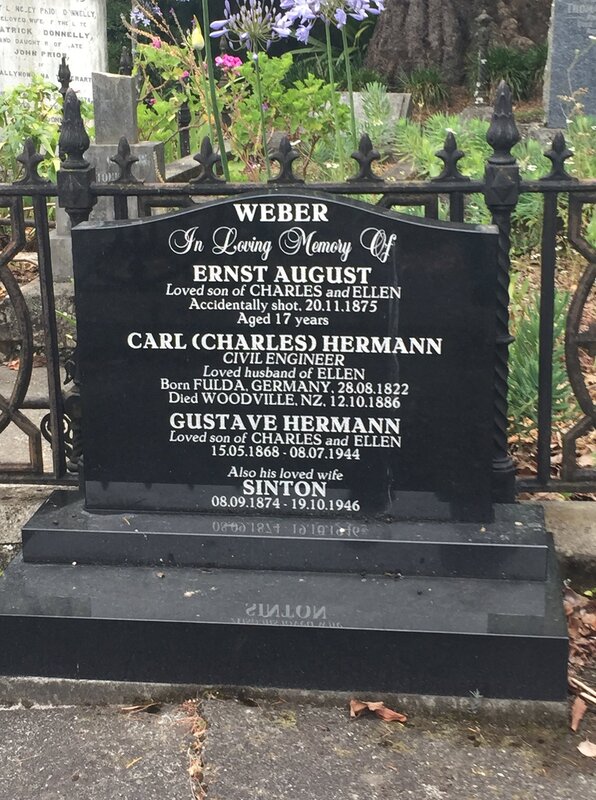 A lot of Hawke’s Bay looks the way it does because of one man.
Streets, the waterfront, railway lines and drainage were all under the overview of Charles - or Carl - Hermann Weber, a noted surveyor who mysteriously died while out surveying land. The tiny Central Hawke’s Bay town of Weber was named after him along with a street in Woodville. Weber township, some 28 kilometres south-east of Dannevirke, was founded as an overnight stop for coach teams heading for the coast. It had once been a thriving little town. Weber also had a little cemetery - now just a memorial. Charles Weber is, however, not buried in his namesake town. Weber was born on August 28, 1822 in the town of Fulda in Germany to Ludwig Christian Weber and Maria Franzisca Ruperti along with five brothers and three sisters. One of his brothers was noted English doctor Sir Hermann Weber. He served in the Army and attained the rank of Captain of Engineers. But in 1848, after he refused to fire on people during a revolution, he was cashiered. He fled to the United States of America and there he was one of a party, under the leadership of General John Fremont, which helped lay the transcontinental railway from New York between 1846 and 1853. Weber moved on to the romantic-sounding South Seas Islands, which we now call the Pacific Islands, as part of the sandalwood and beche-de-mer (sea cucumber) trade. Next he spent time in South America before moving on to Australia where he bought a large cattle run but he was forced to give it up when gold fever struck and he was unable to keep farm hands. In Melbourne he met and married Ellen Powell Drewe. It was in Sydney that he took tests to become a surveyor and was lured to New Zealand in 1860 by the founding of a new province - Hawke’s Bay - to be the chief surveyor. In 1866 he became the Provincial Engineer of Hawke’s Bay, a position he held for five years before joining the Public Works department employed in the preliminary survey of the Manawatu railway line. It was Weber who supervised the construction of the Napier breakwater, advised on massive drainage projects and on the development of Napier Harbour. He was also involved in the planning of the train and road through the Manawatū Gorge. After a time in private practice he retired, but continued to take an interest in the nearby town of Woodville. In 1886 Weber headed out to look at some land near Mangatainoka. He was last seen on the coach near Pahiatua. He went into the bush and disappeared. Searches were mounted and rewards offered but it would be three years before his body was found by bush fellers near Makakahi. An inquest returned the finding that he became lost and died of exposure. Weber is buried at the Old Napier Cemetery with other members of his family including one of his sons, Ernest who died after being accidently shot while a cadet clerk with the railways by another clerk playing with a loaded gun. 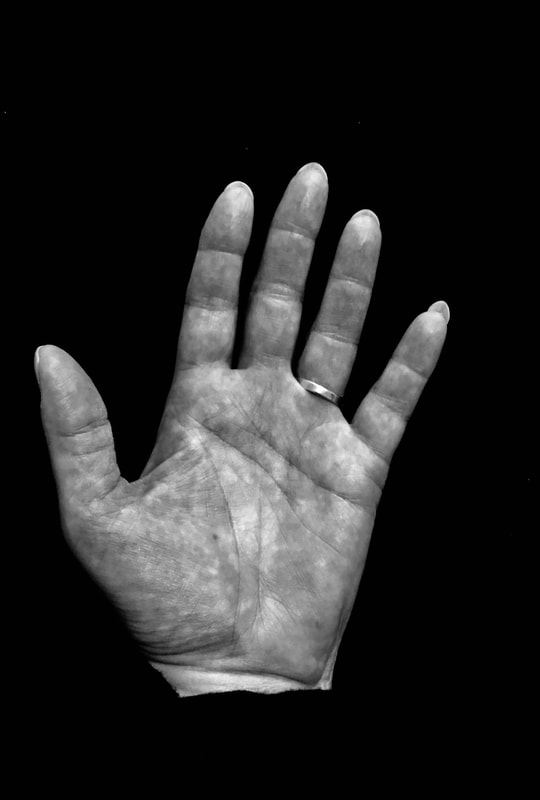 The case of the missing hand.
When police officers dug up the body of 67-year-old Helen Rayner in 1885, they fully expected to find her minus one hand. Instead she still had both. So whose was the severed hand police had in custody? Helen Rayner (nee Bland, known as Betsy) came to New Zealand from England in 1853 with her husband John aboard the Lady Cornwall. Initially they set up home in Lower Hutt with their many children. One of their sons John (junior) moved to Masterton where he married Elizabeth and farmed on the Taratahi Plain. In their retirement, Helen and John (senior) joined their son in Masterton, where John senior died in 1881 and Helen in 1885. On October 11 that same year, Christchurch railway worker Arthur Robert Ramage Howard, a fitter from the Addington workshop, apparently went missing while swimming at Sumner Beach. His widow Jane Howard claimed his £2400 in life insurance from three companies. The companies were, however, not convinced that he was dead, so they advised Jane Howard that they would pay out if a body, “or a portion thereof”, was located. The portion duly showed up on the beach at Sumner on December 16; a hand with a ring on one finger. So Jane Howard tried to claim the money again. Unfortunately for her, the medical experts found the hand belonged to a woman. Jane Howard was arrested and the hunt was on for the missing Arthur Howard. Early in 1886 Arthur was found in Petone. He was wearing a wig and had dyed his moustache (and ironically missing a thumb on one hand) and called himself John Watson. Arthur Howard was a friend of the undertaker in Masterton, and mourners remembered seeing him at Helen Rayner's funeral on November 25, 1885. It became “common knowledge” in Masterton that Arthur had dug up her body after the funeral and had sawn off her hand. Under pressure from Helen’s distraught family to check if the rumours were true, the police organised for an exhumation and at 10.30pm one night a party went to Archer Street cemetery to disinter her body. They found she still had both hands. A friend of Howard’s claimed he had been asked to go to the cemetery to dig up a body, but he had refused. Police proceeded to dig up further bodies to check but found nothing amiss. Despite the fruitless search for the handless arm, Arthur and Jane Howard, and the two men who claimed they found Arthur's hand, Frederick and Elisha Godfrey, went to trial. Arthur was found guilty of fraud and was sentenced to two years jail. His wife and the other two men were found guilty of conspiracy to defraud. It wasn’t the end of Arthur’s problems though. While he was in prison, Jane ran off with a Christchurch butcher. After his release from prison, Arthur was deported back to Australia but died in a shunting accident in 1889. In the meantime, police never discovered who the hand had belonged to. 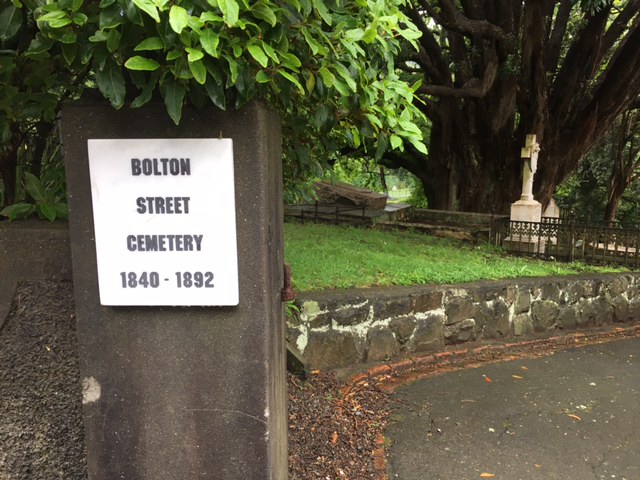 In 1883 Phoebe Veitch made New Zealand history by “pleading her belly” - something no one had done before or since.
Phoebe Veitch’s life was one tragedy after another. Disfigured, abandoned, hard of hearing and with three children and a blind mother to care for by the time she was 20, she seems to have snapped. It’s only now, looking back at the horror she endured and the desperate lengths she went to to survive, can the terrible decision she made be seen in context. She came to New Zealand at 14, then Phoebe Harper, to work as a cook in a Nelson hotel run by her uncle. But within the year she was pregnant with her first child, Albert. After his birth she moved to Feilding where she met Robert Veitch and had a second child, a daughter. They married and she had a third child, named Phoebe and called Flossy. But Robert was not the father. Instead, a man she called Darky Sam was. He had met Phoebe in Nelson and followed her to Feilding where he gave her £5, a huge sum back then. For a short while Phoebe’s life was normal but when Robert was declared bankrupt, he got up one morning and left, never to return. She worked as a domestic servant to support herself, her children and now her blind mother living with her. She was ill, with what later turned out to be sexually transmitted syphilis which ate away at part of her face and nose - leaving her disfigured, struggling to talk and by now she was hard of hearing. Outcast in her community and now 23, Phoebe moved to Whanganui in 1883 - hoping to start over. Work however was hard to come by and she brought in money by working as a prostitute. Within a couple of weeks, the body of a four-year-old girl was found on the beach near the river mouth. It was Flossy. She had drowned. Phoebe gave different accounts: that the child had fallen into the water; or that the man who was her father had thrown her in. She also told a woman she knew that Flossy was going to stay with a woman she called "the dark lady”. A hunt started for the man known as Sam Timaru - however it was unclear what his real name was or even if Phoebe knew. He was never found and Phoebe was charged with the murder of her daughter. She was found guilty and sentenced to death but, in a twist never used before or since, she claimed she was pregnant again, with her fourth child leading to the judge forming a ‘jury of matrons’. Twelve respectable married women were gathered to determine if she was pregnant. The jury determined she was and here death sentence was commuted to life imprisonment. Sure enough, months later she gave birth to her son Robert who was taken from her to be placed with another family. Then, at the age of only 30, she died in Wellington’s Terrace Gaol in 1891. Phoebe is buried in the Bolton Street cemetery in the Church of England section, but like many convicted murderers, it is not known exactly where. 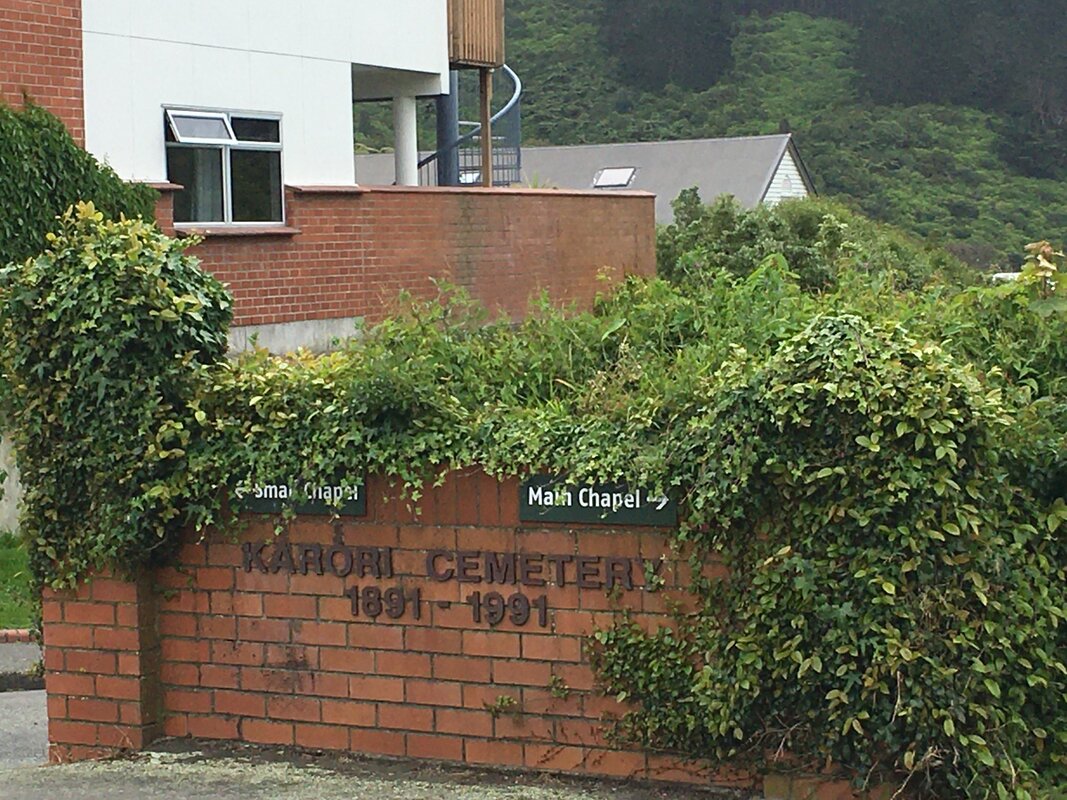 Not originally listed among the dead of the Hawke's Bay's devastating 1931 earthquake was one of Napier's earliest citizens, 91-year-old Henry Skelton.
Henry was crushed under the collapsed Park Island Old Men's home with severe injuries and evacuated only to die in an unfamiliar city far away from home 90 years ago today. Henry, known around the district for his prize-winning strawberries, moved into the home less than a year before the earthquake. Henry had arrived in New Zealand in the 1850s from England and served for nine years as a non-commissioned officer with the 65th regiment. He settled in the Hawke’s Bay in the 1860s and married his wife Catherine (Kate) in 1886. He and Kate had six children. The family first settled in Ruataniwha, near Ongaonga, before they moved to Napier where Henry built a grocery store in Carlyle Street (the first store in the street), which he sold in 1879. Henry was also for a time the city’s pound keeper, briefly the hotel keeper of the Bay View Hotel and also served as the Napier’s first band master. By 1887 the family had moved to Taradale, where Henry grew fruit, in particular, strawberries, which frequently won him first prize at the local horticultural shows. In 1901 Henry and Kate opened up their property, which they named Avondale Gardens, for visitors to enjoy afternoon teas and lawn tennis. The couple remained in their Taradale home till at least March 1930 when Kate died aged 87. She is buried in Taradale Cemetery. Following her death, Henry moved into the Old Men’s Home. On that fateful February day in 1931 Henry was trapped under the rubble of the shattered building. One of Henry’s son’s, fearing for his father’s safety, rushed to the home and managed to pull him out of the wreckage. Sadly, Henry was injured, his feet were badly crushed. His condition was so precarious that he was moved to Wellington Hospital by Navy boat where he died on March 3 from his injuries. He is buried in Karori cemetery and is understood to have no headstone. A few years ago, work done by genealogists and local historians was added to an Ancestry project to match all known data. A few people, like Henry, whose names were sometimes not recorded as earthquake fatalities, were identified. The project also saw some names, formerly thought to have died as a result of the earthquake, discounted.  A lot of Hawke’s Bay looks the way it does because of one man.
Streets, the waterfront, railway lines and drainage were all under the overview of Charles (or Carl) Hermann Weber, a noted surveyor who mysteriously died doing his job. The tiny Central Hawke’s Bay town of Weber was named after him along with a street in Woodville. Weber, some 28 kilometres south-east of Dannevirke, was founded as an overnight stop for coach teams heading for the coast. It was a thriving town at the turn of last century. Weber also had a little cemetery - now just a memorial. Charles Weber is, however, not buried in his namesake town. Weber was born in the Grand Duchy of Hesse-Kassel in Germany or what was called Bavaria in 1823. He served in the Army and attained the rank of Captain of Engineers. But in 1848, after he refused to fire on people during a revolution, he was cashiered. He fled to the United States of America and there he was one of a party, under the leadership of General Fremont, which helped lay the transcontinental railway from New York between 1846 and 1853. Weber moved on to the romantic-sounding South Seas Islands, which we now call the Pacific Islands, as part of the sandalwood and beche-de-mer (sea cucumber) trade. Next he spent time in South America before moving on to Australia where he bought a large cattle run but he was forced to give it up when gold fever struck and he was unable to keep farm hands. It was in Sydney that he took tests to become a surveyor and was lured to New Zealand in 1860 by the founding of a new province - Hawke’s Bay - to be the chief surveyor. In 1866 he became the Provincial Engineer of Hawke’s Bay, a position he held for five years before joining the Public Works department employed in the preliminary survey of the Manawatu railway line. It was Weber who supervised the construction of the Napier breakwater, advised on massive drainage projects and on the development of Napier Harbour. He was also involved in the planning of the train and road through the Manawatū Gorge. After a time in private practice he retired, but continued to take an interest in the nearby town of Woodville. In 1886 Weber headed out to look at some land near Mangatainoka. He was last seen on the coach near Pahiatua. He went into the bush and disappeared. Searches were mounted and rewards offered but it would be three years before his body was found by bush fellers near Makakahi. An inquest returned the finding that he became lost and died of exposure. Weber is buried at the Old Napier Cemetery with other members of his family. He was survived by his wife Ellen and three sons and two daughters.  We’re going to keep looking for James Collins.
You hear so many terrible things about Facebook; interference in politics, privacy breaches and bullying, it’s easy to be cynical. When we decided to start Genealogy Investigations, we looked at how we would use Facebook to reach people. Yes, we are a business, but we also wanted to tell stories and reach out. And it has exceeded our expectations. Not only are we able to share tales that might be forgotten and to honour people, but it just shows Facebook can be a force for good. So many of you were interested in the story of James Collins, who was buried for three days beneath the rubble of the Park Island Old Men’s Home in Napier after the 1931 earthquake before being rescued, especially that the poor chap was buried without a headstone in Dannevirke, that we have decided we are going to investigate further. It constantly surprises us how willing people are to help find a family member no one has spoken to for a while, find a person who has moved overseas and help find records on the ground in another country. There is a vast amount of information on the Internet, but it is not always a substitute for searching through hard copy records. We have found people willing to go to local offices to check things, to cemeteries in far flung countries to take pictures, to reach out to others and help us - in some cases - to reunite families. And in today’s world a bit of kindness is badly needed. Some of you have reached out to help with ideas about James Collins - thank you all. We will let you know how it goes. This is what Facebook should be for.  On February 8, 1939, death came for 54-year-old Patrick Henry Shine, an Auckland storekeeper and former soldier.
But it was only the start of his adventures. He was buried the next day by his grieving family in the Waikumete Soldiers' Cemetery, Auckland. He was survived by his first wife, Georgina and son Frederick and his second wife, Madge. Shortly after however, in a truly extraordinary legal case, his body was dug up by two body snatchers who used him in an attempt to fake one of their death’s for insurance purposes. Gordon Thomas McKay (alias Tom Bowlands) and labourer James Arthur Talbot had arrived in Auckland from Australia aboard the Mariposa two days before Patrick died. They rented out a garage and the day after Patrick was buried they dug him up and removed his body to a garage they were renting in Avondale. McKay and Talbot then rented a bach at Piha which they promptly burned down - with a body inside. It was intended that people would believe McKay, whose life was insured for £50,000, had burnt to death while Talbot survived. The charred remains were buried, again in Waikumete - this time under the name McKay. Suspicions soon arose, however, and the Australian insurance companies, holding the policies on McKay's life, wanted the death investigated. Patrick’s original grave was opened, and it was of course empty. Talbot was arrested and a search made for McKay who was found 12 days later at a boarding house in Parnell registered under a fake name. They were found guilty of arson and the very rarely used charge of improperly interfering with a dead body, both receiving jail terms. And Patrick Shine was buried again - this time to rest in peace in the same coffin and grave he started in. |
AuthorFran and Deb's updates Archives
August 2025
Categories |
 RSS Feed