 The Wahine disaster needs little introduction. It is still considered one of the most tragic maritime disasters in New Zealand’s history.
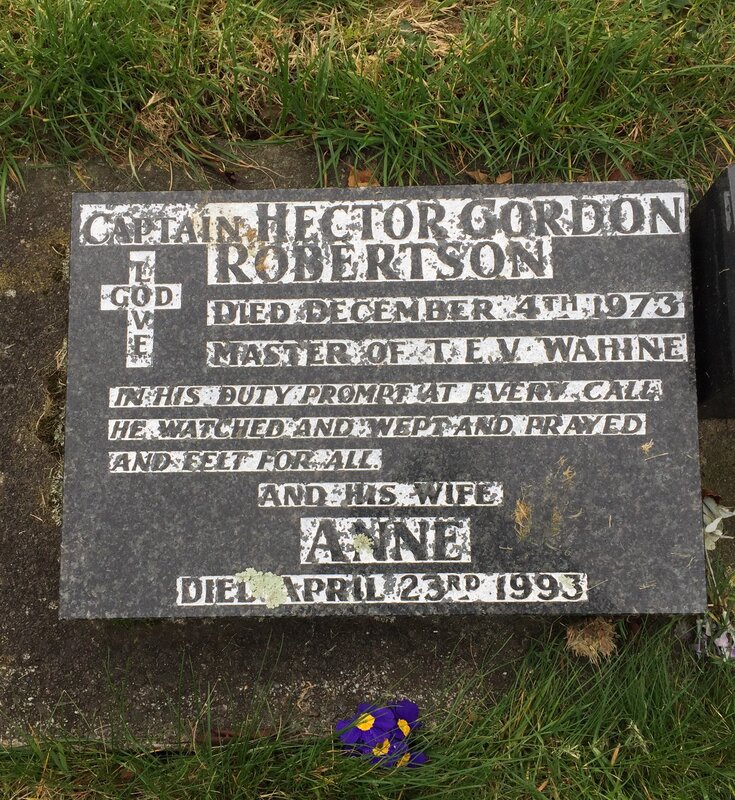
Fifty-three people died, 51 immediately, one several weeks later and another much later from ongoing issues from injuries. Hector Gordon Robertson was the captain of the Wahine on the day of the tragedy - April 10, 1968. Always called Gordon, he was born February 4, 1911, in Wellington, the second of six children. He married Anne Marie Robertson who was a Canadian passenger on a ship he was working on. The Wahine was a 8948 ton roll-on roll off passenger ferry, which sailed a regular route between Wellington and Lyttleton. It was the largest ship of its kind in New Zealand at the time. On the evening of April 9, there were 734 passengers and crew aboard for the sailing from Lyttleton to Wellington. New Zealand was in the grips of tropical storm Giselle, which whipped up strong winds and treacherous waves. At 5.50am the next morning, on April 10, Captain Robertson decided to enter Wellington Harbour. He was a very experienced captain and had made the trip many times before. But what the captain could not have predicted was the storm front meeting a cold southerly front. Just as the Wahine entered the narrow funnel to the harbour, the wind increased to 100 knots. A huge wave slammed into the ship, throwing many aboard off their feet. The Wahine was now side on - and being pushed toward Barrett Reef. Robertson fought, trying to turn his ship back out into the open sea but with the radar out, the ship reversed into Barrett Reef and knocked the starboard propeller off and the port engine then stopped. The captain ordered all watertight doors closed and both anchors dropped. The signal station at Beacon Hill was notified and the crew prepared life saving equipment. Flooding was causing serious concerns about the stability of the ship, water pouring into the car deck. By now the Wahine was dragging its anchors and drifting. The tug Tapuhi had reached the ship, but attempts to secure a line failed. The Wahine began to list and the order was given to abandon ship, but it wasn’t that easy. Lifeboats were launched and one was swamped, passengers jumped into the sea. Rescuers desperate to help stood helplessly on Seatoun’s shore watching as the massive ferry foundered in one of the worst storms ever seen. Saving them was difficult in huge seas. Two lifeboats ended up in Seatoun with a third in Eastbourne. Pictures of people being rescued from the sea became part of the national consciousness. Two hundred made it to shore. Captain Robertson (and tug pilot Captain Galloway) was the last to leave his sinking ship. A subsequent inquest said there were errors of judgment aboard and on shore. Captain Robertson bore the brunt of the blame, but it’s now widely thought there was little he could have done differently. A Court of Inquiry found no serious omissions or defaults on Robertson's part, but it took a toll on him. He had told the inquiry he had never been in weather that bad before. Hector Robertson’s quiet resting place at Taita Cemetery tells only that he was the Captain of the Wahine and a solemn little verse “In his duty prompt at every call. He watched and wept and prayed and felt for all.”
2 Comments
Raeburne Bourke
4/13/2022 01:44:00 am
Was Captain Robertson a crew man earlier in his career on the SS Manuka which went aground in the Catlins? 4/13/2022 03:46:56 pm
Hi Raeburne. You are right, Captain Robertson was an ordinary seamen early in his career aboard the Manuka when she wrecked in 1929. Leave a Reply. |
AuthorFran and Deb's updates Archives
September 2025
Categories |
 RSS Feed