 Outlaw Henry Rouse, Henry Beresford Garrett, Conrington Revingston or William Green. And apparently so many other names that the stories attributed to them seem like movie plots.
But they are, in fact, supposed to be one man whose exploits are legend now. He was born Henry Rouse, to Thomas and Catherine Rouse on March 18, 1818, in Bottesford, Leicester in England. Catherine died three years after his birth and they lived with Henry’s grandmother until his father remarried. He received little education but did train as a cooper. In 1842, he received his first prison sentence of three months in Leicester for assaulting a gamekeeper who caught him poaching, and in 1845 was sentenced to be transported for 10 years for shop breaking. He left England on board the Mayda with nearly 200 other convicts. Initially he was jailed on Norfolk Island before being transferred to Tasmania. He got into minor trouble and tried to escape at least twice. By 1850, he was living in Victoria and calling himself Henry Garrett before moving to the Ballarat goldfields. On October 16, 1854, Garrett and three others robbed the Bank of Victoria on Bakery Hill. getting away with over £14,000, a fortune of several lifetimes. Within three months Garrett and the woman he called his wife left for London where he changed gold dust into cash. He was arrested virtually immediately - one of his accomplices had turned Queen’s evidence. By now he was using the name Henry Beresford Garrett. He was returned to Melbourne, tried and sentenced to 10 years hard labour. On his release in 1861, he came to New Zealand heading to the Otago goldfields but it wasn’t long before he and some companions carried out a highway robbery, pocketing £400 after overhearing some men boasting about how much gold they were carrying. Garrett immediately fled to Sydney. He was again arrested and returned to Dunedin where he was jailed for eight years. He tried escaping but his plan was foiled. On his release he was returned to Australia who didn’t want him and promptly returned him to New Zealand. He worked as a cooper honestly for a while but was caught burgling a seed merchant in 1868. He received another 10 years, served it and was released only to caught thieving ending up in the Wellington Mount Cook gaol where he was a trusted worker - laying the rail for the jail tram. He fell ill however and was moved to The Terrace jail where he died aged 72 of chronic bronchitis at midnight on September 3, 1885. However not all the stories attributed to him can have been him. Despite the name Codrington Revingston being said to be Garrett that seems unlikely. Garrett was in prison during at least one of the robberies Revingston is supposed to have done. Nevertheless the myth has stuck. During his many years in prison, Garrett wrote about the conditions, and about one of the administrators John Gillies Price who he called the Demon for his violence towards prisoners, and a recollection of convict life in Norfolk Island and Victoria. Garrett witnessed the murder of Price who was beaten to death by the prisoners he treated so cruelly. Garrett is buried at the Bolton St Cemetery.
0 Comments
 The detective
It was Walter Dinnie who brought an organised system of criminal identification to New Zealand. The experienced London detective was headhunted from England by the New Zealand Government looking for someone to run the police force. Walter Dinnie was born on December 26, 1850, in Aberdeenshire in Scotland to Robert Dinnie and Celia Hay. He received a grammar school education where he excelled in athletics and his first job was as a bank clerk before taking a clerking job with the West Riding of Yorkshire constabulary. It led to him joining the London metropolitan police force earning promotion after promotion until he became a detective before going on to the Criminal Investigation branch. He achieved fame with a number of high profile cases - including the arrest of international jewel thief William “Harry the valet” Johnson who stole £30,000 from the Dowager Duchess of Sutherland and Charles Wells - a gambler and fraudster who was called the man who broke the bank at Monte Carlo. Dinnie had begun setting up a fingerprint register in 1901 but in 1903 he was approached by the NZ Government to be the Commissioner of Police. Dinnie accepted and retired from New Scotland Yard and boarded the SS Ruapehu with his wife Fredericka, their five sons and niece Isabella Smith. He began putting reforms in place. One of them was organising fingerprint and mug shot databases. The mug shots are not like we think today. Criminals faced the camera and had both their hands in full view - as an extra form of identification. It included samples of handwriting along with details of known associates and methods of operating. He put his son, Edmund, who was trained in modern methods, into the new unit and a year later Edmund was in charge. Edmund also founded the Police Museum. Both were lauded for their success but it didn’t last. Walter became the object of attack in the media for corruption in the police force, especially after Dunedin police were found to be burgling the premises they were supposed to be protecting. It resulted in a royal commission. It ultimately said the police were not corrupt but confidence in Walter continued to drop after discipline problems and a bungled murder investigation. Despite the commission finding there was no issue with police, Walter was seen as incompetent. He attacked back but in 1909 his resignation was announced. He denied resigning but it was too late. He moved to Auckland and took up a position as president of the Tokerau District Maori Land Board, despite his lack of experience. It didn’t last long either, the position ceased to exist in 1914 and Walter settled in Wellington as a private detective. He died on May 7, 1923. It now appears that he was hounded from office by a combination of the New Zealand Truth who had opposed someone being brought from England for a New Zealand job and by a member of Parliament and a magistrate who headed the commission. Whether that is true or just a set of circumstances, Walter brought more modern forensic detective methods to New Zealand. Walter is buried at Karori Cemetery. 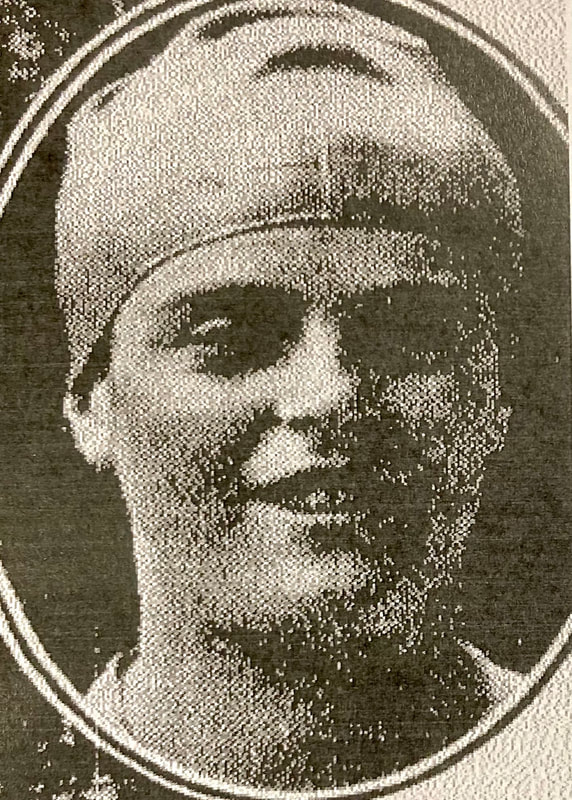 At 48.5kg, Violet Walrond was a tiny thing - but she was also New Zealand’s first female Olympian. Not the first to win a medal (that was Yvette Williams) but the first girl to go to the Olympics.
She was also only 14-years-old when selected for the 1920 Antwerp Olympics games. She was 15 by the time the games happened. Violet Ethel Mary Walrond was born on February 27, 1905, in Auckland to Cecil and Ethel. Cecil - usually called Tui - was her swimming coach and her chaperone to the games as she was not allowed to go alone. It took a nine week sea journey - delayed several times by bad weather - for them to arrive. It was the first official New Zealand team (often New Zealand had been with a joint Australian team) and there was no Olympic uniform. There were only four of them. The men wore suits and Violet had a cream dress. They did however have the fern leaf on their hats. Violet was not even able to leave the hotel room by herself and could not go and watch her teammates. Violet competed in two events, the 100 metre freestyle and the 300 metre freestyle. They were held in an outdoor pool in chilly weather. She was one of the few using the crawl, a new style that she had copied from a Wellington men’s champion. In the 100 metre she came fifth and in the 300 she came seventh. Once the games were over, she set her sights on going to the Paris Olympics in 1924 but it wasn’t to be. Only three years later, she and her sister Edna - also a competitive swimmer and a top diver - retired on her father’s orders - he didn’t like them in the public eye. Violet married Harold Robb in 1933 and died 1996 aged 91. She was cremated at Purewa Cemetery.  The machines of war
Once upon a time nearly every town in New Zealand had a bloody great piece of artillery on display, often a field gun. No, each town was not arming themselves. They were trophy guns and it was common for towns to celebrate and memorialise their war dead by requesting and putting up a huge war weapon. In fact, after the First World War there was a huge demand with towns competing over how much they deserved them, often by trumpetting how many dead they had. The guns were captured goods, taken from battlefields as the spoils of war and they were sent all over the world - and a great many to Australia and New Zealand. They were handed out - and sometimes bought - by towns and cities - and put on display. It was so common that in some places individual suburbs and schools had their own piece of artillery. Although it is unlikely it was done regularly, the big guns were sometimes fired as a salute to those who had died. Wellingtonian and librarian Peter Henry McColl could see what the demand would be like, and while he was serving in France tried to send a trench mortar to a government minister - as a memorial. Wellington City Council chose to display four machine guns which arrived by October 1918 in the Town Hall’s first floor landing and the Newtown Museum. Very few are left now. We became disenchanted with the horrors of war and it was no longer fashionable to have the machines of destruction in every town. Many had war memorials built alongside them at places like Arrowtown, Mt Roskill, Cromwell, Dannevirke, Waiouru, Whanganui and Waipawa - where our photo comes from. The Waipawa 105mm German field gun is still there, having fallen into disrepair and then being restored in 1981. A few have ended up in museums but a great many were scrapped, destroyed Peter McColl never got that mortar home but back then it would have been a popular souvenir. McColl would have been uniquely placed to recognise the contribution something like a mortar would have made. Born June 21, 1880, he had gone on to be a librarian with the General Assembly Library in Wellington. He had sailed as reinforcement for 2nd Battalion NZ Rifle Brigade in June 1916, and returned home in 1919. The husband of Bertha Alice McColl of Northland, Wellington he died in 1956 aged 77 and is buried at Karori Cemetery.  Dr Gilbert Bogle’s death - along with Margaret Chandler - was about sex and drugs and is still a mystery 60 years on.
It was New Year’s Day when his body was spotted near a golf course in Sydney by two men out foraging for golf balls. Gilbert was on his back, with his clothes laid out on top of him along with a piece of carpet, weirdly neat. Not far from him was Margaret Chandler whose floral dress was disordered but with three pieces of cardboard covering her. They had met at a New Year’s Eve party run by Ken Nash. Gilbert had left his wife at home and Margaret had come with her husband Geoffrey. The pair had an understanding about sleeping with other people. Indeed, Geoffrey left the party to see his mistress. Gilbert and Margaret left the party together and it was the last time they were seen until their bodies were discovered. Gilbert Stanely Bogle was born January 5, 1924 in Whanganui to Archibald and Bertha. He attended Whanganui Collegiate, then on to Victoria University. Like many men of the right age, he was eligible for war service at the start of World War two but he was allowed to continue working at his laboratory. In 1947, he went to England as a Rhodes Scholar and studied at Oxford where he got his doctorate in physics and three years later married Vivienne Mary Rich. Back in New Zealand he lectured at the University of Otago but quickly he outgrew it and in 1956 went to the Commonwealth Scientific and Industrial Research Organization's division of physics at the National Standards Laboratory, Sydney. He worked with cryogenics and maser (microwave amplification by stimulated emission of radiation) technology. And by 1962 he was considered by his boss to be the most brilliant of the staff. Then at a Christmas party he met Margaret Chandler, the wife of one of his colleagues. They met again at a New Year’s Eve party and, encouraged by Margaret’s husband, he offered her a ride home. And sometimes before 6am on New Year’s day 1963 they both died on the eastern bank of the Lane Cove River, near Fullers Bridge, Chatswood. How they had died was a mystery and it was generally believed it was poison or a type of drug overdose. But what? Tests revealed nothing toxic. Margaret’s husband Geoffrey was a suspect as was another lover of Bogle’s, librarian Margaret Fowler. Conspiracy theories also abounded, including that Bogle was about to disclose Australian Atomic Energy Commission secrets that led to an assassination. But in 2006 a new theory came to light after a documentary maker uncovered evidence that the nearby polluted river may have let out an eruption of hydrogen sulphide gas. That doesn’t explain how they came to be covered up. Margaret Chandler was cremated and Bogle was buried at the Macquarie Park Cemetery and because no samples were kept, no tests can now be done with today’s advancements. Unless someone comes forward it will likely never be solved.  The ice cream man
Getting ice cream to the masses was a mammoth task. It wasn’t like today with modern freezers. You needed milk or cream, sugar and of course to freeze it - which meant ice or snow. It had to be made in a modified butter churn. There was no popping down to the supermarket. So when Wellington hotelier James Osgood advertised - for the first time in New Zealand - that ice cream would be served at his hotel - the Empire - it was a big deal. Not the least part of which was that ice was being imported into New Zealand from the Lake Wenham Ice Company in Massachusetts. On January 27, 1866, Osgood put out the advert that ice cream would be served and that he had Wenham Ice. It doesn’t say what flavour or how much it was. But it was new. Osgood wasn’t a stranger to new. He is sometimes credited with revolutionising hotel care and stays in New Zealand. An American, from New York, Osgood had been born in 1829 and on coming to New Zealand had gone into the hotel trade. He ran the Empire - where the old BNZ centre is now - and later others, opening a family style hotel in the Hutt and also the Metropolitan where he was the host. The arrival of refrigeration in the 1870’s changed things again, along with ice available commercially. It still wouldn’t have been something that could easily be made at home. Ice cream began being advertised around the country - it had to be made fresh daily. In 1875 a W Marshall, a fruiterer who had a shop on Lambton Quay in Wellington was advertising the manufacture of ice cream on a commercial basis. Osgood was considered a master of hospitality, twice he was appointed in charge of Parliament’s own restaurant Bellamy’s. He is also considered one of the founder’s of Wellington’s volunteer fire brigade. Osgood died October 29, 1876 after a long illness and was buried in the Bolton St Cemetery. His funeral procession was accompanied by the local fire brigades and the City Rifle Band. Picture by Lama Roscu.  Justice Henry Samuel Chapman - the first Supreme Court judge in Wellington - must have wondered what on earth he was hearing when a case of drunken piracy hit his court in March 1850.
Chapman had been in the job less than a year when the odd case came before him. George Jefferson and John Jones were charged with an alleged plot to take charge of the William and James and take off for America. Chapman was sitting as a Vice-Admiralty court - basically a juryless court that had jurisdiction over legal matters related to maritime crimes. It was the first time such a court had sat in New Zealand. As a crime, piracy is very rarely used in New Zealand - even though it remains on the books to the present day. But Chapman can’t have expected anything like this little plot. The barque William and James was outfitted to take passengers. Jefferson was a seamen on board while Jones was a passenger. Thomas Morgan was the master on January 12, 1850, when Jefferson came up to him while the ship was in Queen Charlotte Sound and said he did not intend to go to Taranaki where the ship was bound, but to California to make a fortune. He wanted Morgan to shift course or agree to be put ashore. After this momentous announcement Jefferson and Jones went to the forecastle of the ship. It appears they were drinking - anything they could get their hands on from beer to spirits. One person said there were 14 bottles on the ship and none when Jefferson and Jones finished with them. Drunk, both with power and liquor, they proposed they should head away from New Zealand and if they did not have enough provisions, a spot of cannibalism would do. Morgan and the cook got into a boat and headed for help which arrived to take back the ship. Jefferson and Jones were arrested and dragged before the court. But their clever lawyer had a plan. Once the Crown had presented its whole case the lawyer reminded Chapman that at no point had it been proven that the ship was owned by a British subject. Chapman was forced to concede that was true - and gave a verdict of not guilty. Chapman had been born in London to a civil servant father Henry and wife Ann. After a private education he went to Canada where he worked as a merchant before starting a newspaper. After returning to England he studied law. After arriving in New Zealand he became a judge of the Supreme Court living in Karori. Later he went to Australia where he was a judge before returning to New Zealand as a judge in 1864. Chapman married twice, to Catherine DeLancy Brewer who tragically drowned along with three of their seven children. He later married Selina Frances Carr. Several of his sons followed him into law, carving out their own distinguished careers. He died in Dunedin in December 1881 and is buried in the Northern Cemetery. Photo by Raimond Klavins.  Two horses lined up for the Ormond Memorial gold cup race in Hawke’s Bay in 1925.
And it sent the crowd into a frenzy. One was The Hawk - a Caulfield Stakes winner who had seven wins under his saddle and the other was a bay gelding, Gloaming. Both were considered stars. Initially two other horses were supposed to race, but when they were scratched it turned into a match race. It was a true battle. Between them the lead changed several times to the roar of the crowd. But with 200 metres to go Gloaming gained the lead and won by a length. He was nearly 10-years-old and it would be his last win and race before his retirement. It brought to the end a racing career to rival other legends - Gloaming had won 57 of his 67 starts. His name is considered up there with the likes of Phar Lap but not as well known. Born in Australia at Melton Stud in 1915, he was considered an ordinary looking bay gelding, who had caught the disease strangles. Which led to the bay colt being sold to G D Greenwood for what amounted to $480 odd and brought to New Zealand. It wasn’t until Gloaming was three that he first showed the promise that would lead to his extraordinary career. He was sent back to Australia for the Chelmsford race and after settling at the back of the pack, he flew past them all in the straight to win. By eight lengths. In his debut race. After a loss in the GG Stead Memorial Stakes, he won the AJC Derby before returning to New Zealand. It would set the tone for his career, crossing back and forth to Australia. In 1919, he took on champion mare Desert Gold but it all went wrong. He became tangled in the barrier strands and missed the start. Gloaming chased Desert Gold down but couldn’t catch her. Then six days later they had a rematch and this time Desert Gold got caught up in the strands. When she made it clear she had to hurdle a fallen horse but it was too late. Gloaming had won. By the time he faced The Hawk in Hawke’s Bay he was a rising 10-year-old. His opponent was half his age. He wasn’t expected to be able to beat The Hawk. It was his last race. He was immediately retired to his owner’s property in Teviotdale in North Canterbury. He died in May 1932 and was buried there. Gloaming never seemed to reach the heights of fame of other horses whose names are still spoken of, like Carbine or Phar Lap but he still holds a few records today. His trainer Richard Mason had been born in Wellington in 1853 before becoming a jockey then a trainer. He had a number of well known horses but Gloaming was special. Mason died a week after the horse he had trained for so many wins. His trainer - Richard Mason - who waited to retire until Gloaming did, died only a week after one of his most famous horses. He is buried in St Peter’s Anglican Churchyard in Christchurch. 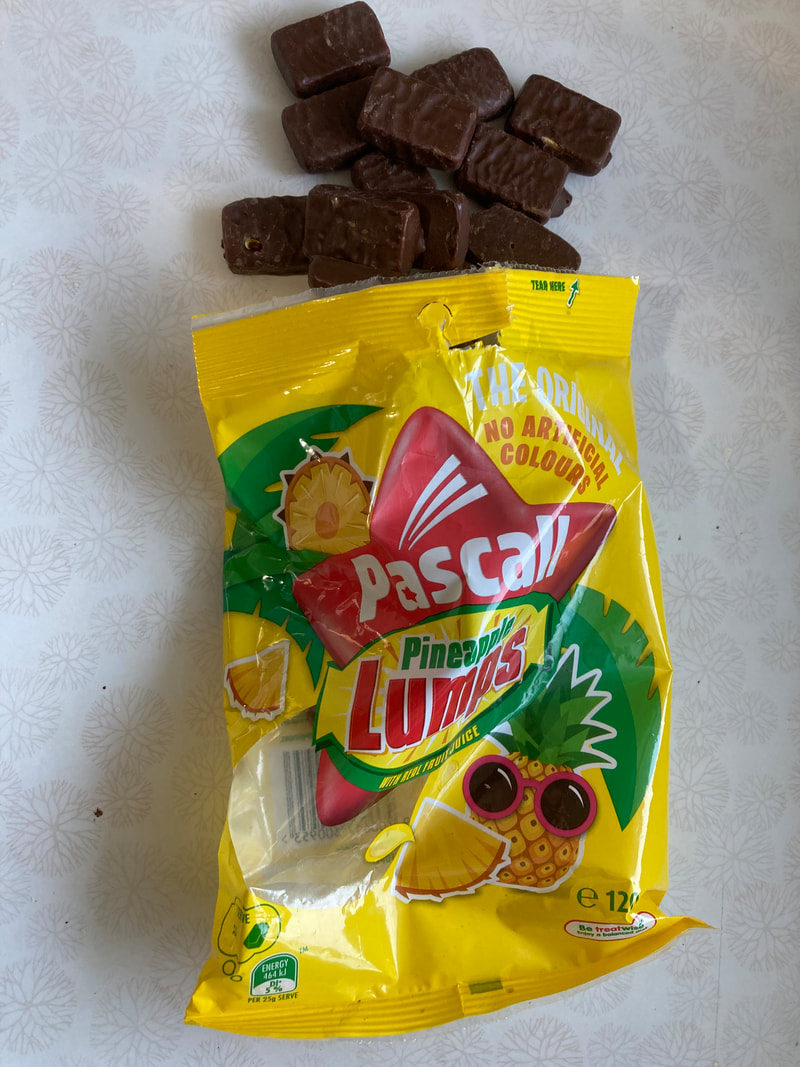 Pineapple lumps have been in the news recently but did you know they were a mistake?
A yummy chocolatey mistake. Nevertheless they have gone on to become one of the most iconic lollies New Zealand has ever known. And expats around the world often have requests of friends visiting - bring pineapple lumps. Charles Richard Diver wasn’t actually supposed to be making pineapple lumps. In 1952, he was told to find a way to use up the waste from the daily run of marshmallow. The most waste came from a type of chocolate fish with pineapple marshmallow. Diver used it to create chunks of the marshmallow and before long the forerunner of pineapple lumps were born. Diver was born November 22, 1910 in Alexandra, Otago to John and Elizabeth. He worked at the Regina Confectionery Factory as confectionery chef and floor production manager and it was during his time that the pineapple lumps were created. He was also responsible for other sweets. Pineapple lumps were introduced to the public around 1952-54. Originally they were called pineapple chunks with the name changed in the 1960’s. Cadbury’s later acquired the name and began selling them under their Pascall brand. A variety of other brands also sell similar named products. The Diver family still has a copy of Charles’ original recipe. The children remember being used as guinea pigs for the lumps and other sweets. Meanwhile Regina has also continued producing pineapple chunks themselves and now used a slightly modified version of Charles’ original recipe. And for anyone who wants to know - the Diver family kept theirs in the freezer. Charles died on May 5, 1994 aged 83 and is buried in the Oamaru Lawn Cemetery with his wife Ivy.  Agnes Bennett was determined to go to war.
A female doctor in a time when they were not common, she offered her services to the New Zealand Government at the outbreak of World War One but no one was interested in having a woman doctor. Agnes didn’t let it stop her. She sailed for Europe instead and joined the French Red Cross. But during her service in Cairo, she was offered a job in the New Zealand Medical Corp with the status and pay of Captain although she was not given a formal commission. After a year she left for England where she was appointed commanding officer of the 7th Medical Unit, Scottish Women’s Hospitals for Foreign Service. She resigned after an attack of malaria. Agnes was given several honours before she became medical officer on troop-ships then worked in the Royal Infirmary, Glasgow, during the 1918 influenza epidemic. Agnes was born on June 24, 1872, to Wiliam Christopher Bennett and his wife Agnes Amelia in Neutral Bay, Sydney, Australia. They took her (and their six others) to England for schooling, returning to Australia after her mother died of smallpox. After initially gaining qualifications in geology and biology, Agnes went to Scotland to study medicine. Working however was not easy. Back in Australia she had to take a job in an asylum before the opportunity to work with Dr Isabella Watson in Wellington came up. In 1908 she became medical officer at St Helen’s maternity hospital where she began an interest in obstetrics and a particular interest in breastfeeding which was the basis of her thesis for her doctor’s degree. A champion of education for women, she fought publicly with Dr Truby King and others who did not think mothers needed higher education. Back in Wellington after the war, she focussed on women’s health, particularly the mortality rates of mothers, newborns and stillbirths. She strictly enforced good antenatal care. In 1936, Agnes “retired” then went on to do a stint with the flying doctor service in Queensland in 1939. But the Second World War saw her organising the Women’s War Service Auxiliary and in 1940 she sailed for England to continue working as a medical officer. She returned to New Zealand in 1942 before answering the call for a doctor on the Chatham Islands in 1947 as the resident doctor was ill. Aged 75 she administered to the ill on the islands, in winter, often on horseback. Agnes received an OBE in recognition of her long life of work. Described as highly energetic and organised, she is responsible for a huge improvement in the care of mothers and infants during her day. Agnes never married and died on November 27, 1960 and was cremated at Karori. |
AuthorFran and Deb's updates Archives
September 2025
Categories |
 RSS Feed