 At the aptly named Deadman’s Creek lay a body.
It lay partly submerged in the icy waters of the small river discovered by a Mr McKenzie on September 2, 1867 Robert Wilson was the murderer of James (Jem) Lennox. He had also been his friend. Both had come to the West Coast in July that year along with others. And like them they had been after gold. They came on the Rifleman from Manukau Harbour. The men had become friends and intended to prospect at Deadman’s Creek. But a few days later Wilson turned up in Westport and said Lennox had gone off to look for gold elsewhere. Wilson joined another prospecting party and headed out again. After the body of Lennox was discovered, a search of the area turned up several items of Lennox’s. Nearby was clothing and a prayer book and a short way off a bloodstained tent. Lennox had been bashed over the head several times. Likely with an axe. Lennox had been born in County Cavan, Ireland. He was by trade a musician. He had arrived in New Zealand from Queensland, arriving in Auckland before going to Whanganui where he worked for a while. Wilson had boasted to several people that he had £30 on him, a great deal of money back then and was found with several pieces of Lennox’s clothing. He told police Lennox had gone off with others and he did not know where he was. A jury found Wilson guilty in an hour, on circumstantial evidence and sentenced to death. A petition was raised raising the possibility that the body found was not Lennox as no one who knew him had seen the body. But on December 20, Wilson was hanged only saying that he had nothing to say. He had never admitted the killing. Wilson was one of the very few people buried in the ground at the Nelson jail. And Deadman’s Creek had the name long before then - like a number of other landmarks in Otago - most often named because of miners who had died until tragic circumstances. Photo by Rahul Dey.
0 Comments
 Would it be possible for a man to have three wives, all living in close-proximity, without getting himself into very hot water?
Dunedin man Thomas Patrick Flynn gave it a good bash, but ended up being living proof that it cannot be successfully pulled off. Flynn, born in Launceston, Tasmania in about 1862 to John Flynn and Jane (nee Gilway), arrived in New Zealand in about 1895 working as a labourer in the Arrowtown area. He lived a reasonably unremarkable life for the next 13 years – apart from his penchant for matrimony – until he was arrested in Dunedin in December 1908 and charged with two counts of bigamy. Dunedin media took pains to point out that Flynn, who they described as balding, middle-aged and somewhat unattractive, was hardly a catch. The arrest may have come as a bit of a relief to Flynn, but he did not get away without the pain of all three women being together in the same place – to give evidence against him in court. Flynn’s first wife Margaret Ann Hay told the packed courthouse that she married him on 15 November 1899 in the Roman Catholic Church in Arrowtown. They lived together for about three years having four children, only one of whom survived. In about 1903, Flynn went to Canterbury and then Dunedin but he and Margaret remained in contact, obviously “close contact” as in November 1904 she moved to Dunedin with their two-month-old son. Margaret was suffering from ill-health so did not move in with him for six months. Unbeknown to Margaret, 10 months earlier her husband had become someone else’s husband too. Giving Flynn some credit, he did fess up to Margaret and told her that he had got the other woman pregnant and married her too. Margaret forgave him and they moved back in and were still together at the time of his arrest. Flynn’s second wife then took the stand. Mary Ann Pearson Skinner told the court she had married Flynn on 4 February 1904 at the Knox Church Dunedin. He had told her he was single. Mary Ann said she had met “Tom Flynn” about two years before their marriage. The couple had a daughter in 1904 and lived together for about eight months until she found out about the first wife and gave him his marching orders. She said Flynn claimed he had lied about being married because he wasn’t happy with his first wife. Flynn’s third wife Isabella Grant told the court she had married Flynn, (who was then using his mother’s maiden name of Gilway) on 3 November 1908 at the Dunedin Registry Office. She knew him as Thomas Henry Gilway. Isabella said she had met Flynn in 1907 and he too told her he was single – despite still living with Margaret. After their wedding, she became pregnant to him and in 1908 gave birth to a daughter. The evidence against Flynn was overwhelming and at his next appearance in court on 7 January 1909 he pleaded guilty to two charges of bigamy and two weeks later, possibly to his great relief, he was sentenced to five years in prison. Thomas Flynn died in Dunedin on 6 November 1935 aged 73 years. He is buried at Anderson’s Bay Cemetery. In death he is alone, as he is the sole occupant of the plot. Title from the Evening Star and photo from Julian Hochgesang.  Did you know New Zealand can lay claim to a middleweight, heavyweight and light heavyweight world boxing champion?
And that it was all one man? Bob Fitzsimmon’s story could be claimed by Great Britain (where he was born) or Australia ( where he began to fight professionally) but he began his career in New Zealand - in fact, in Timaru to be precise. Robert Fitzsimmons was born to policeman James and his wife Jane (nee Strongman) in Helston, Cornwall on May 26, 1863. The couple had had 12 children of which Bob, as he was known, was the youngest. His parents brought their five youngest children to New Zealand on the Adamant in 1873 and after landing in Lyttelton ended up in Timaru. James set up a blacksmith’s forge and after finishing school Bob joined the business where the hard heavy work at the forge was instrumental in the development of his arms and shoulders that lead to the devastating punch that would be his trademark. In 1880, famous British pugilist Jem Mace visited New Zealand and organised a boxing tournament. Bob entered and won - knocking out four opponents to do so. Then he won again the next year and began a professional career in Australia from 1883 to 1890 before heading to America. He won his first three fights before he was matched with Jack Dempsey for the world middleweight championship in New Orleans in 1891. He won by knocking the champion out in the 13th round. Bob fought in different weight classes - finding some more difficult than others - until in March 1897 he knocked out James J Corbett to become heavyweight champion of the world. In fact he became the lightest to ever hold that title. He lost the title on his first defence but in 1903 took the light-heavyweight championship of the world from George Gardner - winning on points and became the first boxer to hold titles at three weights. Bob married four times, Louisa Johns who he married in 1885 and had a son with. After their divorce he married Rose Samnell and had three children. After Rose died in 1903, he married Julia May Gifford which also ended in divorce. He married Temo Ziller in 1915. He died on October 22, 1917 in Chicago, Illinois. He is buried at the Graceland Cemetery. Bob’s official record was 61 wins, 57 by knockout, 8 losses and four draws.  At the turn of the last century, almost everyone in the small Taranaki town of Waitara knew there was something a bit off, dangerous even, with their local GP.
Despite his amiable surname, Dr. Edward Jonathan Goode appeared to be quite the opposite. His acquaintances, for he had no real friends, his patients, local town councillors, the mayor, even police officers described him as being morose, paranoid, angry and prone to bouts of alcoholic binges. Some even knew that he was frequently armed with a pistol, but inexplicably they all turned a blind eye – until he shot a young woman to death. Born in Ireland in 1848 to civil engineer William Goode and Rebecca (nee Rainsbury), Dr. Goode was indeed a man with impressive qualifications. He had graduated from the Royal College of Surgeons in Ireland in 1885 (the same year he married Jane Wall), was a member of the Royal College of Physicians of Ireland and had served time as a ship’s surgeon aboard the RMS John Elder. In 1897 Dr Goode and Jane settled in Waitara. He quickly became part of the community providing medical aid to his patients, was appointed official doctor of the local Forester’s Lodge, provided evidence in coronial hearings and served as a vice president of the Taranaki Rowing Regatta Committee. But out of the public eye, Dr Goode’s problems with alcohol were getting worse and this was increasing his paranoia. In 1902 he was fined £1 for illegally taking a voting ballot paper out of the polling station because he believed the registrar was trying to spy on him and find out who he voted for. He also had disputes with local shopkeepers, who he accused of spying on him, ranted and mumbled to himself about being persecuted, often ministered to his patients while drunk, pulled out his pistol and fired it into the ground during an argument and blamed everyone else for his lack of success as a doctor. But no one did anything about it. Then on 14 December 1908, after drinking for what was believed to have been five days solid, Dr Goode walked into the home of his 36-year-old neighbour Mary Ellen Klenner and demanded she have sex with him. When Mrs Klenner refused, he shot her twice, once in the jaw and once in the neck. He then turned the gun on himself shooting himself in the jaw. Mrs Klenner lingered for two days, long enough to provide a statement to police, before she died on 16 December. Dr Goode was arrested and his wound treated. He was charged with Mrs Klenner’s murder and at his trial a long list of townsfolk finally broke their silence about their grave concerns over Dr Goode’s behaviour. Dr Goode was found not guilty by reason of insanity and sent to an asylum in Auckland. Records do not show if he was ever released, but he died on 13 March 1936 and is buried at Waikaraka Cemetery with his wife Jane, who died in 1919. Mary Ellen Klenner is buried in Waitara Cemetery. Her headstone reads: Thy Will Be Done. Picture: The Free Lance, 10 April 1909, pg.5  William Sanson Collier’s death wasn’t registered until 1920, 23 years after his death. Because he was missing all that time.
William had been living in Rongokaka near Eketahuna in February 1897 with his son ,who had gone away. William was never heard from again. A search was mounted and there was some thought he might have gone to Otaki to another son. But after a while police seemed to come to the view he might have harmed himself. He had been in good health and for a while search parties combed the area off and on for weeks but there was no sign of William. Slowly hope faded and William was consigned to the pile of missing people to which no one has the answer. William was born in Dorset, England to George and Elizabeth Collier in 1832.. The pair, and their six children came to New Zealand aboard the Lady Nugent in 1841. George and the family settled in Karori and he was, along with others, a trustee of the old chapel there built in 1844. It is now the library. Collier Avenue is named after this early settler family. In 1920, a resident of Rongokaka discovered a boot in the bush on his property. It was on top of a ridge and on further investigation a skeleton was also found. Along with the skeleton was a pocket knife, the other boot, and a hat, all in a pretty good state considering they had been out there for more than two decades. It was from the items found that William was able to be identified. An inquest was held and the finding was death by starvation and exposure after losing his way in the bush. Only then was his death registered. William had been married to Georgina Swift. She had died in 1889 and was buried in Greytown. William is buried in the Mangaoranga Eketahuna Cemetery.  Do you love the perfumed sweet feijoa or does the smell make you gag?
How many remember the heavy fruit laden trees in everyone’s backyards? Or that it was sometimes called the fruit salad tree? Because without Hayward Wright we would be missing many of the yummy fruit we love so much, in particular, kiwifruit and feijoa. Wright’s contribution to New Zealand has been immeasurable. It was at his nursery in Avondale, Auckland that many of the fruits were tried for the first time before being made available to the public. Wright was known as a grumpy man, but he was a horticultural genius. Kiwifruit had come into the country as early as 1904 and were known as Chinese gooseberries. The first seeds were brought in by Whanganui Girls College head Isabel Fraser who gave the seeds to a farmer, Alexander Allison who grew it here for the first time. They began to increase in popularity but it wasn’t until Wright began experimenting that a stable solid vine with large fruit was developed for commercial use. It ended up becoming one of our biggest export earners. In the 1920’s, Wright began working with feijoa. It goes by quite a few other names including pineapple guava but feijoa is the correct one. The fruit had first been discovered in 1815 by German explorer Freidrich Sellow. But it was many years later in 1890 that it was taken to Europe and named after Brazilian botanist Joam de Silva Feijo. Wright began advertising the plants through his catalogue. “Its fruit… is destined to become one of the very best for jams or jellies. It has a flavour quite its own, which can only be described as delicious.” Most of us know it now because of heavily fruit laden trees in backyards, yielding up its crop in late summer and early autumn. Hayward Reginald Wright had been born on November 25, 1873 in Northland to Ernest Edward Hamilton Wright and his wife Sarah. He came to Avondale about 1900 and ran a nursery there until his retirement in the 1940’s when he went to Tauranga. He was considered the foremost citrus nurseryman in New Zealand and helped establish many different kinds of lemons, mandarins, clementines, orange and grapefruit along with cherries. Wright died on July 14, 1959 and is buried in the Anglican Cemetery in Tauranga. 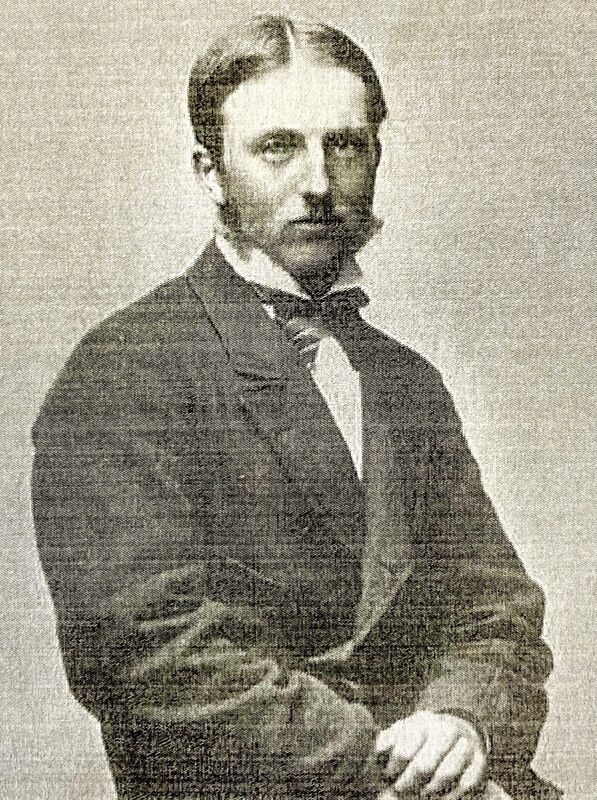 How important is rugby to New Zealand?
It’s our national sport, our obsession, a huge part of our overseas reputation and worth billions to us. The All Blacks are considered one of the most successful teams in history. And our amazing Black Ferns are hard on their heels. The honour of bringing rugby to New Zealand belongs to Charles John Monro. Monro was born on April 5, 1851, in Waimea West, near Nelson to politician Sir David Monro and his wife Dinah. Monro attended Nelson College until 1865 then in 1867 went to Christ’s College at Finchley near London. He was aiming for an army career. It was at Christ’s that he discovered rugby where he played for the second VX. Then in 1870 he organised the first rugby game ever played in New Zealand - between Nelson College and Monro’s own club at the Botanics ground at 2pm May 14, 1870. He had persuaded the Nelson Football club (who played either soccer or an Australian rules game) to change to the rugby code. About 200 curious people turned out to watch. Monro’s club side won 2-0. Monro set about establishing rugby - organising, selecting and coaching a Wellington team while playing for a Nelson team and even refereeing the first game played in the North Island in Petone on September 12, 1870. Clubs began springing up around New Zealand with a provincial union starting in Canterbury and Wellington in 1879 then the New Zealand Rugby Football Union starting in 1892. Monro travelled a lot for years, living in both England and in Europe before returning to New Zealand and marrying Helena (Lena) Beatrice Macdonald in 1885. They had five children. He bought land near Palmerston North and ironically had by then stopped playing, not retaining much interest in the game. But it wasn’t his only first. He took part in the first polo match in 1871 as well as playing golf, croquet, billiards and snooker. Monro died in Palmerston North on April 9, 1933 and was buried in Kelvin Grove Cemetery. A statue of him stands outside the Te Manawa Musuem of Art, Science and History.  On a shelf at the Waihao Forks Hotel sits a bottle of beer. Ted’s beer.
There are a couple of stories about how it came to be there but everyone agrees Ted was going to war and the beer was to be opened when he got back.. He never did and now the beer, a bottle of Natural XXXX beer from Ballins Brewery in Christchurch, sits unopened, in a glass cabinet waiting for its hero. Ted d’Auvergne was born La Tour Mollet d'Auvergne to Charles Edward (from Jersey) and Lilian d’Auvergne (from the Channel Islands) in Rangiora on February 21, 1906. He was the youngest of six children. His mother died early in his life and his father remarried. They were a farming family, having a property on Stoney Creek Road near Waihao Forks, right behind the local pub. Often called the nickname Froggie, his ancestors had been French and arrived in Akaroa in 1856. Ted was known as an athletic, humorous inventive man, who once saved the life of a woman at the local swimming hole. He damaged his hearing in a diving accident. Ted enlisted for the Second World War three days after enlistment opened on September 16, 1939. He managed to conceal his impaired hearing. He was posted to the 27th machine gun Battalion. He was invited to the pub for a leaving drink and as the train whistled he handed his beer to publican George Provan and said he’d have it when he got back. An alternative version has two mates leaving the beer for him at the pub. Ted served in North Africa and Crete and was listed as missing in June 1941 and declared dead in 1945. It was a few years later that his family heard from a Cretan partisan who told Ted’s story. Ted had been wounded in a vineyard while his platoon retreated. He was found by a young man who tried to help him but Ted died two days later. Ted was buried in the vineyard but later his body was exhumed (this was common for war dead) and buried in Suda Bay war cemetery. Two years ago a bronze statue of Ted was put outside the pub, forever waiting for the train to take him to war. He stands - or rather sits - remembering all those from the Waimate District - and New Zealand - who served. Pic by Bart ros. To all those who went, to those who came back and for those who waited - Lest We Forget.  Ebenezer Halley literally worked himself to death.
Not many doctors were willing to open a practice in the wilds of New Zealand goldfields, ministering to the roughest of men and travelling on horseback to rude huts or just a tent all over the countryside. But Ebenezer Halley did. What he saw led him to push for more comfort than the surroundings could offer. So, in 1861, he set up a cottage hospital in Tuapeka. The first major gold rush in Otago started the same year and with it came a wealth of injuries, along with men falling down and or getting blind drunk. Thousands had rushed there hoping to make a fortune. Ebenezer was born on April 25, 1836, to Rev Dr Robert and Rebekah Halley in Middlesex, England. If the name seems familiar it’s because he was the grand nephew to the man who the Halley comet is named after, Edmund Halley. A doctor for the area was badly needed. There was no chance of anyone seriously ill or injured being taken to Dunedin which was reached by a rough bridle track. As a doctor, he was called out at all hours and he willingly went, off to find his patient. And travel he did, during snowstorms or at night, up mountains and across rivers. His original horse Jordan was replaced with a horse as well known as he was, Smuggler, who had been owned by someone who liked to stop at pubs. Whenever Ebenezer went past a pub, Smuggler would stop and take some persuading to keep going. He had his hands full with patients, from frostbite to broken bones, not to mention stabbings during fights or avalanches and landslides. It was also a time of bushrangers and bandits. Ebenezer however was considered immune. He had treated everyone at one time or another. There wasn’t much he wasn’t called upon to do, even extracting teeth regularly. His dedication to his duty was what he was known for. While helping someone at the hospital in November 1875, he became infected with septic poisoning. Already exhausted by overwork he became ill himself and died on November 20, 1875 aged 39. His funeral was huge, so well respected was he, and was by far the largest Tuapeka had ever seen. He is buried in the Lawrence Cemetery, Clutha District with the words “ Erected by the numerous friends of Ebenezer Halley, MRCS in affectionate remembrance of his many kind acts during a long residence in Tuapeka district.” Picture by Marcelo Leal.  Even on holiday Sydney Smith would be involved in murder. It was like he couldn’t help himself.
Fortunately he was on the solving it side rather than the criminal side. In fact Smith might have helped solve more murders than any other New Zealander. Whether it was an arm swallowed by a shark, profiling a cat burglar (from his shoes) or determining what weapon was used, Smith did it all. Smith was born August 4, 1883, in Roxburgh, in Central Otago to James Jackson Smith and Mary Elizabeth Wilkinson. He went to school there initially before going to Victoria University where he studied before going to Edinburgh University. He spent a short time in private practice before making a fateful move - to the Edinburgh department of forensic medicine. It was here in 1913 he worked on his first big case - of two children found in the Hopetoun Quarry. Despite the bodies having been in water for 18 months, Smith was able to provide information to the police that led to the arrest of their father, Patrick Higgins. In 1914, he returned to Otago where he was chief medical officer before serving as a major in the New Zealand army during the First World War. He took up a post as a medico-legal advisor to the Egyptian government in 1917 and with it a senior lecturer in forensics at the University of Cairo. One day in 1920 he was sent a single bone found in a trench by a group of workmen. When he said it was human, police took over the site and found 14 bodies. It turned out to be two men and two women entrapping prostitutes and killing them. Smith also began working with forensic ballistics when the Commander-in-Chief of the Egyptian army was shot in the street. Two brothers were arrested and their guns provided to Smith who immediately fired them, proving one had been used. The technique is now routinely used. He returned to Edinburgh in 1927 and was hotly sought to give evidence in court cases. In 1935 he and wife Catherine Goodsir Gelenick went on a world tour intending to spend some time back in New Zealand. While passing through Australia he was sought by the police. Two fishermen had captured a shark that had gone on display at a Sydney aquarium where it promptly vomited up a human arm. Smith was able to tell the police it was not a victim of a shark attack, but of murder, the arm having been cut off after death. ( The case was so strange it was used as the plot of a TV show.) Despite there being a suspect, no one was convicted. During their last world holiday in 1955 - back to New Zealand - a retrial was put off just so he could be there. Among his cases was one where he used forensic podiatry to identify the shoes of a cat burglar and the identification of people by superimposing their photos over x-rays of their skulls. He became Sir Sydney in 1949. He and Catherine had two children, a son who became a poet and a daughter who followed her father into medicine. Smith had been a pupil of Joseph Bell - the man Arthur Conan Doyle is supposed to have based Sherlock Holmes on. Smith died at his home in Edinburgh in May, 1969 where he is buried. |
AuthorFran and Deb's updates Archives
September 2025
Categories |
 RSS Feed