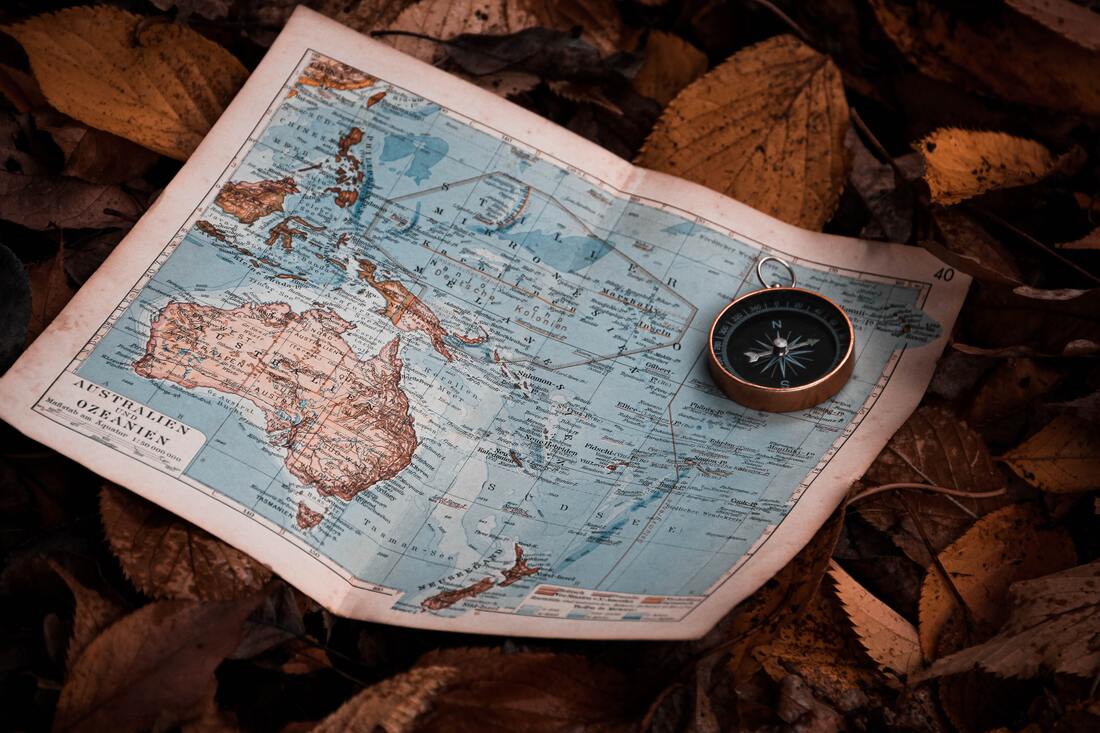
 If it wasn’t for Richard Seddon - we’d be Australian.
We’ve written about Seddon before (King Dick the lion from the Wellington zoo is named after him) but most people don’t know that it was Seddon who turned down an invitation to make New Zealand part of the pending new Commonwealth of Australia. Seddon is a towering political figure in New Zealand. His importance to our history can’t be overlooked. He championed old age pensions, liquor licensing, opposed women’s suffrage - then changed his mind and supported it. Born on June 22, 1845 in Lancashire, England, to Thomas and Jane Seddon. Both were teachers. Ironic because Seddon wasn’t a good student, ending up working on his grandfather’s farm from about 12-years-old. He also worked at a foundry and engineers but contracted smallpox and lost his job. In 1863 he worked his passage to Melbourne and worked at railway workshops before trying his hand at prospecting. When that failed he returned to the workshops. When he became engaged to Louisa Jane Spotswood her father wasn’t having it, at least until he improved his financial status. So he sailed for New Zealand where he tried gold digging again. He made enough to return to Melbourne and marry Louisa who had waited three years for him, before returning with him to New Zealand. His political career began by going on to the Arahura Road Board then becoming its chairman. After that it was the Westland County Council, then he became the first mayor of Kumara before being elected in Hokitika. His political career has been well documented. He was considered boisterous, loud and a bit boastful while underneath he suffered from depression and anxiety. It was his profound knowledge of Parliamentary procedure that led him to win the Premiership in 1893. In 1900 Seddon established a Royal Commission of inquiry to determine if New Zealand should become a state of the Commonwealth of Australia.which had been proposed since 1895. He was playing for time. Seddon was a staunch imperialist and also believed in a strong Pacific - but not that New Zealand should become Australian. The 10 man royal commission eventually returned with a unanimous no. Seddon then dropped the word Premier and began calling himself Prime Minister. He would be one of New Zealand’s longest serving. He remained in power until his death in 1906 - when he was returning from a trip to Australia and suffered a heart attack on board the Oswestry Grange and died at sea. Seddon is buried at the Bolton St Cemetery where a large memorial is dedicated to him (and family). Pic from Denise Jans.
0 Comments
 Kiwi Icon: Radio’s first lady
Maud Ruby Basham was known to a whole generation of New Zealanders - by her greeting - Good morning, good morning, good morning everyone - but more so by her air name - Aunt Daisy. Born in London on August 30, 1879, her parents Robert and Eliza Taylor christened her Maud - but she was always known as Daisy. Her father died when she was three and her widowed mother and she came to New Zealand in 1891, coming to New Plymouth where she went to New Plymouth High School. As well as singing lessons she took part in local concerts, and sang in the church choir, honing the voice that would become one of her trademarks. She also trained as a teacher and trained at a number of local schools. On June 4, 1904 she married Frederick Basham - a civil engineer - and they had three children. In 1922, during a visit to Wellington, Daisy accepted an invitation to sing on an experimental radio station (the first public broadcast had only been the year before). But she did not begin broadcasting until 1928. During the depression, with her husband on half pay, he encouraged her to apply for a position singing on Auckland station iYA. She wrote and sang for a programme on the lives of great composers. Then in 1930 - with the presenter of the children’s programme away - she took over and for the first time was known as Aunt Daisy. It didn’t last - she was made redundant and immediately went to a private radio station in Wellington. But after a month she was back in Auckland at 1ZR and had the responsibility of opening each day's transmission. Over the years she headed different programmes and gathered fans. She moved back to Wellington in 1937 to the headquarters of the newly stated operated ZB network, (the forerunner of Newstalk ZB). Her programme was astonishingly simple. Aunt Daisy talked for half an hour. About anything she liked. She was a hell of a talker - getting up to between 175-202 words an hour! Aunt Daisy often mentioned products (she was paid to promote them) and once she did it was not unknown for that product to promptly sell out. Her theme song was the popular Daisy, Daisy, give me your answer do. Along with her show were the Aunt Daisy cook books along with books on handy hints and a world tour. (Our pic is an Aunty Daisy cookbook in Deb’s collection.) Aunt Daisy was recognised as the first lady of New Zealand radio and received an MBE. She was still broadcasting until only a few days before her death on July 14, 1963. She was cremated at Karori Cemetery. 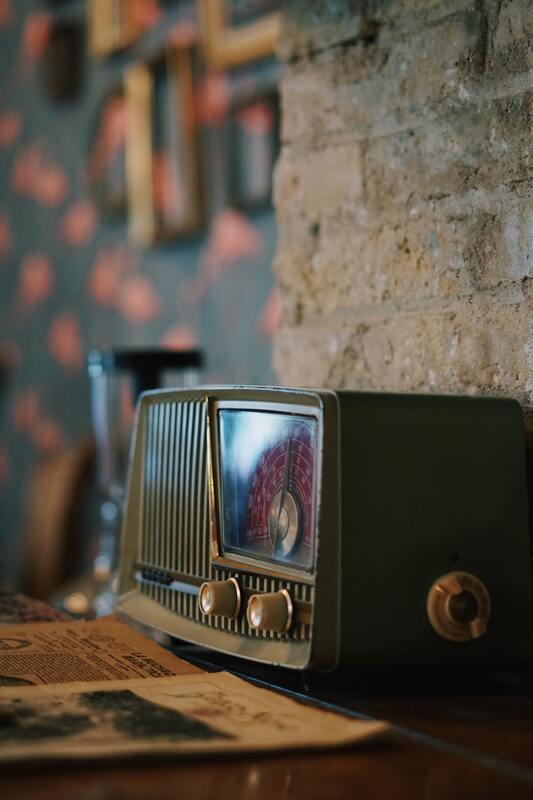 The radio man
Robert Jack’s voice on the radio was the first time anyone in New Zealand had heard a local radio programme. A professor of physics at Otago University, he wanted to unite and educate communities. Jack was born on November 4, 1877, in Scotland, the son of schoolmaster Hugh Jack and wife Janet. He received a first class education then went on to study in France and Germany, specialising in magnetic fields. Then after four years at Belfast University, teaching as a lecturer in physics Jack came to New Zealand in 1914 as a professor of physics at Otago. He was to teach there for 33 years. Open public lectures were common at the time, and Jack took full advantage - speaking on many aspects of physics. Jack became fascinated by radio. Radio signals were broadcast in New Zealand - but there was no voice or music and Jack developed the technology to allow it. During a visit to Britain he researched the latest naval radio communications and talked about how the equipment with his brother Hugh - an electrical engineer, returning to New Zealand with high-voltage direct current generators and two Edison valves that would create the core of his radio transmitter. Overseas a handful of radio stations had begun and Jack and his team had put together a small transmitter. On May 21, 1921 they were able to transmit voice and music within the laboratory and on November 17, Jack and the team broadcast New Zealand’s first radio programme. The first song ever broadcast was Hello My Dearie. He continued the radio programme two nights a week - a mix of news, live music and recorded music and it was heard all over New Zealand. One of his contributors was his wife, Isabella Finlay Manson, who he had married on May 22, 1927 when she was matron of Knox College. Nearly a year after the first broadcast began regularly and the station - now called Radio Dunedin is still on the air and is the fifth oldest station in the world. Jack also experimented with television transmission and during the Second World War he did governmental research on infra-red radiation. He died on May 1, 1957 and is buried at the Anderson’s Bay cemetery. His historic radio transmitter is at the Otago Settlers Musuem. Picture from Nacho-Carretero-Molero.  Wellington’s Cable Car has turned 121. The little red trams that trundle between Lambton Quay and Kelburn rise 394 feet and are considered an icon of the city.
The man responsible is James Fulton. At the end of the 19th century, Wellington was growing rapidly. Its hilly terrain meant that any land that stood still for five minutes was being built on. With new plans for residential development in Kelburn, a cable car was proposed and some of its prominent residents founded the Kelburne (that’s how it was spelled) and Karori Tramway Company. Land was bought with the intention of linking it to a new street, now called Upland Road. Permission was granted by the city council in 1898, but on the condition that it had the option to purchase the cable car at a later date. Engineer James Fulton was chosen to design the system. He selected the route and the two car system - one going up as one was coming down - and construction started in 1899. The line opened in December 1902 and people queued (just like they do now) to use it. It reached one million passengers annually by 1912. But in the 1940’s there was increased competition from buses and there was a legal dispute between the council-run buses and the privately run cable car company which ended with the council buying the cable car in 1947. As the old system began to wear out, there were complainants about it and an upgrade was started in 1978. It was completely refurbished with new lines and new cars. A number of other upgrades have since taken place to replace the electric drive and control system and upgrading the terminals. James Edward Fulton was born in Dunedin on December 11, 1854, the son of James and Catherine. He went into the Public Works Department in Wellington as a cadet. After years of engineering and survey work, he was appointed resident engineer on the Wellington to Palmerston North train line - the Waikanae to Longburn section. After going into private practice he designed the cable car, the first Kelburn viaduct and Ballance bridge in the Manawatu Gorge. He had married Charlotte Fredericka Budd in 1885. He retired in 1926 and died December 6, 1928 and is buried in the Karori Cemetery. In 1909, the only death recorded (there have been several injuries) from the cable car was for John William Wakelin who fell on to the concrete blocks from the still moving car, sustaining head injuries. He is buried in Woolston Cemetery in Christchurch. Picture from Te Papa’s collection 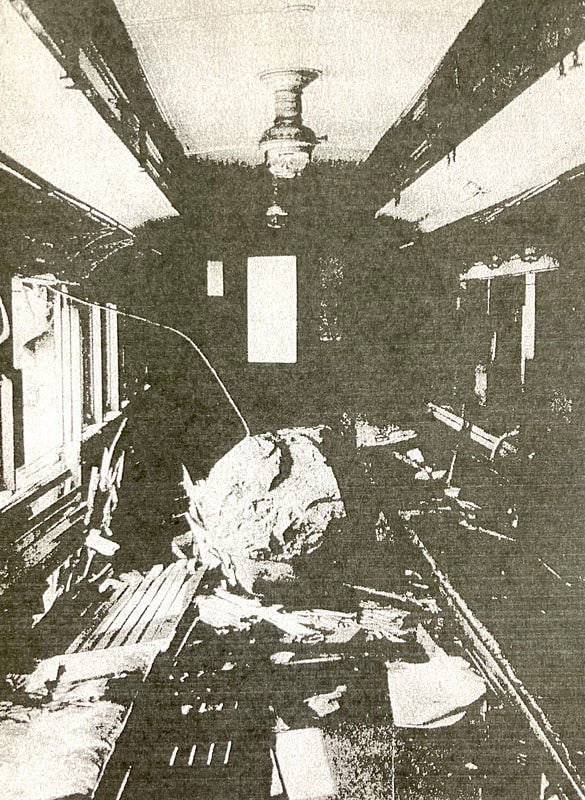 The killer boulder
Alice Power and her friend Margaret Moran were enjoying their train ride on the Napier Express on February 20, 1911. The passenger train ran regularly between Hawke’s Bay and Wellington and was well used. Before the passenger train there had been a much rougher train for passengers combined with freight. Twenty-five-old Alice was a tailoress up from Greymouth visiting her friend and on their way back to Hawke’s Bay from Wellington. As the train was heading down the incline into Paekakariki there was a massive crash. A nearly half tonne boulder had been dislodged from the top of the hill near a quarry and come rolling down, smashing through the carriage that Alice and Margaret were in, along with 20 others. The driver had seen the boulder break free and fall and had tried to stop but was unable to stop in time. Unable to stop where it was, the train rolled on to Paekakariki station where it was discovered that several people were badly injured and Alice was dead, her skull fractured by the force of the blow. Alice was born to Patrick and Sarah who had six sons and four daughters. Patrick had been born in Ireland, travelling to Victoria in Australia before coming to New Zealand. He was a well known wrestler and footballer in his youth. He was a quarryman and worked for the firm that constructed roads about Greymouth. Alice’s body was returned to Greymouth by boat where a large crowd of her friends and family escorted her to her final resting place, at the Karoro Cemetery. Within four years she was joined by her mother and father.  The plague and Dr Mason
When John Malcolm Mason said there was plague in Auckland no one wanted to believe it. After all, bubonic or black plague terrified people. On April 19, 1900, a sick rat was noticed on the wharf in Auckland. It had the plague. Then a second rat was found. Then more. Auckland was terrified. And other places, like Napier opted to stop some ships bringing goods in. Two men were sent to investigate. One was bacteriologist Mason. The other was a veterinarian John Anderson Gilruth. News paper headlines went back and forth between panic and denial. Mason and Gilruth heavily criticised the conditions around Auckland, a substandard water supply, uncollected rubbish and disposal and old buildings that needed to be condemned. Twenty one cases of plague were recorded. It seems small but the whole population was about 12,000. Mason was born on August 22, 1864, in Arbroath, Scotland to Thomas and Sarah Mason. He studied medicine before becoming a ship’s surgeon, then settling briefly in Portsmouth before going to Blyth in Northumberland. He married Kate Susan Jenkins and studied public health before training for the legal Bar. His health brought him to New Zealand in 1895 where he set up a general practice in Otaki. As a skilled bacteriologist and one of only a handful of doctors in New Zealand with a public health diploma, his first major triumph was to have the government set up a state laboratory for testing - along with Gilruth. With the threat of plague he championed the first Public Health Act, which set out the first national department of health and Mason became the first chief health office, a role that became the one we associate with Sir Ashley Bloomfield today. In his first annual report to the government he outlined his aims especially vaccination against smallpox, a fight against tuberculosis (leading to the establishment of sanatoriums) and a focus on Maori health. He was also editor of the New Zealand Medical Journal. In a case of irony, Mason himself contracted diphtheria and spent months recovering which led to an extended trip around North America and Europe to study advances in public health. He promoted the Quackery Prevention Act 1908 which made it illegal to publish a false statement about the efficiency of medicines. Mason acted as chief sanitary officer of the Wellington Military District and had the rank of lieutenant colonel. He served as a medical officer aboard the Marama but was invalided out. Mason was replaced as chief health officer in 1909 when the number of government employees were reduced to cut costs. He was appointed to special duties to London as a consulting medical officer. There he finally completed his legal studies and was called to the Bar in 1910 before returning to New Zealand to set up a private medical practise in Wellington and Lower Hutt. Mason died in Lower Hutt on May 9, 1924 after spending a year fighting cancer. He is buried at the Otaki Public Cemetery.  For seven years Irish immigrant William Sheehan thought he had got away with a grisly triple murder – after all he had moved halfway around the world to New Zealand and his crime had gone undiscovered.
Sheehan’s story begins in Castletownroache, Cork in 1877 when the then 32-year-old’s widowed mother Catherine decided it was time for him to marry and take over the running of the family’s 60-acre-farm. Catherine had planned a £300 pound dowry from the bride’s family for her son’s nuptials. This would provide enough money for her and her two youngest children Thomas and Hanna to have a comfortable future. Her plans were foiled, however, when Sheehan fell in love with Mary Anne Browne, the daughter of wealthy farmer James Browne. James refused Catherine’s financial demand, instead offering only £170 - so she called off the marriage. But for Sheehan the marriage was not a matter of economics – it was true love. The only solution to his problem was that his mother must die. This, however, came with a problem (two in fact) it would leave him responsible for the care his younger brother and sister, so they had to go too. On 22 October 1877 Sheehan strangled his mother, brother, and sister. Later that day, possibly with the help of one of Mary-Anne’s brothers, he loaded the bodies into a cart, rode to a neighbouring farm and disposed of them down a well. Less than a month later, on 6 November, Sheehan married Mary-Anne. Sheehan told friends and neighbours his missing relatives had simply gone to America to live. The Sheehans settled down to life on the farm. In the subsequent years Mary-Anne gave birth to two children – and, to Sheehan’s relief, no one found the bodies. Things began to go wrong at the end of 1882 when, amidst a financial crisis in Ireland, the Sheehans were evicted from their farm. All-but penniless, they sailed to New Zealand aboard the Doric landing in Auckland in about August 1883. For just over a year they lived Pakaraka in the Bay of Islands, where Sheehan worked on a farm. But then, on September 1, 1884, the bodies, now just skeletons, were discovered. Irish police put two and two together and came up with the missing widow Sheehan and her two children. The hunt for William Sheehan was on. Authorities in New Zealand were contacted, and the case was given to Auckland Detective Patrick Herbert and Detective Walker, who realised that the man the Irish police were looking for was the same William Sheehan who had arrived on the Doric. Unable to arrest Sheehan for a crime committed in Ireland, they made their way to Pakaraka and set up tents pretending to be gumdiggers so they could keep him under observation. When the Sheehans moved to Auckland later that year, Detective Walker followed them, at times hiding in the basement of the house in John Street, Ponsonby where they lived for a while. Then, just before Christmas 1884, word came through from Ireland that an arrest could be made. The detectives confronted Sheehan near Waikomiti (now Waikumete) railway station. He admitted he was the right William Sheehan but denied the murders. Sheehan was returned to Ireland early in 1885, followed shortly after by Mary-Anne and their three children, one of whom had been born in New Zealand. A guilty verdict was returned at Sheenhan’s trial for the triple murders and at 8am on January 20, 1886 he was hanged at the Cork County Gaol (pictured). He is buried in unhallowed ground within the prison confines. Picture: Cork City Council.  Every year we take a few seemingly ordinary people and tell their story. Genealogy Investigations believes there is a story behind every grave. And we haven’t been proved wrong yet.
So for Valentine’s Day (yes we know it was yesterday) we thought we would pick a couple with an extraordinary track record and tell their story. On Christmas Day, 1936, George Henry Powley and Sarah Powley celebrated their 70th wedding anniversary. Seventy is an amazing number of years to be married and few couples reach that milestone. George had been born in 1839 in Hobart in Australia to his soldier father Thomas and mother Harriet who had nine other children. He came to New Zealand as a young child with his family on the barque Fanny Fisher. George joined the Navy at the age of 15 and went to sea on the HMS Niger. One of his duties had him fighting West African slavers off the coast of America. He was eventually invalided out in 1866. Later he travelled to England on a warship but had nowhere to stay when he got there, so the ship’s carpenter John Tooke gave him room. George found a job with a railway company. It was there he met Sarah Tooke (John’s daughter) and married her at the Lambeth chapel in London on December 25, 1866, Sarah was 19. They left virtually immediately, spending their honeymoon at sea as they came to New Zealand in 1867 in the first clipper ship made from iron, appropriately named Ironsides. Once back, he ran through a number of jobs, a coastal seaman and storekeeper before being one of the first from Auckland to head to Thames after gold was found. But it wasn’t for him and by 1878 he and Sarah were living in Dargaville where George was a hotel keeper. In 1882 George bought a small factory and in 1889 opened the Cambridge Shirt Factory. He built large new premises and modernised the factory. It would be his business until he sold it and retired in 1902. Now called Cambridge Clothing, it is still in business today. During his life he volunteered with the Naval Artillery, was a justice of the peace, a member of the Auckland City Council and a freemason. Just five months after their 70th wedding anniversary George died and is buried in the Waikumete Cemetery. Sarah lived until she was 101, remaining active and vital nearly her whole life. She died in 1949 as one of the oldest citizens of Auckland at the time. They had no children. There were several stories about their milestones but no one thought to ask them what the secret of their long lives or marriage was so we are still in the dark. Picture by Sandy Millar.  There has been a Hannah’s on Wellington’s Lambton Quay as long as anyone can remember - and much much longer than that.
The first store was opened there in 1870. It has changed position several times and at one point there were two factories there as well. But that has come to an end with the closure of the Lambton Quay store last week. While not all the stores are closing - there are others around the country - the closure of that store would have been a sad day for Robert Hannah - who came to New Zealand in 1866 from Ireland. Robert Hanna - he added an H to the end of his name after losing a bet with another man with the same last name - was born in County Antrim in Ireland on September 10, 1846, to John and Mary Hanna and had been working as a bootmaker. But after an argument with his father he headed to Australia. Instead he ended up in New Zealand arriving in Hokitika on the SS Claud Hamilton where he may have been attracted by the ongoing gold rush. He opened his first shop in Charleston in 1868. But as the gold rush declined and people left the area, he knew he would have to move. Originally considering going to America, he ended up in Wellington and the store on Lambton Quay was opened. Business boomed and he opened further stores and factories. By 1897 there were 10 stores around the country. By 1893, Hannah’s factory employed more than 250 people. At its peak, the factory was capable of producing 6,000 pairs of shoes a week. Robert had married Hannah Ferguson in 1975 who also came from Ireland. They had eight children. They lived in Boulcott St, and Antrim House was the third of their houses in the same street. Specially built in 1904 it had modern (for the times) gas, electric lights and bathrooms inside. Robert died on June 14, 1930, from pneumonia after a visit to the farm the couple had kept in Lower Hutt. He was known as a shrewd businessman. After his death Antrim House was used as a hostel and a private hotel, and was only just saved from a fire in 1940. In 1979 it was gifted to Heritage New Zealand and is now their headquarters. It is now a gorgeous house with a lawn and garden in between office buildings. His legacy was the number of stores - a portion of Leeds St in Wellington is now called Hannah’s laneway - after the factory that had been in Leeds St. And the no doubt thousands - if not millions - of shoes. Two of the stores in Hawke’s Bay, run by Robert’s brother William, were destroyed in the 1931 earthquake. Robert is buried in the Bolton St Cemetery with his wife who died two years before him. 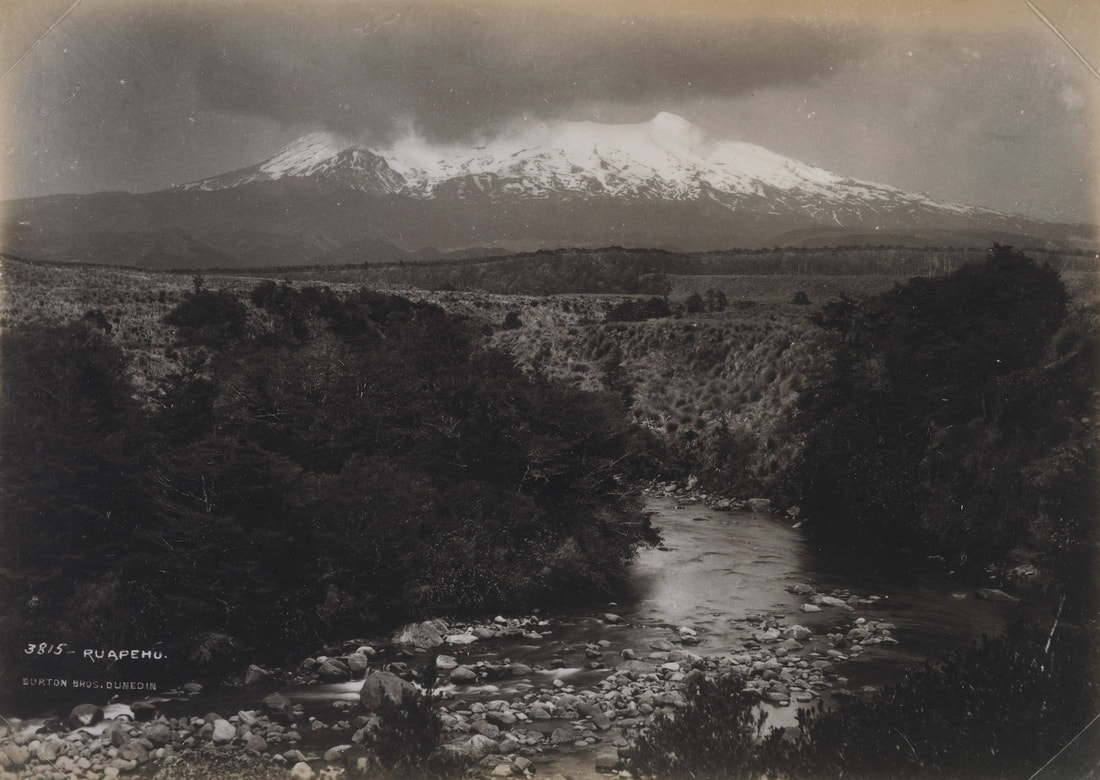 The man of the Chateau.
Larger than life hotelier Rodolph Lysaght Wigley would be upset to find his pride and joy, the Chateau Tongariro, has closed for good. The Chateau closed at the weekend after concern about earthquake stability, bringing to an end nearly 100 years of legacy. Wigley, or Wigs as he was often called, was considered a pioneer of tourism in New Zealand. A big man with an appetite for adventure - he was the perfect embodiment of the outdoor New Zealand lifestyle we have come to associate with tourism here. Born October 21, 1881 to sheepfarmer Thomas Henry Wigley and his second wife Annie Caroline Lysaght. Wigs attended Christ’s College then studied electrical engineering by correspondence. Which must have taken quite some time back then. It led him to create a workshop where he built his own steam engine. He liked electricity and being the practical joker would wire up doorknobs to give people mild shocks. After selling out of his family’s business he teamed up with Samuel Thornley to form a transport company specialising in traction engine haulage. Wigs made the first automobile trip to the Hermitage in Mt Cook in a De Dion Bouton he had purchased. Fatefully, it showed him the Mt Cook scenery and he became convinced of the tourism opportunities. He arranged to buy service cars and the Mount Cook Motor Service began. He is thought to have run the first bus business in Australasia and the first to deliver mail. Ultimately the business went bankrupt but Wigs took over the assets and restarted it. He also wanted to lease the Hermitage from the government. He considered it badly run and wanted it to be open all year round. He got the lease in 1922 and he began work, enlarging it, putting in a telegraph link, building tramping huts and catering for sportsmen. He also employed two experienced mountain guides with whom he made the first winter ascent of Mt Cook. In 1929 he formed the Tongariro Tourist Company as a subsidiary of the Mount Cook one and took on the building of the Chateau on land gifted to the people of New Zealand by Ngāti Tūwharetoa paramount chief Horonuku Te Heuheu Tūkino in 1887. He employed architect Herbert Hall to design it. It opened in August 1929 even though it was unfurnished and there was money owed on it. It had a modern boiling water tanks, panoramic window views and custom made furniture. But with money owing to the construction company, Fletchers, the Tongariro Tourist Company was put into receivership and the Chateau ended up taken over by the National Park Board who gave it to the Department of Tourist and Health Resorts, which owned and ran the hotel for the next 26 years. Wigs moved on, forming a rental car company - the first in New Zealand and then the New Zealand Aero Transport Company. He continued in business making the Mount Cook Group Limited one of the largest tourist companies in the country. He had married Jessie Christie Grant in 19210 and they had six children with two of his sons being involved in the company. Rudolph Wigley died on April 27, 1946 and is buried in the Timaru Cemetery. Photo from Te Papa's Collection |
AuthorFran and Deb's updates Archives
September 2025
Categories |
 RSS Feed