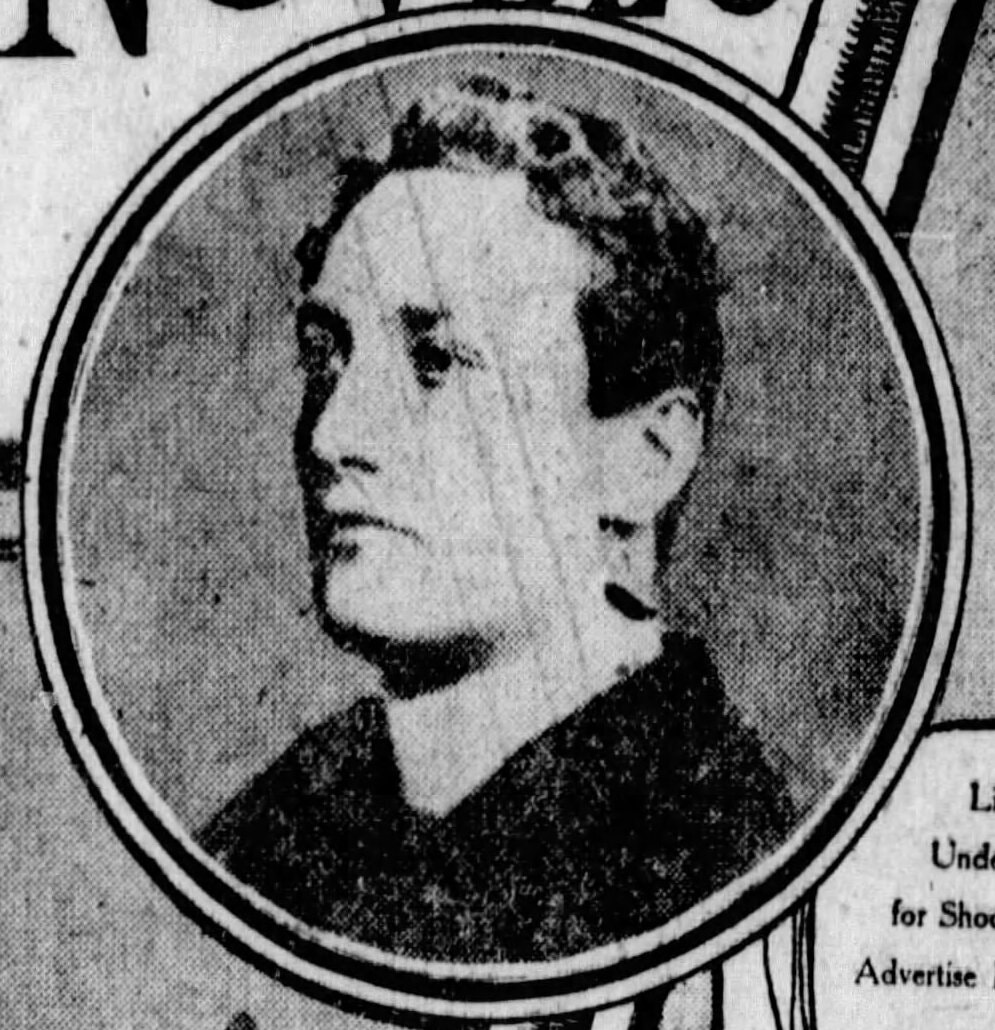
 At 9.30am on September 25, 1905, Edward Lionel Terry walked into the Wellington police station and turned himself in for murder.
Police were already well into the investigation of the murder of Joe Kum Yung - who had been shot in Wellington’s Haining St the day before. Why anyone would want to kill Yung was not obvious. He was nearly 70, and had lived in New Zealand for close to 30 years and was a retired miner. He was also broke, so it wasn’t over money. But when Terry, a tall, well dressed young man, came forward the pieces began to fall into place. Terry was known for his anti-Asian stance. He had published a booklet called The Shadow that had been criticised for its writings and embarked on a walk of the country to raise awareness of his racist views, to the point where he refused to eat fruit and vegetables grown by them.. Terry had been born in Sandwich, Kent on January 6, 1873, the son of Edward and Frances Terry. He had worked for the West Indies Gold Mining Corporation then joined the Royal Regiment Artillery in 1892. After being discharged he worked around South Africa, America, Canada and Australia. He served in a mounted police brigade in Bulawayo, Rhodesia, fighting against the Matabele in the Second Matabele War, taking part in fifteen engagements and being wounded twice. In Canada he was the secretary of a miner's union, and was outraged at how the Premier of British Columbia, James Dunsmuir, who was also a mine owner, hired Chinese labour for low wages in preference to Caucasians and was also angered by the mine owners in South Africa importing Chinese coolies to work for low wages. When he came to New Zealand Terry worked for the Department of Lands and Survey in Auckland, before trying to establish a horticultural market garden north of there. He went back to the Department of Lands and Survey as a surveyor, based in Mangonui, Northland in 1905. If he had been hoping to attract followers to his cause with the murder, he failed. The public was appalled. Yung was old, had a permanent injury and limp and no threat to anyone. Outside the Supreme Court on the day of the trial, crowds gathered. Inside Terry said his action was right and justifiable. He refused to use a lawyer. The trial was actually brief since he had admitted the murder but he used the opportunity to rail against the Chinese witnesses and to tell people he was quite sane. Terry said it was a disgrace that Asian immigrants were coming to New Zealand and he was convinced of a need to separate the races. It took the jury about 40 minutes to find him guilty and to recommend mercy since they believed his hatred made him crazy - since the only sentence available was death. Even with that sentence hanging over him, prison authorities considered him mad and his sentence was commuted to life. Terry spent the rest of his life in Lyttelton prison, then Sunnyside hospital before ending up in Seacliff mental hospital. He escaped from Sunnyside twice before he was taken to Seacliff where he remained, painting and gardening before dying on August 20, 1952. Usually we tell you where someone is buried. But murderers are often in unmarked graves, and with Seacliff there is an extra issue - many were buried in mass graves either at the hospital or even in other graveyards. And the Chinese community of Wellington gathered to send Yung back to China for last rites and traditional burial.
0 Comments
Leave a Reply. |
AuthorFran and Deb's updates Archives
September 2025
Categories |
 RSS Feed