 The prehistoric world of New Zealand was not filled with herds of roaming dinosaurs or terrible t-rexs.
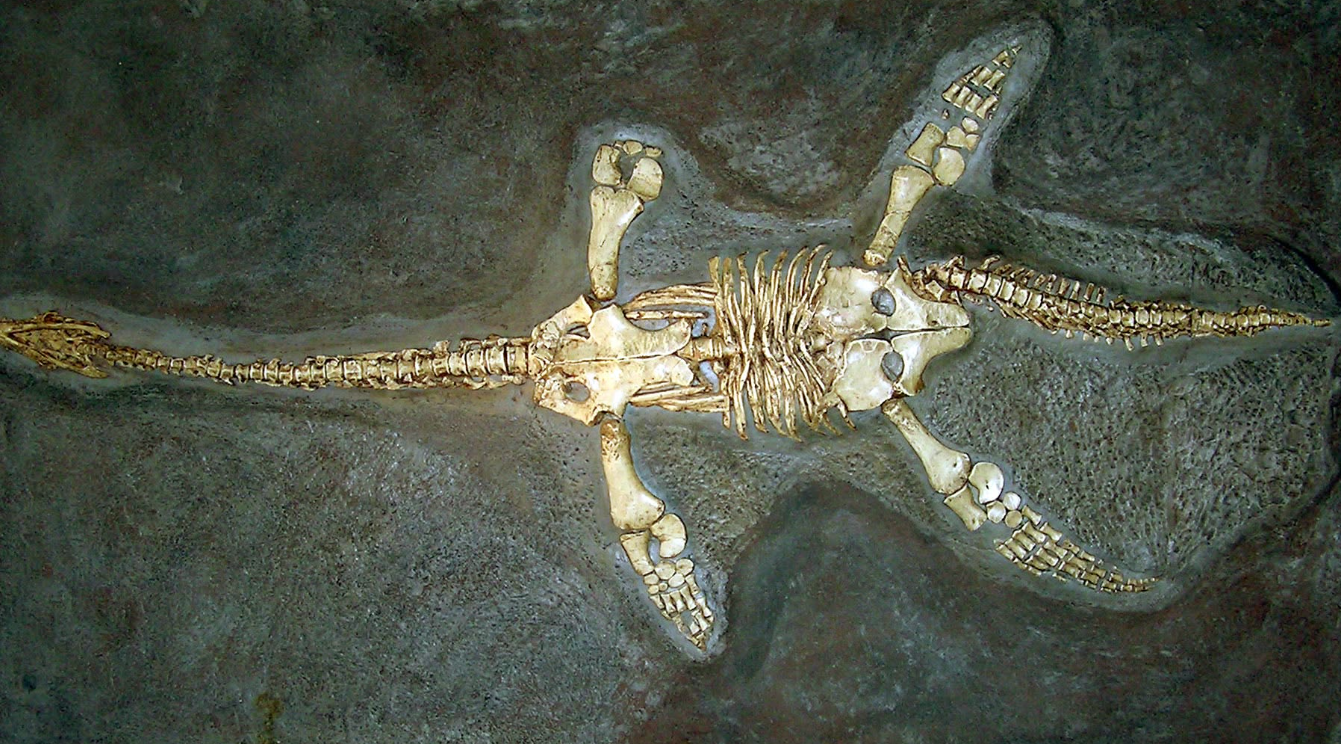
Instead we had a fairly limited number on land. But our seas were a different story - it was filled with terrifying monsters, including mosasaurs capable of dragging down a whale. New Zealand was largely protected from large number of dinosaurs for two reasons - as the land masses moved we were increasingly isolated and the cooler climate was not for dinosaurs. It wasn’t until Joan Wiffen found the first dinosaur fossil in the Mangahouanga Stream in Hawke’s Bay that the remains that had been missing from New Zealand’s fossil record up until then were discovered. The first was a tail vertebra of a theropod - a four metre long half tonne carnivorous dino then an allosaur - the smaller version of the T Rex. After that was an ankylosaur - a heavily armoured dino about the size of a small car. Along with those Wiffen and her team of other amateur enthusiasts also found plesiosaur - the one the Loch Ness monster is supposed to look like. There were also pterosaurs - flying lizards with wing made from skin rather than feathers. The oceans around us however had 12m long mosasaurs, And for a while it was thought we had escaped the largest beasts - until the discovery of part of a tail bone of a Titanosaurid - they would have been up to 45m long and weighed over 50 tonnes. It was the first time such a large dinosaur had been discovered. None of that would have been possible without Joan Wiffen, whose determination led her to discover more and more. Joan was born on February 4, 1922, in Auckland and adopted by Alfred Ernest and Ivy Pedersen of Mangaweka. During World War Two she joined the Women’s Auxiliary Air Force with her first job being a runner, taking files between officers. She trained as a radar plotter and a medical clerk. In 1948, she returned to Hawke’s Bay then met and married Montague Arthur Wiffen, called Pont. Their joint interest in collecting led them to join a rock and mineral club and while on a trip to Australia Joan bought a small trilobite fossil. It was the start of fossil hunting and in 1972 they made their first visit to Mangahouanga Stream where Joan said there seemed to be fossils everywhere. The first bone was found in 1973 but there was almost no one in New Zealand who could help her identify it. Eventually they found an almost complete plesiosaur and mosasaur skull. But it was when the Wiffen’s visited an American dino expert at the Queensland Museum in Brisbane that they saw a vertebra on his desk - almost identical to one they had found. And with that the presence of dinosaurs was confirmed in New Zealand. They went on to find many more. Pont died in 1992 and Joan in 2009. Both were cremated at the Hastings Crematorium.
0 Comments
Leave a Reply. |
AuthorFran and Deb's updates Archives
September 2025
Categories |
 RSS Feed