 Chinese immigrant Ham Sing Tong was, in 1905, found dead in his house, bludgeoned, shot and set on fire.
Today, 116 years later, his murder is still unsolved despite two men going to trial for it. Tong was aged somewhere between 60 and 65 and was living in Tapanui, a small forestry town in West Otago, known as the place Tapanui flu is named after. The newspaper coverage of the day reveals a lot about how Chinese immigrants were looked at back then, reporting that Tong was not involved with opium or sly grogging which was often the prevailing racist stereotype. Despite this, Tong was seen by his neighbours as a good-natured hard-working gold miner and was well respected. He lived alone on the outskirts of Tapanui and was known for either carrying his money around or having it in his house and, as such, always locked himself in at night. This was not unusual in that era as many people did not trust banks or lived so far away that using one was not practical. Late on the night of 21 August 1905 nearby residents heard a shot ring out. The next day, his friend Ah Chong found his body in the bedroom. Initially police were unsure what killed him. There was a large bruise on his forehead and his clothes were nearly burned off. The floor was strewn with the remains of a bottle. An autopsy revealed there was a bullet in his right shoulder, which one doctor thought would have left him paralysed as it had severed his spine. More than £70 was found in his house. But he was believed to be worth about £200 - a huge sum in those days - worth about $48,000 now. The police case was that he was bludgeoned with a whiskey bottle first. He resisted, which led to him being shot. Then a lamp was broken to spread kerosene on the bedclothes and set alight. By the end of August, Thomas Stott, a 38-year-old labourer and George Hill Bromley, a 17-year-old farm hand, were arrested for his murder. The two lived together in a hut on Bromley’s father’s property. A revolver was found in their hut. Also found were some skeleton keys, one of which would have opened Tong’s house. Stott, an Aboriginal Australian, had lived in Tapanui for several years. Newspapers reported he had a reputation as a fighting man and was known for becoming "ugly" when drunk. He was more than six feet tall (1.83m) and had a tattoo of a tombstone on his right arm and one on his left arm stating: DO YOU REMEMBER TOM STOTT. Stott was known to be broke, but in the day or two after the murder he was seen in the nearby town of Heriot, flush with cash and telling different stories about where he got it. The Supreme Court trial took place in Dunedin in December 1905 and went several days. One of New Zealand's most noted defence lawyers Alfred Charles Hanlon, appeared for the two men. Bloodstains had been found on the clothes of both men, and one of the pair had borrowed a rifle from Tong only two days before he was found dead. Hanlon had no witnesses to call in defence, but it did not stop him attacking. He challenged a great many aspects of the Crown case. He also intimated that a Crown witness - a John Reddit - may also have been the killer. The all-male jury found both men not guilty, although they asked if they could return a verdict of not proven - which the presiding judge said was the same thing. No other person has been convicted of the crime. Three years after being acquitted of the murder, Stott was back in court again, this time for shooting 19-year-old Mary Brown with a double-barrelled shotgun, wounding her in the arm. Stott and the girl's father were drinking buddies. On June 20, 1908, after a drinking session at the Brown's house Mary told Stott to leave. He did, but he returned with the gun charging into the house and shooting her. He was sentenced to five years in prison. Stott was released in March 1912. In 1915 he served a further six months in prison for being a rogue and vagabond. Records don't show what happened to him after that. Perhaps he went back to Australia. Tong is buried in Tapanui cemetery under the name Am Sing Tong. He has no headstone or grave marker.
0 Comments
 Ever wondered how someone came up with the name of the street you live on?
Some - like Main, High, Victoria, Prince, Regent etc- are in every town. And then there are the more musical Maori names. But what about the stranger ones? Are there stories behind them? Petone’s Riddlers Crescent caught my eye and I couldn’t resist doing a little research. (I was pretty sure it wasn’t named after the Batman villain). Turns out it's a family name. Thomas Riddler was the son of William and Elizabeth (nee Sparrow) Riddler who came to New Zealand in 1842. William, from Harefield, Gloucestershire in England came on the Thomas Sparks, caring for a cargo of stock for the Hon. Henry Petre - one of Wellington’s founders - who had a 100 acre block in what is now Petone encompassing what is now Riddlers Crescent. He gave it to William who settled down there with his wife Elizabeth. Their children were born there, including Thomas. When he was born there were only four other houses. He was the first to be christened in the English church in the Hutt. Thomas went on to be a stock agent and farmed at Tawa until the death of his father. He married Mary Hirst in 1873. He helped create Petone and was one of the escort of calvary for the Duke of Edinburgh on a trip to Upper Hutt. At the time of his death aged 87, on 21 August, 1936, he was one of the oldest surviving settlers in the Hutt and had six sons and two daughters. His land was divided into lots and sold on his death - creating the area through which Riddlers Crescent runs. He is buried in Christ Church cemetery in Taita. Ever wondered about your street name? Tell us and we’ll take a look.  William Lee lay pinned to his own bed in his Northe Street, Napier home after a huge beam from his house fell on him.
The beam had been dislodged by a slip that had slammed into the back of his house while he was asleep at 4.30am on April 26. It was the last day of a three-day rain storm that devastated Hawke’s Bay in 1938. Prolonged heavy rain caused severe flooding in Gisborne and Hawke's Bay beginning on April 24. The rain fell so fast thousands of acres of farmland was quickly submerged, farm animals drowning, unable to get out of the way. Most roads suffered from slips or flooding. Near Gisborne, Maki Morepi was drowned when he tried to cross the Waiapu River and the body of waterside worker Donald McLaren was found in the Waikanae Creek after he had fallen from a footbridge. Picturesque Esk Valley, with its pretty church and vineyards, was the hardest hit. Esk Valley homes and farmland became buried by over 1.6 metres of silt or ruined by floodwaters and landslides. The river rose 10 metres and quickly burst its banks. Silt blanketed the whole valley floor and wrecked houses. Many residents tried to escape through it before being rescued. High on the hillside of the Upper Esk Valley, on the early morning of April 25 - Anzac Day - Harry O’Donel Bourke and his wife Kathleen Maud watched as the waters rose. But it was not the biggest danger. Above them, a large mass of earth weakened by rain began to move. The slip barrelled through their home at about 9am. The four adults and three children in the house managed to escape to their old woolshed only to watch more earth entirely destroy their house. Cut off from the road, the seven of them huddled for three days in the woolshed before being able to get to their horses and ride out. Nearby, France House, a boys' home in Esk Valley was also completely cut off and a troop of police were needed to rescue the boys and staff. In the greater Hawke’s Bay county 51 bridges were destroyed. Residents at Clive had to be rescued in boats, the water being so high. Some families were so cut off supplies were dropped to them by plane. In a cruel twist, one of the planes crashed in the Pakuratahi Valley and the injured crew had to wait 19 hours to be rescued. Mr Lee’s fate was discovered by the milkman who, with two other men, lifted the beam off him. He was taken to hospital and found to have severely fractured ribs. His house had been moved 20 feet off its foundations by the slip. Mr Lee, who was born in County Clare in Ireland on July 12, 1870, had been a soldier for 2 years during World War One and received the British War Medal and discharged in 1918 for no longer being physically fit due to injuries sustained during his service, most likely a sprained ankle while in Egypt. He does not appear to have ever married. There is no mention of him again in news reports of the time other than to say the former soldier and labourer was not badly injured but he appears to have died a few months later - on August 5 - and is buried at the Park Island Cemetery aged 68.  People rushed toward the fire beginning to burn out of control in the grocers and drapers shop of Benge and Pratt on Upper Hutt’s Main Street.
Many wanted to help get stock out. It was what we did, helped our neighbours out. But this time it would turn deadly. Benge and Pratt was a well known store. It had expanded only a few years before. There was little it did not sell. When the fire broke out late on a Saturday night in March 1914 it was not immediately noticed in a back room to the grocery store. Senior partner Herbert Victor Benge (sometimes referred to as Victor Herbert) left the store about 10pm. He was at the back of the premises in the bakehouse. The fire was noticed shortly after. People ran to help, other storekeepers and police. Fire was always a danger and everyone pitched in. Upper Hutt had no fire brigade. Members of the public and other store owners were trying to move goods and assemble hoses to fight the fire when there was a huge explosion. It was so large it was heard as far away as Kaiwharawhara. The hands of the clock on the Post Office were frozen at the time of the explosion - 12.09am on March 29, 1914. The nearby Provincial Hotel was badly damaged, with nearly every window blown in, the porch destroyed and doors blown off their hinges. The night train from Auckland to Wellington had just pulled into Upper Hutt and one of its guards was killed by the blast. The train was quickly repurposed to take the injured into Wellington. But by the end, eight had died. They were Constable Denis ‘Dinny’ Mahoney - who had been one of the first to arrive to help, train guard William Flynn, Upper Hutt’s postmaster James Comesky, railway porter George Taylor, bridge contractor Michael Toohey, assistant storeman John Wesley Vivian, town board member Virgil McGovern and blacksmith Everard Pelling. Initially it was unclear what had caused the explosion. The store owners denied there was any explosives in the store but it was discovered that there was a barrel of gelignite illegally stored. It had been set off when the fire reached it. The police station was across the road and it was Mahoney who was first on the scene helping to get people out of nearby buildings and trying to get goods out. He had just made the decision to get all the helpers out when the shop exploded. Mahoney had been born in Limerick, Ireland about 1873 and came to New Zealand with his siblings. He worked as a miner before becoming a police officer. He had been stationed in central Wellington and Woodville before becoming Upper Hutt’s cop in 1905 when he also married Mary Dennehy and had three children. He is buried, along with three others killed in the disaster, in the St Joseph’s Catholic Church graveyard.  At a dip in the road called Mystery Creek, a shot rang out.
Two bank officers were transporting a large amount of cash. It was sale day in the Hamilton area, and banks often sent officers to other areas carrying bundles of money. Leslie Ray Jordan, 26, ledger-keeper for the Bank of New Zealand and William Fox Langley Ward, the Hamilton manager of the Bank of Australia were heading to Ohaupo in a single horse buggy on February 8, 1910. Ward was driving when they went through the dip called Mystery Creek about 11am when the shot was fired from the bushes. The shot hit Jordan in the head, neck and shoulder with great force. The horse tried to bolt but with great presence of mind, Ward controlled the horse and pulled his own revolver. He saw nothing however and took Jordan to a nearby house and then to hospital and even went on to deliver the money to the respective banks. It was later found that Jordan had been hit by 85 pellets from a shotgun. He also lost his false teeth which were blown out of his mouth. For the local police the hunt was on. There was a great deal of local outrage and people came forward. Quite a number had seen John Mintern Paull with a gun. Paull was born February 18, 1891 in Christchurch. He was the fifth of eight children to Robert John Paull and Annie Mary Mintern. Paull had been seen by people both before and after the robbery attempt with a gun. He had hired a horse at a stable and told the stable master he was going to Te Rapa to get a gun mended there. Jordan himself knew Paull on sight. Paull was 19 at the time and employed as a junior clerk by a local firm of grain merchants. It did not take him long to be arrested. He told police a group of Māori had told him they were going to rob the men and he had to help them on pain of death. He blamed them for firing on the bank officials. Paull was charged with attempted murder and after a preliminary hearing pleaded guilty in the Supreme Court on March 1, 1910 and was sentenced to seven years by Justice Edwards. It seems to have been his one brush with serious crime. A doctor said Jordan was shot in the face and some of the shot was still embedded, leaving him with a facial paralysis. Paull died in Marlborough on November 30, 1967 and is buried in Wakapuaka Cemetery.  At a dip in the road called Mystery Creek, a shot rang out.
Two bank officers were transporting a large amount of cash. It was sale day in the Hamilton area, and banks often sent officers to other areas carrying bundles of money. Leslie Ray Jordan, 26, ledger-keeper for the Bank of New Zealand and William Fox Langley Ward, the Hamilton manager of the Bank of Australia were heading to Ohaupo in a single horse buggy on February 8, 1910. Ward was driving when they went through the dip called Mystery Creek about 11am when the shot was fired from the bushes. The shot hit Jordan in the head, neck and shoulder with great force. The horse tried to bolt but with great presence of mind, Ward controlled the horse and pulled his own revolver. He saw nothing however and took Jordan to a nearby house and then to hospital and even went on to deliver the money to the respective banks. It was later found that Jordan had been hit by 85 pellets from a shotgun. He also lost his false teeth which were blown out of his mouth. For the local police the hunt was on. There was a great deal of local outrage and people came forward. Quite a number had seen John Mintern Paull with a gun. Paull was born February 18, 1891 in Christchurch. He was the fifth of eight children to Robert John Paull and Annie Mary Mintern. Paull had been seen by people both before and after the robbery attempt with a gun. He had hired a horse at a stable and told the stable master he was going to Te Rapa to get a gun mended there. Jordan himself knew Paull on sight. Paull was 19 at the time and employed as a junior clerk by a local firm of grain merchants. It did not take him long to be arrested. He told police a group of Māori had told him they were going to rob the men and he had to help them on pain of death. He blamed them for firing on the bank officials. Paull was charged with attempted murder and after a preliminary hearing pleaded guilty in the Supreme Court on March 1, 1910 and was sentenced to seven years by Justice Edwards. It seems to have been his one brush with serious crime. A doctor said Jordan was shot in the face and some of the shot was still embedded, leaving him with a facial paralysis. Paull died in Marlborough on November 30, 1967 and is buried in Wakapuaka Cemetery.  In the 1890s the world was in the grips of a pandemic of the Black Death. Cases of bubonic plague were first reported in China and spread across the planet through trade routes eventually killing around 10 million people.
New Zealanders watched in fear as news of the spreading plague was reported in local newspapers and when cases began to appear in Australia in January 1900, the New Zealand government began making urgent preparations for its appearance on our shores. In Auckland a two-acre block of land on the Domain was chosen for a plague hospital containing two wards of six beds each. A large crematorium was also built to incinerate the bodies of those who perished from the often fatal disease. In Wellington a similar hospital was constructed on MacAllister Park, Berhampore, much to the disgust of local residents who had challenged the plans in the Supreme Court, but lost. Over subsequent years plague hospitals were also built in Whanganui and Christchurch. Plague inspectors were appointed in major cities to inspect properties and order residents to clean up houses and sections which could harbour rats. Quarantine stations were also set up. Efforts were made to eradicate rats with the nation’s councils paying a bounty of around one to three pennies for each rat killed. On April 23, 1900 New Zealanders’ worst fears were confirmed when authorities reported that rats infected with the plague had been found on Auckland’s wharves. A week later a boy in the city was admitted to hospital with a suspected mild case of the disease – apparently contracted when he was bitten by a rat two weeks earlier. A week later it was determined that the boy did not, in fact, have the plague. Around the country, business people took the opportunity to advertise their herbal remedies and other wares as plague preventatives, including Wellington shoe merchants R Hannah and Co., who somewhat spuriously claimed the disease could be kept away by wearing of their locally manufactured “G boots and shoes”. Then on 22 June a man named Hugh Charles Kelly, 36, died at his house in Upper Queen Street, Auckland. Kelly was a married man with five young children and another on the way. Kelly’s doctor recorded his death as being due to bubonic plague. The Auckland City Council quarantined Kelly’s house and those of his children’s grandparents, Jose Perez (his wife Marion Mildred Kelly, nee Percy’s parents) and Kelly’s mother Sarah Boyd Harrison, while tests were made on his specimens taken from his body. Kelly’s family were kept in quarantine for 14 days. Three weeks after his death the official report came back with a finding that Kelly, a gum packer in the employ of Messrs Gorman and Newton, may or may not have died from the plague, or from blood poisoning. Kelly’s death was officially recorded as being due to plague. He is buried at Waikumete Cemetery. Meanwhile, the government passed a Bubonic Plague Prevention Act giving authorities widespread powers, including the ability to isolate and quarantine individuals and demolish buildings. Several more suspected cases were reported over subsequent years, but no epidemic followed. The plague scare eventually died down, despite outbreaks continuing in Australia and other countries. Then in March 1911, three people were admitted to hospital with the disease. The victims were a husband and wife who operated a fruit and confectionary business in Onehunga and one of their employees, David Fletcher, 26, who subsequently died. One of the nurses who cared for Fletcher also developed plague, but survived. A fifth case, a 17 year-old man who worked as a storeman at the Great Northern Brewery in Customs Street, and a sixth case, an 18 year-old man, who worked in Smith and Caughey’s warehouse also in Customs Street, were reported on March 30. April revealed no further cases, but on May 3, the seventh case appeared, a 20 year-old woman, quickly followed by the report of the eighth case, a 15 year-old lad employed as a gasfitter. Both also worked at Smith and Caughey’s warehouse. New Zealanders held their breaths for the expected onslaught of the plague epidemic – but it never came. Don’t, however, breathe too greater sigh of relief – according to the Ministry of Health both species of rodent flea capable of transmitting the plague bacteria are still present in New Zealand. The nine victims: (We think this is the only list naming the victims of the plague in NZ) 1901 22 June, Hugh Charles Kelly, 36, gum packer, Upper Queen Street, city 1902 29 April, Thomas Henry Virtue, 37, lumper (wharf worker), Richmond Rd, Grey Lynn 25 May, George Barraclough Bentley, 18, a kauri gum sorter, Grey Street, central city 4 July, Luke Edward Walker (known as Edward), 48, of Haydn Street, also a lumper on Auckland’s wharves 1904 Robert Stafford, 17, warehouse worker, Brunswick Lane, city 1907 12 May, Minnie Kitchen, 15, Tararua Tce, Parnell 15 May, Norma Isabell (Daisy) McMillan, 27, seamstress, Radford St, Parnell (Both worked in same building on Queen Street) 1910 22 July, Ernest Bridgeford, 18, packer at an electrical company near the wharves, Kingsland 1911 29 March, David Fletcher, 26, shopworker, Trafalgar St, Onehunga  With a new lockdown I’m sure we all feel a bit like we want to escape.
So here at Genealogy Investigations we thought we would give you a few minutes of escape with an extra story for the week. And it's all about escapes. Please, everyone stay safe. It’s hard to feel sorry for Edward Raymond Horton. He was jailed for the murder and rape of a widow in Wellington. But it was his escape from prison that led to a rethink of how life sentenced prisoners were treated. Born on July 28,1928, in Blenheim, he was the son of Murial Doreen Gill and a married man, Herman Edward Hermanson. He was initially raised by his mother but by five he went to his now divorced father and took a name he used - Horton. Edward preferred to be called Ray or Slim. By the time he was 10 he was truant from school and had begun stealing, appearing often in the Nelson Children’s Court. He ended up in boys’ homes around the country from which he often escaped. In 1943 while working as a farmhand he tried to sexually assault his employer’s wife and was sent to the boys training centre in Levin. After being sent back to his father he was sent to borstal for burglary. He escaped from there too and attempted to rape a warder’s daughter. That landed him in prison in Christchurch where he was until 1948. Bizarrely he was named as a co-respondent in a divorce case over a relationship he had after leaving prison. Later that year in Wellington after his release he saw Katherine Gladys Cranston, a 47-year-old widow, while out on a walk. He hit her on the head with a stick, strangled her then raped her and cut her throat with a broken beer bottle. Her body was found on Mount Victoria by a group of boys. Mrs Cranston had only come to New Zealand the year before. At the time the country was aghast over a series of unsolved murders and the disappearance of teenager Marie West. It all led to a snap debate in Parliament over the death penalty which had been abolished eight years earlier. It lead to the brief reappearance of the death penalty before it was removed for good. Horton was actually arrested on a vagrancy charge but confessed to killing Katherine while in custody. He was only 20. Thirty witnesses were called and the jury that found him guilty was so concerned about his age they added a rider to their verdict, worried that he might be released early because of his age. Horton was sent to Mount Eden prison where he was considered sullen and withdrawn but he joined the prison band and was allowed to go on trips. But on December 6, 1955, he was allowed to go to an indoor bowling event in Mount Albert with a few other prisoners serving life imprisonment. True to form, he took the opportunity to escape, avoiding the guards sight and walking right out a door. A 200 strong police contingent began searching for him - with reinforcements being sent for from around the country. It took three days to find him. In the end he was recaptured by Cyril Naylor - who had been the police officer who had arrested him the first time round in Wellington, after he got a call about a strange man in some bush, this time in Avondale. Horton’s escape was a great embarrassment for the authorities and changed how life prisoners were treated. There was a review of penal policy over it. Horton went back to Mount Eden and in 1965 he was transferred to Waikeria prison and given life parole in 1971. He moved to New Plymouth where he started a family but died of a heart attack on November 10, 1977. His ashes are scattered at the Garden of Remembrance. Horton was seen both as a monster and as a study of whether prisoners can be rehabilitated. Katherine was cremated at Karori cemetery. Both the Marlborough and her sister ship the Dunedin vanished without trace in the same year.
While the dangers of shipping in the late 1800s were myriad, the coincidences with these two ships are spooky. Both of the three-masted ships were built in the same shipyard at Port Glasgow and sold to the same company, Shaw, Saville and Co - later called the Albion Line. They were considered fine ships of their time and were put to work travelling between England and New Zealand carrying emigrants looking for a home in a new country. When refrigeration came about, the Dunedin was refitted in 1881 and became the first ship to successfully transport meat from New Zealand to England. So was born the New Zealand export meat trade. The Marlborough, likewise, was refitted making her first voyage in 1882. Both ships carried wool and meat regularly, and carried vast quantities of coal - on the Marlborough’s last voyage she was carrying 400 tonnes of coal. The refrigeration units used coal to fuel them. They also still carried passengers, although nothing like their previous trips. The Marlborough had made 14 successful trips while the Dunedin made nine. But in 1890 both ships set out - the Marlborough from Lyttelton and the Dunedin from Oamaru. The Marlborough left on January 11 and the Dunedin on March 19. Both were carrying a full crew. Both were sighted a day or so out by other ships. And then they vanished without trace. In a weird coincidence both were carrying precisely one female passenger. On board the Marlborough was Mrs W. B. Anderson, 37 of Dunedin. Mrs Anderson was born Emily Rhoda Inman in 1854 in Melbourne, coming to Nelson as a teacher. She married William Bain Anderson, a wool merchant. He had paid £33 for her passage on the ship to England. The Dunedin’s passenger was the Captain’s daughter. Captain Arthur Roberts was a master mariner who had sailed many ships in his time. There were a number of unconfirmed sightings of both ships. Two years later a Singapore newspaper claimed the Marlborough had been discovered with “the skeletons of her crew on board that were slimy to the touch”. They had found the ship in a cove. They thought the letters on the bow spelled out Marlborough. However there were no follow ups and that ship - whoever she was - was never found again. The Dunedin was seen once near Cape Horn just before a storm. So what happened to them? The theory is both ran foul of icebergs, a large number of which had been noted in the Cape Horn area in the months before the disappearances. Only one person ‘survived’ from the Marlborough. Alex Carson was an apprentice on the Marlborough and due to be on the journey. He had been taken ill while visiting relatives in Dunedin and had a lucky escape when he was told by a doctor not to sail. Carson was later made Gisborne’s harbour master. He is buried in Taruheru Cemetery with his wife Mabel. 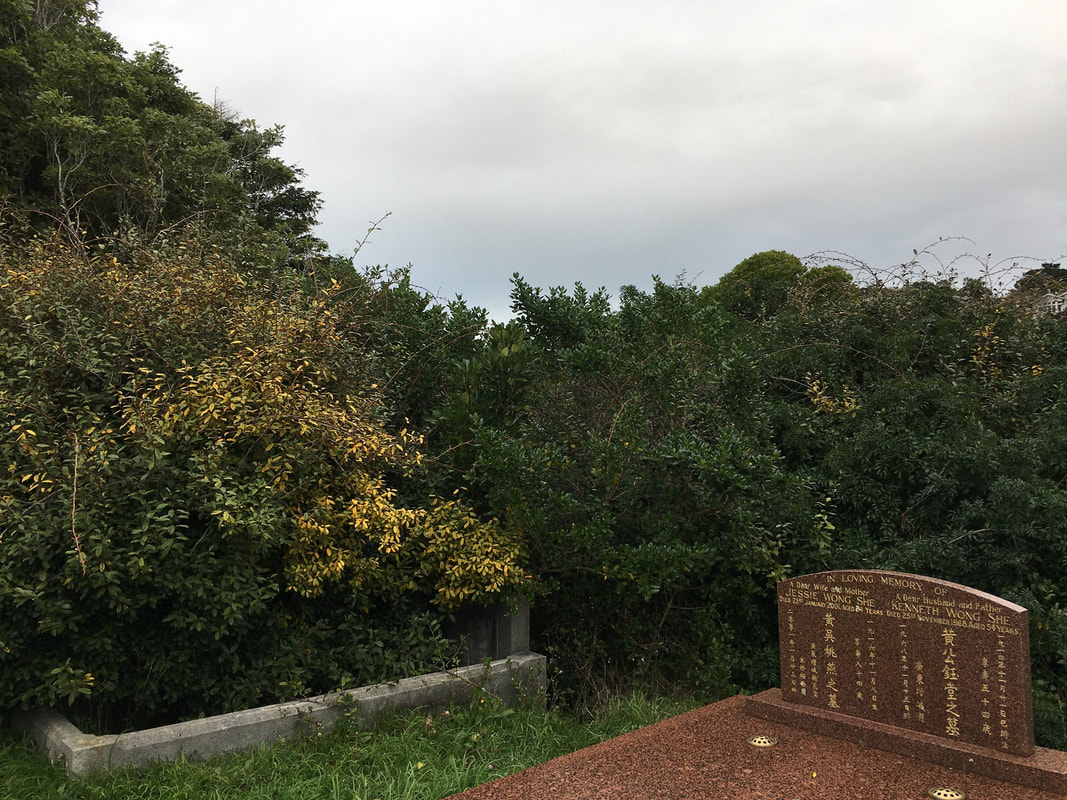 Drunken seamen and a gun sounds like a recipe for disaster. So it turned out to be as members of the public watched horrified as a man was shot dead on September 19, 1892 near Railway (now called Waterloo) Wharf.
At 10.50am in broad daylight several shots rang out ending with one man shot through the heart and a second wounded. It all started the night before. Crew from the Danish barque Doris Eckhoff were drinking at a hotel. Chief officer of the Doris Eckhoff was Henry William Finley, an Irish-born man, who was not on friendly terms with anyone. William Lynch, a seaman from the English ship Waimate met with Finley and Chief officer Ernest Seel of the American barque William B Flint. It led to an argument that appeared to run its course when the three men set off for their own ships. The next morning Lynch - along with Charles Greenrose, 40, and Donald McDonald - visited the William B Flint, to apologise to Seel, they said. They found Seel and Finlay walking along the shore. Finley attacked Lynch who fought back. During the fight, Finlay drew a revolver and fired. Greenrose had gone to intervene but caught one of the bullets in the chest, dying at the scene. He was believed to be a Russian or Finnish sailor. Lynch ran to his ship and during the chase McDonald was hit by a shot intended for Lynch. A shot was later found to have pierced the galvanised iron doors of a large storage shed nearby. Finlay was arrested aboard his ship where the revolver was found. McDonald received a wound to his thigh but it was not considered serious. Little is recorded about the trial, but in 1900 police reports say Finley was released from prison early from his 10-year-sentence for manslaughter. Greenrose is buried in Karori Cemetery in an unmarked paupers', and now overgrown, grave near the fenceline by Standen Street. |
AuthorFran and Deb's updates Archives
August 2025
Categories |


 RSS Feed