 On a street in Johnsonville stands an old fashioned-style lamp with a plaque on it - dedicated to one of the first soldiers of New Zealand to die in an overseas conflict.
Trooper Leonard Greenwood Ritter (Len) was born on December 19, 1878 to Frederick and Martha Retter in Johnsonville, early settlers in the area. Frederick himself was born in Wadestown in 1849 and ran a blacksmith shop in the main street Johnsonville. Blacksmithing was a family affair with three of his sons including Leonard working in the shop and then another they opened. Three of the boys, Claude, Darcy and Leonard were listed as farriers when they joined the New Zealand Mounted Rifles. They and others sailed for South Africa to take part in the Boer War. Leonard was assigned to Colonel Garrett’s column in the Eastern Transvaal. With constant skirmishing, there were fatalities. In what was called the Bloody Battle of Bothasberg, Leonard was fatally wounded. His brother Darcy was in the trench as him, holding him as he died. He was buried in the Vrede Cemetery, Free State, South Africa. Initially his personal effects were packed up to be returned to his family but things like his wrist watch was stolen in transit and all his family got back was a knife and fork. The family did receive the Queen’s South Africa medal. At first a plaque was created to commemorate Retter and only later was attached to a lamppost on Main Road - now Johnsonville Road. The lamp was originally kerosene, then gas and now electric, made by a Wellington iron foundry company E W Mills and Co. In 1953, a reversing truck knocked it over and took a while to be put back up. Then in the 60’s there was talk of demolishing it before it was moved to the gates of Johnsonville memorial park on Frankmoore avenue, then moved to Moorefield Road in 1986. It is not the only lamppost memorial - there are others in Christchurch, Feilding and Marton. Retter was buried in the Vrede Cemetery, Free State, South Africa.
0 Comments
 How 17-year-old Elsie Walker died is a mystery to this day. And it was her cousin William Alfred Bayly who was suspected.
Depending on who you talked to, he was definitely her killer or there was absolutely no way he did it. Even after nearly 100 years there is no answer but one thing is certain - Bayly was a murderer. Elsie was found on October 5, 1928 at a disused quarry in Tamaki. There were few signs of what had happened, no outward signs of violence but she had a fractured skull. No cause of death could be pinpointed. And despite a long running inquest, a police investigation, public meetings and a magisterial inquiry could not come to a definitive conclusion. Else had been living with William (Bill) Alfred Bayly and his wife Phyllis - her cousins. Bayly’s car was said to have been stolen at the same time and was found 200 miles away. Bayly was born on July 15, 1906 to Frank and Constance Bayly. The family farmed in the Waikato and Auckland then in 1925 moved to Pāpāmoa and Bayley married Phyllis Dorothy Palmer on 29 August 1928. After Elsie’s death they moved to Rauwaro near Huntly where their neighbours were Samuel and Christobel Lakey who had bought the farm from Bayly’s father. The relationship between the two couples was initially friendly but deteriorated when Christobel accused Bayly of killing Elsie. In 1933 after neighbours became concerned about the Lakey’s cows not being milked there was a search. Christobel’s body was found face down in a pond near the Lakey’s farmhouse. Initially it was thought Samuel had killed her but remnants of his body was found on a shovel from Bayly’s cowshed. A search found more and more evidence - items of clothes and guns. Police watched Bayly for a while then he disappeared leaving a suicide note. When he was spotted in Auckland he was arrested for murder. A jury took barely an hour to find him guilty and he was hanged at Mt Eden prison on July 20, 1934. Oddly, his death certificate notes he died of asphyxiation, usually for hanging it is strangulation - apparently it took him an unusually time to die. Elsie is buried in Purewa Cemetery while Christobel was buried in Huntly Cemetery. Samuel joined her in 2015. His remains had been used for forensic training. Bayly was buried in Waikumete Cemetery. 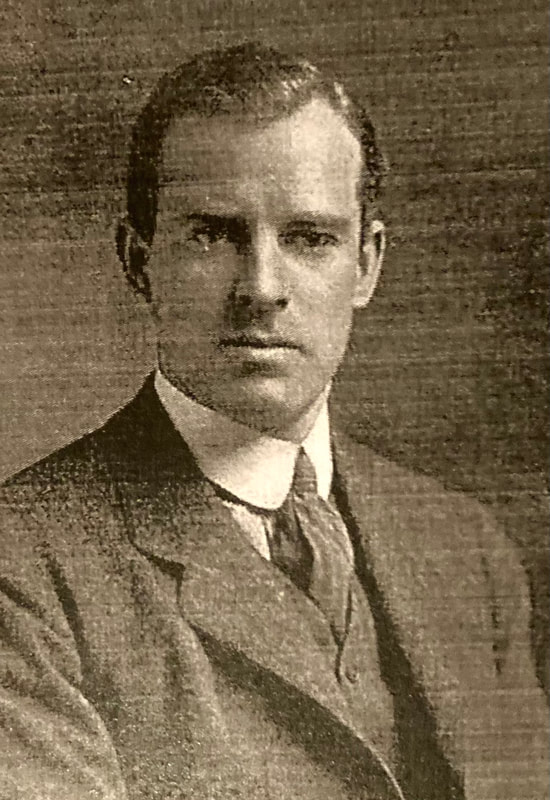 The world’s first tennis superstar was a Kiwi and a soldier whose life and career was cut short by war.
Anthony Frederick Wilding - Tony - was born on October 31, 1883 to Frederick and Julia Wilding. They had come to New Zealand from Herefordshire, England to Christchurch. Frederick was a lawyer and a tennis player himself, who won several national championships. At their farm they had two tennis courts and Tony began playing at age 6. After schooling he went to England to go to Trinity College to study law, where he was a member of their lawn tennis team. He did manage to get a law degree but it was the tennis that defined him. He was 17 when he won his first singles title in Canterbury then while at Trinity he entered an English public tournament reaching the semifinals where he defeated a top 10 English player. He continued to win, partnering too with Dorothea Douglas - the reigning Wimbledon champion. Tony’s first Wimbledon appearance was in 1904, with one win and then a loss. His tennis career continued during a tour of Europe, making his first Davis Cup appearance as part of an Australasian team. By 1906, Tony was touring for most of the year playing the French riviera circuit, before coming back to New Zealand where he won the Australasian championship in the singles. His 1907 Wimbledon bid ended when he drew the same round as the eventual winner Norman Brookes. Between 1907 and 1909 he helped the Australasian team win three consecutive Davis Cups, the first against the British Isles at Wimbledon and the last two against the United States. Among his titles was a rare triple, the World Hard Court championship, the World Grass Court championship and the World covered court championship - not really leaving anywhere for anyone else to go! With war breaking out Tony joined up in 1914 - initially in the Marines then going into the Intelligence corps due to his connections on the continent. At one point he was serving in the squad that used armoured Rolls Royce as their vehicles. In February 1915 his squadron was placed at the front and he was killed in action on May 9, 1915 when a shell exploded on the roof of the dug out he was in in Frances. He was initially buried there but later re-interred at the Rue-des-Berceaux Military Cemetery in France.  The Great Escape from Stalag Luft 111 during World War Two has been immortalised in book, song and film but few remember that there were five kiwis.
The extraordinary story of the prisoners of war and their extensive plans and actions to dig three tunnels - called Tom, Dick and Harry - through which the prisoners would escape has been told multiple times. In the end only a handful actually survived the escape attempt - the original plan had 200 going through the tunnels - but a series of holdups - including freezing weather - meant only 77 got to the end of the tunnel being used - called Harry - before being discovered. In fact, it was New Zealand Squadron Leader Leonard Henry Trent who had just reached the tree line to make his run for freedom, who stopped and surrendered, holding up the guards for a few moments - giving others time to run. Leonard Henry Trent was born on April 14, 1915, to Leonard Noel Trent and his wife Irene Violet Everett in Nelson. The family moved to Takaka in 1919 where he took his first flight in a Gipsy Moth and was captivated by flight ever after. Golf was more his passion than school (he failed initially) then after leaving school he worked a variety of jobs to save his money to become a pilot. He gained his wings in May 1938. A month later he joined the British RAF. Trent flew reconnaissance and combat missions, During a stint as an instructor he married Ursula Elizabeth Woolhouse in 1940. He returned to combat duty and in May 1943 with virtually his whole squadron destroyed near Amsterdam, he managed to bail out suffering only flesh wounds. But he was captured and sent to the notorious Stalag Luft III. After the escape from the camp, 50 prisoners were executed. Trent survived only because he surrendered. He got solitary confinement on starvation rations instead. In 1945 the camp was liberated and returned to his family and to RAF life. It was then he learned he had earned the Victory Cross for his heroic actions during his last mission. It changed nothing for him, in fact he disliked the fuss, and went back to work. He flew missions again, seeing combat in the Suez Canal in 1956. After he became aide-de-camp to the Queen before retiring and returning to New Zealand. He settled with his family in Auckland where he died in 1986 and was cremated at the North Shore Memorial Park and his ashes taken to Fremantle Cemetery where they were interred with his daughter Judith. His Victoria Cross is now at the Air Force Museum of New Zealand. Trent St in Taradale is named after him. But he was not the only Kiwi involved in the escape. Flight Lieutenant Arnold Christensen, Flying Officer Porokoru (Johnny) Pohe and Squadron Leader John Williams DFC who had escaped before Trent evaded capture for a few days but were taken and were among the 50 shot by the Gestapo. Flight Lieutenant Michael Moray Shand was interrogated but not picked to be shot, and he survived to return to New Zealand, dying aged 92 in Masterton. He is buried in the Riverside Cemetery.  People raise money by doing all sorts of sponsored things these days. And it’s not unusual for it to be a sponsored walk.
But when Esther Marion Pretoria James did it in 1931 it was new and unusual. Not the least of which because she was a woman. Esther was tiny, barely five foot, and and slightly built, but with a spirit and will ten times that, she set off from Spirits Bay in Northland to walk to Stewart Island. Esther was born in Pahiatua on November 5, 1900, to Thomas Joseph James and his wife Eliza Jane Whitmore, the seventh of ten children. Thomas was a carpenter and worked as a bridge inspector which meant they moved around a lot. Esther was hardworking and independent, winning a scholarship to a grammar school in Auckland and excelling in art. She later married architect Leslie Haysom and had one daughter. Along with patenting domestic inventions, Esther was one of New Zealand’s first professional models, working with the New Zealand Manufacturers’ Federation - promoting New Zealand made goods. So she decided on a walk, using only clothes and food from local producers. After six months training she set off. Esther walked alone - something probably not recommended today - but was greeted at every stop where she was received by mayors and factory managers who fed and housed her. She carried a log book which was signed by many of them. In fact she was so well fed, she complained she gained weight during the walk. The only mishap was a sprained ankle when she was blown into a gully on the Remutaka Range, leading to a week’s rest in Wellington. In 197 days she finished her walk reaching Bluff on June 18, 1932. Even on her rest days she was walking, having climbed Mount Egmont during one of them. Later in 1932 - again to promote New Zealand goods - she went to Australia and walked from Melbourne to Brisbane, and in Sydney she was the first woman to walk across the then new harbour bridge. She spent some time having adventures - diving for coral, crocodile hunting and opal mining. After her divorce from her first husband she married again in 1937 to Edward Scanlon Julian. She continued her entrepreneurial spirit, harvesting shells and seaweed for profit, growing crops, buying a section at Mount Maunganui where she built her own home, then after selling it, and building another in Remuera. She wrote her autobiography in 1965 Jobbing along and it led to her representing New Zealand authors at the World book fair in Frankfurt. At the age of 69 she became one of the four electoral candidates for the Independent Women’s Party in Auckland supporting a reform of the laws of marriage and matrimonial property. Esther divorced her second husband in 1971 and died in Auckland on January 7, 1990 and is buried in Purewa Cemetery. Esther could be considered the spiritual mother of Buy New Zealand Made.  Dentists are never the most popular people. We put off going to them, moan about the cost and even the smell and sounds put us off.
But for the terribly wounded and disfigured men who were attended by Henry Percy Pickerill, he was a miracle worker. Born in Hereford, England on August 3, 1879, he was the son of Thomas Pickerill and Mary Ann Gurney. He studied in England and gained his first qualifications in dentistry there including dental surgery. He married Mabel Louise Knott in 1906 before they came to New Zealand. He applied to be Dean of the dental school at the University of Otago. Henry proved to be a prolific author, teacher and researcher and taught a great many of the classes himself. He was the editor of the New Zealand Dental Journal and was a firm believer in the importance of good dental health in children. In 1915 - already aged 36, - he took up a commission to the New Zealand Medical Corps and pushed strongly for a dental corps. Once in England he was posted to the No2 New Zealand General Hospital and after establishing a ward there began working on men with severe jaw injuries. Indeed some had no jaw at all. It was here he pioneered a form of plastic surgery - jaw wiring, bone, skin and fat grafting to help reconstruct faces. Before this, often masks were made that the men would likely have to wear for the rest of their lives. In 1918 the whole operation was moved to a new hospital - which Pickerill did not want. He contemplated returning to New Zealand but ended up staying. When the war ended, he came back - bringing with him men that still needed to be worked on, creating the jaw ward where a good number of further men were worked on. Henry continued overseeing the work until 1921 after which he returned to his position at Otago University. Between 1927 and 1935 he worked in Sydney before returning to New Zealand and setting up a practise in Wellington. Then in 1939 he and his second wife set up Bassam, a hostel in Lower Hutt. Bassam in Arabic means one who smiles. The hostel became a hospital specialising the treating children with cleft palates and other conditions that needed plastic surgery. Henry retired in 1955 after having dedicated his life to helping others. He died on August 10, 1956 and his second wife Cecily Mary Wise Clarkson - herself a surgeon - and children took his ashes to be scattered over the River Wyre. Henry received the British War Medal and the Victory Medal, was made an Officer of the Order of the British Empire and then Commander of the Order of the British Empire.  While William Wallace Allison Burn is not mentioned on the New Zealand roll of honour since he served with an Australian force, he is both our first military aviator and the first one killed in action.
Born July 17, 1891, in Melbourne Australia, to station manager Forbes Burn and his wife Isabel Ayers who had moved there after marrying in Christchurch. They promptly moved back and William went to Christchurch Boys High where he did cadet force training. In 1911, he joined the New Zealand Staff Corps and posted to the Canterbury military district where he was considered tactful, energetic, resourceful, likely to make a good officer. He and three other officers left for England in 1912 to study with the Imperial Forces where he gained qualifications as a pilot. He returned to New Zealand just in time for World War One to break out. In February 1915 the Indian government called for trained pilots, needed in the Tigris valley during the Mesopotamian campaign. Burn was seconded to the Australian Flying Corps as a flying officer, attached to the Indian Expeditionary Force. He was sent to Basra. The three planes available were in poor shape but they began reconnaissance flights. Burn flew many sorties. On July 30, 1915 he was flying a Caudron G.3, a plane prone to engine failure in the hot conditions, alone with another pilot in a similar plane. One went down and was lucky enough to land near a friendly village. Burn’s plane had continued but apparently landed about 20 miles away when the engine failed. As they tried to fix it, they encountered a force of well armed men. Burn - and the pilot Australian George Merz - quickly headed for Abu Salibiq - fighting a running gun battle as they did. It was believed both ended up shot - but no sign of them was ever found. His date of death is listed as July 30, 1915. The plane was later located but hacked to bits. His name is on the Basra memorial, a Commonwealth War Graves commission memorial near Zubyr in Iraq. Picture by Simon Fitall.  It’s hard to know if Isadore Rothschild was extremely lucky or unlucky.
The jewel merchant from Wellington travelled a lot and he often carried jewels with him. And on July 29, 1897, he was aboard the SS Tasmania heading between Gisborne to Napier. A southerly gale was blowing hard and the Tasmania hit rocks off the Table Cape, Mahia Peninsula The four lifeboats were launched and another two smaller boats loaded with passengers headed for Whangawehi. It was nearly the middle of the night and pitch black. Five of the boats launched safely, although a couple of people were lost overboard and the sixth capsized. In all 11 people died. Isadore Jonah Rothschild survived but in the rush he had had to leave behind a suitcase full of jewels - worth £3000 which went down with the ship. Some have since been recovered by Kelly Tarlton - only to be later stolen. Isadore Jonah Rothschild was born on March 10, 1849 in Bristol, England where he was educated before becoming an apprentice jeweller. He was a travelling salesman before the news came about gold being discovered in New Zealand. Rothschild (and yes he is distantly related to the famously wealthy family) thought he would try his luck and boarded a ship in 1867 heading to Australia and then to New Zealand. He grabbed a pick and shovel and headed for the West Coast, prospecting a few miles out of Westport. He said he and a partner were making about £5-6 a week that they were promptly spending on a Saturday night. For about 15 months he kept going before being offered a job as a store manager in Rakaia. But on a trip back to England he ended up back in the jewellery trade for nearly four years. With a nephew as a partner he returned to New Zealand to start a jewellery business. When it failed he tried again in Sydney but ill health stopped him. The next return to New Zealand landed him in Wellington. He bought jewellery wholesale from England and set up shop. The loss of the jewellery on the Tasmania was the worst of his career - he had not insured it. He became determined to recover it and bought the wreck of the Tasmania from the insurers and tried to raise it. At one time, the scheme to retrieve it included raising it using 2000 balloons. None of the schemes worked. (Later the wreck was sold to Kelly Tarlton). Rothschild died on August 11, 1941 and is buried in Karori Cemetery (under the name Isadore Jonas Rothchild). A memorial to the dead of the Tasmania is at Makaraka Cemetery in Gisborne.  The theft of the copper cladding that forms the dome to the Zeiss telescope at Auckland’s Stardome observatory would have upset Edith Winstone Blackwell.
Edith believed in giving back and was well known in the first half of last century as a philanthropist. It was Edith who established a charitable trust in her own name and the board that ran the trust is the one who gifted a substantial sum toward buying the Zeiss telescope for the people of Auckland. In fact, the primary fixed telescope at the observatory is named after her. Edith Mary Winstone was born on July 28, 1877, the only daughter of George and Mary Winstone. George was the brother of William Winstone who founded Winstone Ltd - initially as a cartage business. Highly educated, she was one of the first girls to attend Auckland Grammar. She married Joseph Henry Blackwell in 1932 and set up the trust in 1950. Fundraising for a public observatory had begun in 1948 and by 1956 a great deal of the funds had been raised - in part due to the donation from Edith. The One Tree Hill Borough Council granted a lease to the Auckland Astronomical Society - and the observatory was opened in March 1967. The EWB Zeiss telescope was once used to assist NASA with the moon landing. It was part of a network of instruments around the world used to manually track the missions during the time Houston did not have radio contact with its astronauts. It is the largest publicly accessible telescope in the North Island and is estimated to have shown over a million people the stars. Along with the telescope, a room at Auckland University is named after her. A $4.5 million donation from the Edith Einstone Blackwell foundation kickstarted the fundraising campaign for redevelopment of the Leigh Marine Laboratory on Goat Island. Edith was awarded an Administrative member of the Order of the British Empire by the Queen in 1954 but did not live to see the opening of the observatory she had championed. She died on September 15, 1956 and is buried in Waikumete Cemetery. Picture by Alexander Andrews.  The murder of Mary Eileen Spargo is historic - for the first time there was no body, but her husband was still convicted of murder. And it changed how murder trials were run across the world.
George Cecil Horry was born in Sheffield, England, on May 6, 1907, to Charles Henry Horry and his wife Lily. He attended school there before the family came to Auckland in 1921. He worked as a meter reader But by the end of that year he was racking up convictions for assault, burglary and theft. Horry decided to reinvent himself, using the name George Horace Collver, a steel manufacturer from Wentworth, and went on to marry Evelyn Edna Bates, a divorcee, and started over in Sydney. But Horry was up to his old tricks - ending up in jail for passing fraudulent cheques before being deported back to New Zealand. He promptly went back to prison for crimes he had committed before marrying and on the day he got out he broke into a house. Evelyn had had enough and the marriage was dissolved. In 1942, he married Mary Elieen Jones - called Eileen - under the name George Arthur Turner. She believed he was wealthy and would one day inherit a title. He had told her parents they were going back to England where he worked in a secret capacity for the British government. The day after their wedding Eileen disappeared….and so did Horry. Then five months later he married again under his real name. This time to Eunice Marcel Geale. He had been seeing her while marrying Eileen. A week after he did, “George Turner” visited Eileen’s parents and told them she had been lost at sea when their ship was torpedoed. But it made them suspicious and they went to the police. It took Detective Sergeant William Fell eight years to put it all together. He discovered Turner was actually Horry and that he had obtained the proceeds of the sale of Eileen’s house and the contents of her bank account. Letters written to explain her disappearance had actually come from him and he had arranged for them to be posted from Australia. A search warrant for his home found some of her clothes and he gave another unlikely explanation for her disappearance, that she had paid him to marry her so she could disappear with her American soldier lover. Before he could be arrested he was conscripted into the army then transferred into the Royal New Zealand Air Force. But his criminal habits saw him arrested for forgery and burglary and sent to jail. Fell faced a dilemma. He had no body and the witnesses were ageing. After taking legal advice he went ahead and arrested him on May 14, 1951. A law that said anyone who was missing for seven years could be considered legally dead helped. A jury took 155 minutes to find him guilty, the first time anyone had been convicted without a body. He was released from prison in 1967 - still married to Eunice. He died in 1981 having changed his name by deed poll to Turner. He is buried at Purewa Cemetery. Shortly after his trial - murder cases in America and the United Kingdom succeeded where there was no body - based on Horry’s case. Pic by Alexandre Boucey. |
AuthorFran and Deb's updates Archives
September 2025
Categories |
 RSS Feed