 With the mysterious loss of the ship Glenmark went a king’s ransom in gold - all from New Zealand.
The Glenmark had made the round trip from England to New Zealand eight times, bringing immigrants out and taking back goods. She made her first voyage in 1864 and was one of the fastest ships - making the trip in 83 days. She had been built in an Aberdeen shipyard especially for the New Zealand trip. The ship was initially captained by John Thomson, a weak grumpy man,who was eventually replaced after several dangerous incidents. Plushly appointed, it had first and second class cabins (although passengers had to bring their own furniture) and a concert hall with two pianos. Immigrants travelled in relative luxury - compared to those on other ships - and arrived quicker. The ship still suffered from the usual complaints - like disease, but it was often in the newspapers when she arrived so the public could go and view her. On February 1, 1872, the Glenmark left Lyttelton carrying 50 passengers and filled to the brim with wool, sheepskins and £80,000 in colonial gold. In today’s money that's well over $1.5 billion. The Captain was now Lieutenant Richard Wrankworth, born in Cape Town and with a good reputation after having been in the merchant navy his whole working life. He had gained his master’s certificate in 1851. The Glenmark set sail with no issues. But after 154 days with no mention of her arriving, concerns grew about her fate. Two other ships had left Lyttelton about the same time, the Robert Henderson and the Natal Queen, whose captain wrote that something must be very wrong. He had also noted the very bad weather off the Falklands and rumours of a ship foundering. Another ship, the Sir Humphrey Davies, had left Sydney for England shortly before the Glenmark left New Zealand. It encountered a cyclone and on the second day of the storm came across a debris field in the ocean. The storm prevented them from examining the debris. After a year there was no hope. The Glenmark was lost with all hands. The watery grave of all on board is unknown to this day. Photo by Jingming Pan.
0 Comments
 Wellington’s beautiful Oriental Bay has a glowing beach, wonderful harbour views and pricy homes.
But would it be quite so flash if it was called Duppa Bay? Which it was originally. It was all because of the first European resident George Duppa. George Duppa was born in 1819 in Maidstone in Kent to Baldwin Duppa and his wife Mary. In 1839, he purchased eight properties in Wellington for £800 from the New Zealand Company in London and at 21-years-old set off across the world. On arriving in Wellington on January 1, 1840 - then Port Nicholson - he found, like a lot of others, that the surveying had not been done and he could not have the land. In fact it was in the Wairarapa, on land that had not yet been purchased from the local Iwi. After an initial attempt to clear land in the Hutt he was defeated by a flood, an earthquake, then a fire. So he moved to what would become Oriental Bay and built a house. He had had the prefabricated home brought out from England. It sat just below where the monastery is now. He was the only one there - the area was considered a dreary looking spot that was only used as a quarantine area with a tent and a nurse on the beach and whalers. In 1841, his brother Bryan suggested a second settlement to the New Zealand Company. It would go on to become Nelson. George was requested to go with a ship to report on the area. Meanwhile George could not get his land in Wellington recognised so opted to leave. He imported cattle from Australia and squatted on unoccupied land at Allington in the Wai-iti valley. George was also granted 200 acres in the Waimea and an 8000 run in the Upper Wairua Valley then granted the lease of part of the Lower Peaks country forming the foundation of the St Leonards station. He wasn’t, however, always a good guy. He encouraged his sheep to graze on neighbours land as well as avoiding paying his annual dues to the Commissioner of Crown Lands along with an attempt to defraud Robert Ross, the manager at St Leonards. In 1862, he sold St Leonards for a huge amount and returned to England and bought back his ancestral home in Kent. That gave him the life of a country squire. He married society beauty Alice Catherine with whom he had a son. George was considered one of the first men to have made his fortune in New Zealand. He died on January 5, 1888 and is buried at the All Saints graveyard in Kent. And Oriental Bay ended up with the name because the Oriental was the ship George arrived in. Duppa Street in Berhampore is named for him.  Richard Forgie was a baker and a boxer. By day he was working in his father’s bakery in Auckland and by night he was taking part in the semi-legal world of organised fighting.
On April 11, 1893, Forgie squared off against John Nicholson at the Zealandia rink in Stanley Street, Auckland. There was initially nothing untoward. The fight was to go 35 rounds. The first few rounds were all Forgie while NIcholson hung back waiting for an opening. By the 30th round, neither man was seriously injured. Then Nicholson struck, a single blow to the head and Forgie fell, hitting his head. Forgie got up, but it was clear he was getting weaker. Nicholson came in and made several hard hits to the face. The crowd booed and a foul was called. Nicholson continued to hit. Which was when the police stepped in to stop the fight. After, Nicholson disputed the foul call and wanted the payment of the stakes withheld. But the next day, after spending the day at work as usual, Forgie died and the police charged Nicholson with manslaughter. Richard Campbell Forgie was born on March 14, 1872, to Richard and Ann Eliza (nee Tinkler) in the Waikato. He became a baker and worked for his father. By the time he died at 21 he had become a well respected amateur boxer, and had won a few bouts. Nicholson was 26 and had won numerous contests including in Sydney. He was considered a professional. An inquest found Forgie had suffered a concussion and brain bleed. The jury found there was a case to answer and Nicholson was sent to the court for trial. Ten other men were also charged, referee Lindsay Cooke, judge William Burns, timekeeper John Wakefield, timekeeper William McManomin, James Saxon, Frank Burns, judge R. J. S. Sandall, second for Nicholson William O'Meara, John McConnell, and Frederick J. Paltridge were charged with aiding and abetting. Sandall dropped dead only a few weeks later during a right in his store and eventually the charges against all but Nicholson were dismissed. At trial the jury however was unconvinced and Nicholson was acquitted with the jury mentioning that the fight should have been stopped much sooner. Forgie was cremated at Waikumete Cemetery. Picture by Bogdan Yukhymchuk.  The role of ship’s doctor was not an envious one.
Conditions on immigrant ships were not designed for good health. Many people crammed into small bunks, living too close together for months at a time. The doctor was often into charge of stores and food rations, organising the cleaning of the passenger areas, and the passengers themselves. The ships’ owners often supplied the medicinal supplies but a doctor would be expected to have their own equipment. They would deal with everything from lice to amputations to tooth pulling. It was accepted that there would be deaths. Doctors sometimes got paid based on how many people lived. Thomas Renwick was the ship's doctor on the Thomas Harrison - an early settler ship from the New Zealand Company. Doctors often worked their passage to a new company. The ship arrived in Nelson with the death of only two children, considered an extremely low death rate and a testament to Dr Renwick. Renwick was born in Dumgree in Scotland in 1818 to Herbert and Elizabeth Renwick. He received his medical education in Edinburgh before working in Kent, England. In 1842, he opted to become ship’s doctor on the Thomas Harrison for the trip to New Zealand. Renwick established himself in Nelson and did well for himself. He was not only able to set himself up with livestock for farming but helped finance George Hooper’s brewery - the second commercial brewery in the country. He also helped establish the first Presbyterian Church in the area. In 1846, he married Adeline Absolon who was quite wealthy so they bought land in the Awatere Valley - calling it Dumgree. The marriage however did not last, Adeline had an affair and then went to England - no longer wanting to live in New Zealand and they agreed to a separation. He would later marry again - Anne Smith in 1872. Renwick went into politics in 1853, standing for provincial elections although he didn’t win (he lost by one vote) and then was a member of the Nelson Provincial Council until 1863, advocating strongly for independence of Marlborough from Nelson. After a trip to England he returned to be appointed to the New Zealand Legislative Council - what was then the Upper House of what would become Parliament. He continued until his death on November 28, 1879. He is buried at Wakapuaka Cemetery. The town of Renwick in Marlborough is named after him. Picture by Markus Frieauff.  With Countdown rebranding as Woolworths - again, it seems to have come full circle.
Woolworths had been a household name for decades in New Zealand with the first shop being opened on Wellington's Cuba Street in 1929. The man responsible was Harold Percy Christmas who expanded this into a chain of stores selling general merchandise. By the 60's the chain formed a larger company with Farmers Trading and Milne and Choyce then the first supermarket opened in Hastings in 1965. But Percy Christmas who started it all never got to see that. Christmas was born on May 5, 1886, in Kiama, New South Wales to bank clerk Robert and his wife Mary. He received a traditional education and aged 16 left school to become a commercial traveller. He was a warehouse manager when he married Constance Veta Southouse in 1912. She unfortunately died two years later. On 16 January, 1917, at St James's Church, Sydney, he married Thirza Millard Phillips. Then, almost by accident, he bought a book he thought was a detective novel. Called The Clock without Hands it turned out to be about advertising. It led him to do a correspondence course and convinced him that advertising was the key to success. He went into partnership with a former department manager in David Jones Ltd to sell clothes by mail order, but it was not as successful as hoped. So they tried opening a shop. Christmas registered Woolworths Ltd in 1924 using the advertising slogan "Woolworth's Stupendous Bargain Basement” because the first shop was in a basement of a building. He created new sales methods using an understanding of how ordinary people behaved although not all of his methods were legit. He took great trouble to hire staff but had applicants examined by a phrenologist (head reader). He began expanding around Australia and into New Zealand. In World War II he was controller of the New South Wales division of the Australian Defence Canteens Service. Percy retired as managing director of Woolworths in 1945. He died suddenly at Bordeaux, France on June 19, 1947. His body was returned to Australia and buried in the Northern Suburbs Memorial Gardens and Crematorium. Photo from Wikimedia Commons. 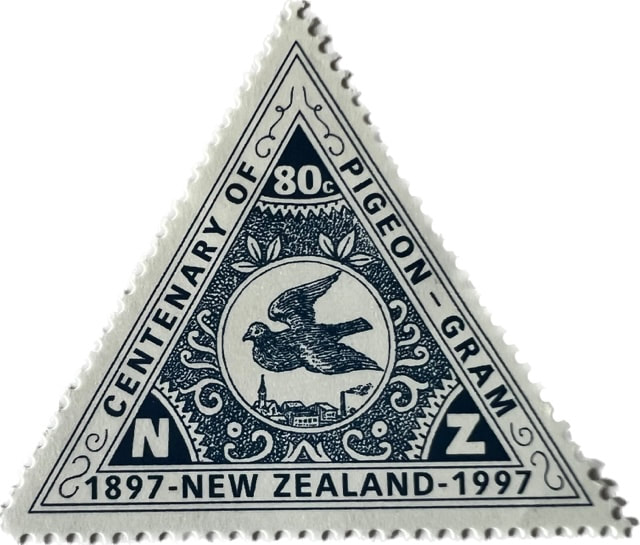 As a journalist went to report on the commemoration ceremony of the tragic sinking of the SS Wairarapa in 1894 he had everything a reporter might need. And a pigeon.
Why a pigeon? Because there was no other way to get the news out. In fact the pigeon - Ariel - had come from the loft of award winning and master pigeon fancier Walter Fricker and Ariel did her job. The year before, when the ship sank, it had taken days to get the news out. The country was staggered by the news of over 130 people who died when the ship wrecked on a reef at the northern edge of Great Barrier Island. And out of that horrid tragedy arose a postal system unique in the country. Walter Fricker realised there was a greater need for a stable method of post between Great Barrier and the mainland. So he, along with stockbroker Joseph Smales, started Fricker’s Great Barrier Pigeongram agency with regular flights every week and with a bird able to carry up to five letters - all written on tissue paper. Fricker was a house painter, whose hobby was pigeons. He had been using his birds to run messages for many years before the postal idea came up. He trained his birds to fly further and further carrying messages. Some had even gone between Auckland and Wellington. His partnership with Smales ended, likely over financial issues, and Fricker sought a government subsidy, but it was declined. In the meantime Fricker had opposition from John Ernest (Jack) Parkin, now in partnership with Smales who set up a similar service. He called his the Original Great Barrier pigeongram service. And he produced unofficial ‘airmail’ stamps - an unique triangle stamp with a pigeon on it. There was quite a bit of wrangling between the two but the pigeons didn’t care, they carried on carrying the mail. Until 1908 when a telegraph cable was finally laid to the island. And many many years later commemorative stamps were issued by New Zealand post. Walter Fricker was born in Somerset on March 2, 1841 to Jonathan and Catharine and came to New Zealand in 1863. He was said to have over 100 pigeons at his Ponsonby home. He died on December 2, 1911 and is buried at Purewa Cemetery.  There are many dedicated to caring for the graves of the war fallen now. There has been a resurgence of interest in not letting the legacy they left behind go.
But before that there was one woman. Edith Mary Statham was born April 14, 1853 in Bootle, Lancashire, England to William and Ellen. The family came to New Zealand in 1863 and settled in Dunedin. Edith was a nurse and also trained as a singer. But poor health led to her giving up nursing for secretarial work and she moved to Auckland. Her skill was organisational talent, working with volunteer groups, with the most significant being the Victoria League. The League was set up to conserve the memory of Queen Victoria. When a branch opened in Auckland in 1910, Edith became the secretary of its graves committee, looking at restoring the graves of soldiers from the New Zealand wars. In 1913 she became a part time employee of the Department of Internal Affairs which took over the restoration work and Edith gained the title of inspector of old soldiers’ graves with a £65 salary. She went on inspection visits, wrote reports and letters as she asked for relatives or local communities to donate and negotiated with stone masons. Sometimes it was easier to put up a collective memorial and despite the Victoria League being about soldiers from the British side, Edith was soon erecting memorials to the Māori that died too. The league however thought there was a conflict of interest and she was forced to resign in 1914. With a new war underway, there was no money for memorials and she went to the office of passports and permits. By 1919, she was responsible for a dozen collective memorials in the North Island including the one at the corner of Wakefield St and Symons St in Auckland and 78 cemeteries were under her care. At the end of the First World War, she became involved in commemorating the dead of that war and continued her work on other memorials until her retirement in 1928 when she became honorary inspector of war graves for the Auckland RSA. But it was not the only organisation that benefited from Edith’s skills. She was secretary of the Navy League, the women’s branch of the Medical Service Corps, district secretary of the Girl Peace Scouts Association as well a Plunket Society, a church, the St Helier’s Kohi Society, a founding member of the Society for the Protection of Women and Children in Dunedin and by no means least an avid cyclist and secretary of the Mimiro Ladies’ Cycling Club. She was awarded the King George V Silver Jubilee medal in 1935 and died, aged 97 on February 13, 1951 and is buried in Waikumete Cemetery. She never married or had children.  With the proposed changeover from pounds to decimal currency came the opportunity to have a uniquely New Zealand look.
On July 10, 1967, it happened and out went pounds, shillings and pence and in came $27 million in banknotes and 165 million in coin. It had been talked about for years but by 1960 both National and Labour agreed. There was lots of talk about what our new currency should be called - with some suggesting fern, tui and Kiwi but we ended up following other countries with the dollar. The first designs were heavily criticised so the Government asked for public input. The new designs were published in newspapers and the ones from James Berry were the winners. The new $1, $2, $5, $10, $20 and $100 banknotes each had different native birds and plants on the reverse. Their design featured complicated geometric patterns, including Māori iconography. Reginald George James Berry had been born on June 20, 1906 in London to James Willie Berry and his wife Amy Blanche Clarissa Wakefield. HIs father died shortly after and James as he was known received an education where his art was nurtured by an aunt, Lillian Berry. A job as an insurance clerk was not for him and he paid his way to New Zealand on the Iconic in 1925, becoming a farm cadet in Gisborne. But two years later he was working as a commercial artist with the Goldberg advertising agency in Wellington. He saved and bought a section, married Miriel Frances Hewitt and had a son and five daughters. He became a freelance artist and then worked as staff artist on The Dominion newspaper. Berry worked with engravers on war work from 1942 to 1944 and then was self employed, designing book covers, bookplates, stamps, coins and medals. His stamps included designs for Western Samoa, the Cook Islands, Niue and Tonga and produced nine of 12 designs for the 1940 centennial stamp issue and the entire peace issue in 1946. While some of his designs were criticised as trite, he was called by the American Weekly Philatelic Gossip as the greatest postage stamp designer in the world. When the designs came up for the new currency he submitted four sets featuring New Zealand flora and fauna. In 1968 - after the currency was well in use - Berry was appointed an OBE. He was so well regarded he was often invited to the Franklin Mint in Pennsylvania and the Royal Australia Mint. That resulted in a huge commission of 60 silver on gold medallions for the Medallic History of Australia. Other commissions came from Britain for medallions of Oliver Cromwell and Winston Churchill. Berry travelled a lot and often had exhibitions. He designed his last medal for a papal visit and after a trip to England, returned to Auckland to visit relatives. He boarded a plane on November 6, 1979, to return to Wellington and suffered a fatal heart attack. He had completed more than 1000 designs for stamps, coins and medals and posthumously received the gold medal of the Accademia Italiana dell’Arte e del Lavoro in 1980 - a medal he had not designed himself. Berry is buried in Karori Cemetery. 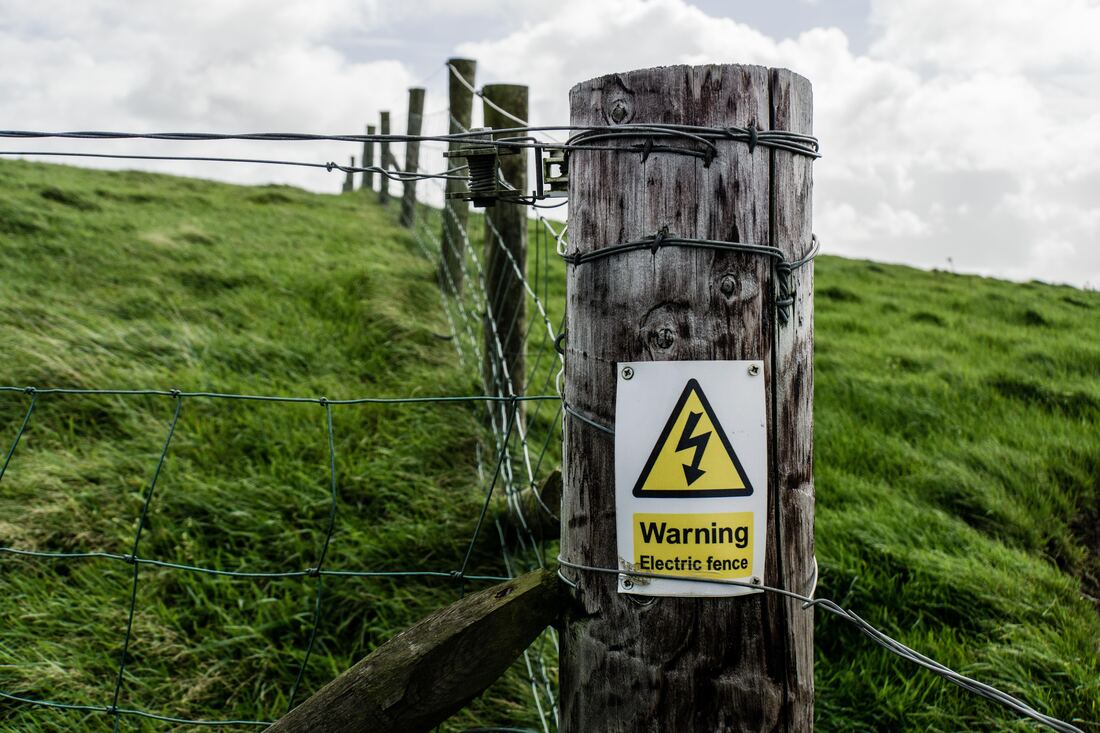 As kids, how many of us just had to reach out and touch an electric fence. You know, to see what happened?
And you got a little jolt for your efforts, right? The inventor of the electric fence Alfred William Gallagher was a Kiwi. And the idea came from his horse. Bill and his brother Henry were working on Henry’s motorcycle one day and a horse wandered into the barn while they were working. Bill’s horse Joe was a nuisance who had learned that he could lean up against the car to scratch an itch. Bill connected the motorcycles’s magneto to his car as a triggering device and when the horse brushed up against the car, it got a little jolt. He immediately recognised the benefit of it. This was a way of controlling wandering stock. In 1937, he created the first electric fence connected to mains power but then, because using the mains power was illegal, he created a battery powered version. Gallagher was born on May 17, 1911, to father Alfred John Gallagher and his wife Sarah Matilda Clow in Hamilton. He was the first of six children. Bill went to the local school, but in 1920 his family moved to Papamoa in the Bay of Plenty to a farm. When he left school he began working on the farm. The farm didn’t thrive and in 1927 his father left and went to Australia. After his mother suffered a stroke, the family moved back to the Waikato, selling the farm. With his share, Bill bought a property and married Millicent May Murray on April 29, 1936. During a visit to Wellington Bill and a mate were offered a job making gas-producers and electric fences. He then worked for the Colonial Ammunition Company then a farm repair business. After the war he expanded a garage on his property to a workshop and began making gas-producers and turning old cars into tractors. Two of his brothers worked with him and created a spinning top-dresser. The workshop also did repairs and created the electric fences units. In 1963, Gallagher Engineering was established with £3000 and his son’s John and Bill Jnr came on board. The electric fence became the most successful product once mains electricity could be used. By the 80’s Bill had reduced his direct involvement although he remained a director. But retirement he kept inventing - crating a hoist for transferring hospital patients from bed, bath and wheelchair. He received an MBE in 1990, was a justice of the peace, and Rotarian. And his electric fences were being used all over the world, including in Malaysia for elephant control and in Canada to protect beehives from bears. Bill died in Hamilton on August 8, 1990 and was buried in Hamilton Park cemetery. Picture by Chris Slupski.  New Zealand’s rowers exploded on the world stage in the last few decades. At the Rio Olympics our rowers won 24 of the medals.
But early last century we also had rowing superstars whose names now are not as well remembered. One was Richard (Dick) Arnst. He was born on November 28, 1883 to Hermann and Catharina Arnst. The pair had met on the voyage from Germany to New Zealand and married in Christchurch. Richard was one of 13 children. Initially Dick and his brothers, Hermann, Jack and Bill were cyclists, going on to be champions. Jack broke records and won many races. He was killed in action at Bapaume in 1918. After a championship career in Australia, Dick took up sculling. He had no previous experience but after tutoring by experts, notably former World Champion George Towns, in Australia he began winning races. He began issuing match races challenges but was not immediately taken seriously until Harry Pearce took him on for £100 a side. He won and immediately challenged World champion William Webb - also a New Zealander - for the professional single sculls world championship title. It was a huge event and at the end Dick had won - in a sport he had only taken up a couple of years before. For several years he held off challengers - including a rematch with Webb and one by Pearce, Australian champion, who he had beaten in his first challenge match. One of his races - against English champion Ernest Barry - took place on the Zambezi River for a massive purse of £1000. Hippopotamuses were deterred from interfering with the race by a marksman. Dick won. In 1911, while on a visit to Sydney, New South Wales, Dick was attacked and beaten. He was nursed by Amy Williams who he later married. They had one son. But in 1912 he lost to Ernest Barry in England on the Thames. When Barry retired the title was up for grabs and Dick claimed it, defending it against Pat Hannan in 1921. His final race for the title took place a year later against Darcy Hadfield who won. After sculling other sports took Dick’s interest, particularly shooting and he won several championships. He and a brother, Henry bought a farm in Timaru. Dick died in on December 7, 1953. Arnst Place in Christchurch is named after him as is the Arnst River in the Nelson Lakes National Park. Despite his prominence in several sports, Dick was not inducted into the New Zealand Sports Hall of Fame until 1995. He is buried in the Timaru Cemetery. (with thanks to Cathy Arnst for telling us about him). |
AuthorFran and Deb's updates Archives
September 2025
Categories |
 RSS Feed