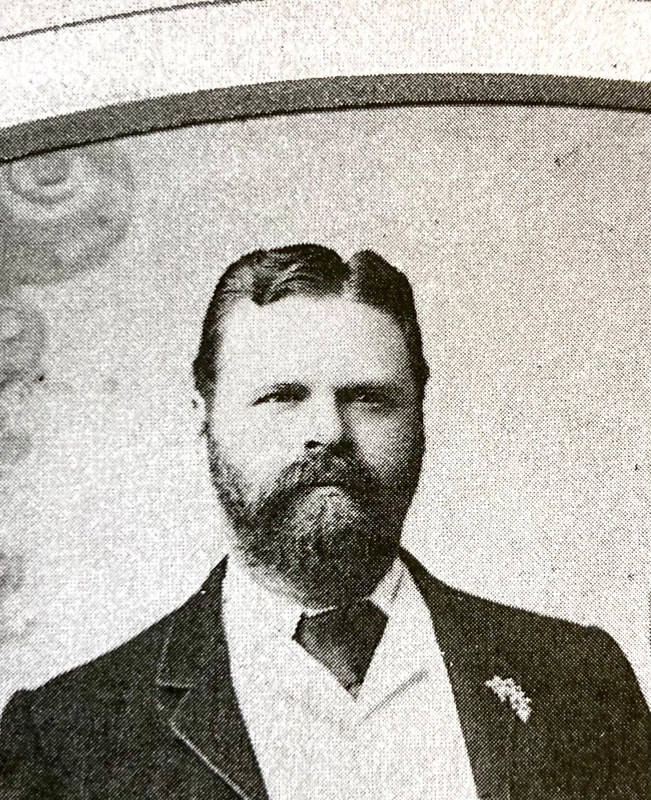
 Arthur Winton Brown had served two terms as Wellington’s mayor. His second had ended in 1891.
A proud, self made man, he took his reputation seriously But within weeks of his final act as mayor - laying the foundation stone of one of his pride and joy’s - the Wellington Free Public Library - Brown suddenly vanished from New Zealand, never to set foot here again. Brown was born in Port Chalmers on December 27, 1856, to carpenter, cabinet maker and shipwright Arthur Brown and his wife Jane and within a few years they had moved to Wellington. HIs first job was stacking shelves at a grocer’s and he could see how well the business could do. By the age of 20 he bought his first store in Tory Street, quickly earning success and opening another on Lambton Quay. But he wanted more than just business success. So he ran for various public offices, first the Mount Cook school committee, then the Wellington City Council, sitting as a councillor from 1881 to 1885. In 1886 he won the mayoralty and served his first term. He went back to being a councillor for a few years but stood as mayor again in 1891. His term finished in December that year. A few weeks later he told friends he was going to Mokau in Taranaki to visit a coal mine he was director of. He never showed up and shortly after his friends, and his wife Mary Eliza Linnell began to worry about him. In fact, Brown sailed to Auckland and then to Sydney and there he wrote letters to some friends explaining he had left because of debts. "It may be cowardly, but after having occupied the positions in which I have been placed by the people of Wellington, I have not the moral courage to face the inevitable crash," he wrote. Initially that made no sense, he was considered well off. But with the collapse of the Mokau Coal Company only a few months after his departure, it became clear. As director he would be liable for the debt. A warrant was issued for his arrest in New Zealand and he was listed as an absconding debtor in Australia but by then he had already moved on - with people claiming he was in Japan, then London. Then in 1894 he was in New Orleans, apparently doing well for himself, where he worked as a journalist. He went on to be part owner of a newspaper. Brown died on July 27, 1916, at his home. He had been sick for some time and suffered a stroke. Brown is buried at the Masonic Cemetery No 1, New Orleans.
0 Comments
 Flour and cocoa miller John Griffin had a vision. He wanted more than the daily grind.
So he struck out for New Zealand - and created a legacy that we all still see every day. Because who among us hasn’t had a Griffin's biscuit? Toffee Pops, Shrewsbury, Squiggles or that coffee dunking favourite - gingernuts? He was born on November 20, 1812, to John Griffin and Hannah Hollis in the village of God’s Hill on the Isle of Wight. He married Charlotte Reynolds in 1840 and they went on to have seven children. John ran his own flour mill - using a windmill - before deciding he wanted more opportunity. He packed them up on to the barque Ashmore and they sailed for New Zealand in 1854 arriving in Nelson. He immediately set up a bakery in Trafalgar S,t but almost as quickly lost it in an earthquake. Despite learning and rebuilding in wood, business was slow and he relocated his family to Christchurch a few years later. John worked as a grocer and a draper before the whole family returned to Nelson where he bought land and sold fuel, flour and biscuits, including candied peel and drinking cocoa. It was here he died in 1893. It was two of his sons who decided to expand the business but it wasn’t easy. Twice their factory burned to the ground. The second time, in 1903, a new modern factory was built. In 1938, the whole biscuit making side of the business was moved to Lower Hutt - at the bottom of the hill to Wainuiomata. The factory in Nelson was turned over to confectionery. During World War Two the factory began making huge quantities of army biscuits to be shipped to the Middle East. It was considered a cutting edge production facility - including the first full automated wrapping machine. The factory closed in Lower Hutt in 2009 putting 228 people out of work while the Auckland factory took over production. John is buried in Fairfield Cemetery.  At the top of the beautiful Good Samaritan window in Old St Paul’s Cathedral in Wellington is a little mystery.
Carved into wood high up is a face, it is hardly visible from the ground and no one knows exactly who it is. It is only one of the odd mysteries of the lovely old church. There are a number of possibilities, including William Levin (yes the town of Levin is named for him) for whom the window was made, it might also reflect one of the faces from the window or just be a cheeky member of the building crew. But there is another person whose name is prominently connected with the church, builder John McLaggan who with his team of carpenters, are responsible for building it. John was born in Scotland in about 1803. It’s unclear when he came to New Zealand but about the 1840s with his wife Margaret. Along with being a carpenter, John had political ambitions - he stood along with Edward Jerningham Wakefield for the Wellington provincial council which he won but fortunately it was the only time he dabbled in politics, at least for the church. The land for Old St Paul’s was bought in 1845 and by 1865 the foundation stone was laid and John and his team of eight carpenters got to work. Built in the gothic revival style and of New Zealand timbers it also includes a piece of wood - hidden in a pillar and inscribed with McLaggan’s name and those of his whole team. The church was consecrated in 1866 and opened for worship. McLaggan then won the contract to construct a deep water wharf - Queen’s wharf. It was a huge complex task especially competing with the ocean - and that ships were coming into it before it was even finished. Meanwhile McLaggan was also the city’s undertaker (perhaps on the basis he could build coffins) and owned a saw mill in the Wairarapa - probably a necessity with how much wood he was using. He won a contract to make the wooden seats, pulpits and reader’s desk for Presbyterian St Andrew on Lambton Quay (the building was later shifted to Tinakori Road) McLaggan died in 1886 and he and his wife are buried in the Bolton Street cemetery.  Whether you believe in the strangeness of the Bermuda Triangle or not, there have been disappearances there that are unexplained to this day.
And one is the flight captained by New Zealander and war veteran John McPhee. John Clutha McPhee was born on June 21, 1918, to Gilbert James McPhee and his wife Elizabeth Charlotte McPhee. He went to school in Dunedin before going to Victoria University. Athletically inclined, he decided to enlist in the RNZAF in 1942 and showed an aptitude for flying. He was one of many sent to Canada for training before going on to England as pilot of a Liberator bomber. John flew many missions until the war's end and after a desk job did not appeal he was put in touch with airlines, getting a civil flying licence. In 1947, he began flying for the British South American Airlines Corp where he made headlines for having been the co-pilot on a world record setting flight from London to New Zealand. John often flew the route between Bermuda and Kingston, often stopping over in Bermuda where he would play golf and gather with other pilots at the White Horse Tavern. He was back in the newspapers in 1949 when the Star Ariel plane he was pilot of vanished without trace on a flight that left Kindley Field in Bermuda at 8.41am to Kingston on January 17. There were 19 people on board. A massive search was commenced, with two US fleet carriers, five other naval vessels and 63 aircraft. There had been no SOS and the last radio report was a standard position relay. Nothing was ever found and over time it was relegated to yet another mystery of a missing plane in the notorious Bermuda Triangle. There were odd theories, including the manufacturer of the plane claiming sabotage. It was much much later that the plane became known for the possibility of explosive decompression due to metal fatigue. The Star Ariel however was a Tudor IV, a relatively new airliner and there was never any debris found. To make it weirder, the Star Ariel’s sister airliner, the Star Tiger had also vanished, the same way nearly a year before. As of now, the plane and its crew and passengers are still missing. Among them, ironically, was the deputy director of accident prevention at the Air Ministry during the war. 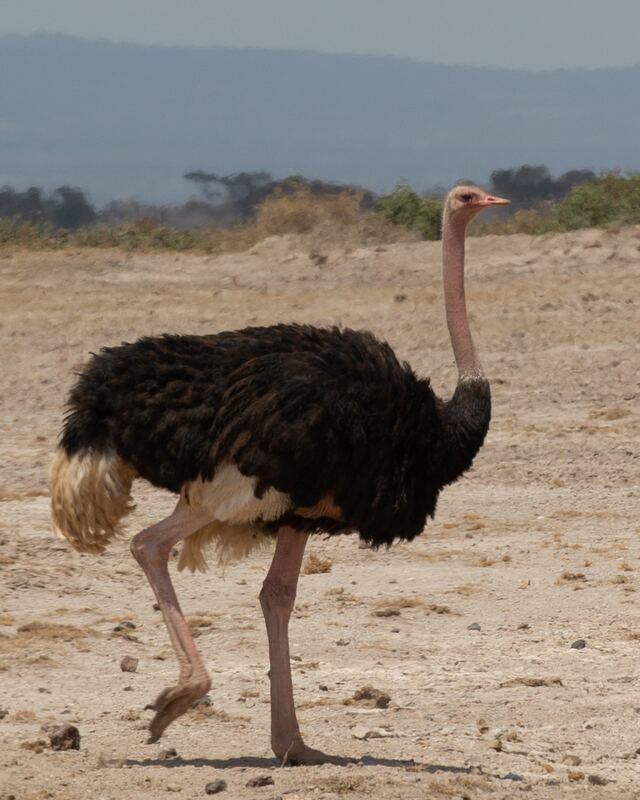 The ostrich farmer
In the fields of Merivale in 1883 was a farm unlike other farms. Its fields were full of stock of a very different kind to other farms - ostriches. A world wide fashion craze among society women was for feathers for their hats. It led to increasingly outrageous hats with feathers from the plumage of any bird deemed suitable, peacocks, pheasants and ostriches. And it was unbelievably popular. In 1807 about 509 kilos of ostrich feathers were imported into France alone. It was a cruel trade, with birds like ostriches being hunted to near extinction for a handful of feathers on a hat. It only really slowed when the farming of birds took off. And John Thomas Matson of New Zealand saw a chance. In 1883, he imported four of the big birds into New Zealand - one died on the journey and another died of injuries on arrival. But he was left with a male and female. And they bred and by 1887, Matson sent 2000 feathers to England with instructions from Matson for some to be made into fans to be given to Queen Victoria and the Princess of Wales. His farm became something of a tourist attraction - it was near a tram line in Papanui Road and passengers would look out for the birds. In 1891, John’s operation was bought by the New Zealand Ostrich Farming Company - the flock now stood at 49 birds. But it wasn’t to last. The trend began to die and in 1916 - with the effects of austerity from World War One - ostrich feathers were removed from the list of New Zealand industries. John however had not lived to see his wild idea die. Matson was born to Henry and Alice Matson in Goulburn, Victoria, Australia on March 30, 1845. He came to New Zealand with his father in 1862 and they settled Springfield farm. He married Marion Thomas. It was not John’s only odd farm animal. He also farmed alpacas which had been given to him by Robert Heaton Rhodes, the local member of Parliament. John also worked as an auctioneer - conducting the first ever wool sale in Canterbury. A devoted parishioner of St Paul’s in Papanui, John paid for the church bells. When he died in April, 1895, the bells were rung - but muted - for his service. John is buried at the St Paul’s Anglican Church Cemetery. Picture by Saad Khan.  John Wainhouse wasn’t put off by the idea of ghosts.
As a police constable in Kingsland, Auckland, he had likely heard quite a few weird things, but in 1912 he was tasked with investigating a ghost scare. Not being a paranormal investigator he took a pragmatic approach to the rumours that were swirling around the suburb. One young woman had been woken late at night by a light outside her window. On going to look outside she saw a spectacle in white that scared her so she hid in bed under the covers in terror. She later told a newspaper she hadn’t told anyone initially because she thought they would laugh at her. Shortly after two young women, Misses Yates and Foster, were scared by a figure in white as they walked home about 6pm at night. Both were shop girls not normally prone to flights of fancy. They said they had seen something that had made horrible noises and sent them fleeing to a nearby house they knew while it chased them. It might have been left as the imagination of young ladies except that the following evening several residents heard terrifying screams that sounded like a woman although no one could be found. Nevertheless the papers still thought it was someone under a sheet. But as Wainhouse began asking about the suburb he couldn’t actually find the young woman who had hidden in her bed or anyone who knew who that was. However there had been a couple of Fijian men in the area out for a stroll wearing white at the same time. As for the second sighting he found a white taxi whose driver was wearing a white coat while trying to relight his lamps in the rain. As he got them lit, suddenly making himself visible, two young women screamed and ran off. Wainhouse reported that nothing in the shape of a ghost had been found and that police had been patrolling the area without success. And after that nothing was heard or seen of the Kingsland ghost again. John Robert Wainhouse died in 1943 in Whanganui and is buried, along with his wife Eliza, in the Aramoho Cemetery. Happy Halloween and watch out for ghosts!! Pic by Tandem X Visuals.  Percival Leonard Carol Redwood was a married wealthy sheepfarmer. There were only a few things wrong with that statement - he wasn’t wealthy, a sheepfarmer, married or indeed a man.
The bizarre story of Any Maud Bock is one of a confidence trickster who worked her schemes all over New Zealand and often for just a few pounds reward. It’s hard to know if the money was what she wanted or whether it was acting out her fantasy life. Bock was born on May 18, 1859, in Hobart, Tasmania to Mary Ann Parkinson and her husband Alfred Bock. Her childhood was spent there and in Melbourne. Her father was an artist and photographer and encouraged her to take part in amateur dramatics. Her mother, howeve,r died in a mental asylum in 1875 believing she was Lady Macbeth. She found a job as a teacher but by1885 she got into trouble for illegally acquiring goods and her father persuaded her to move to Auckland. She began working as a governess but within weeks had defrauded her employer and appeared in court. She made a tearful confession and was let off. Bock often found work, as a cook, housekeeper or companion creating a fantasy life about herself, like that she was from a well off family with a noble sounding name. Her employers initially valued her until she managed to get some money, sometimes by pawning her employers possessions, before disappearing. Once found and in court she would ask for forgiveness and be sentenced. One of her tricks was to forge letters to herself about the things she took, perfecting seven different types of handwriting to do it. Her first official appearance was in 1886 when she was charged with buying goods on credit and she got hard labour for a month which she served at Addington gaol. The next year she was back on fraud charges. Once she convinced a man to marry her, and they went off to Melbourne, only for Bock to disappear with all his possessions. Quite often she had given away what she took. While working as a matron at the Otaki Maori Boys College, she would use stolen money to buy boots for her pupils. The pattern continued for a while, until in 1908, she was living in Dunedin as Agnes Vallance when she pawned her employers furniture before hiding out when she decided on her most audacious scheme yet. She began posing as Percival Redwood, cutting her hair short, holidaying at the Albion House on the South Otago coast and began wooing the landlady’s daughter Agnes Ottaway and they got engaged. Bock even took her and her mother on a shopping trip for the wedding - using money he had tricked out of a solicitor. When creditors arrived demanding payment for various things Bock - or Percy - would string along another story. Bock managed to maintain the deception even to the point of marrying the girl on April 21, 1909. But four days later she was arrested and convicted of false pretences, forgery and making a false statement under the Marriage Act then declared a habitual criminal. The marriage was then annulled. She was released from New Plymouth gaol in 1911 and began working for an old people’s home. She married - legally - Charles Edward Christofferson in 1914 but the marriage only lasted a year. Bock managed to gain a few more convictions before making her final appearance before a court in Auckland and gaining two years probation. In all she was jailed 13 times for a total of 16 years and two months. She died on August 29, 1943 in Auckland and buried in an unmarked grave at Pukekohe Cemetery.  William Vining cranked the starting handle on his little open-topped Cadillac, joined his three passengers and began the first trip from Nelson to Christchurch by car.
It was a torturous trip filled with breakdowns, fording rivers, and having to have the car towed. They started out on March 26, 1906, in a 10hp single cylinder car with rain coming down. The car laboured up hills and along trails where only centimetres were between them and a sheer drop. Progress was slow and at Havelock they invested in an umbrella - which along with wraps and waterproof coats were their only protection against the rain. Several times the car got bogged down, once in a cattle stop, often in mud. During one mud-logged stop, even using tussock under the wheels they were unable to move the car, ending up walking five miles to a homestead where men with a cart horse dragged the car out. At the Hapuka River, another horse was used to pull it but it became stuck. Several onlookers helped move boulders from the river bed to get the car to the other side. More horses had to be used at the Kowhai then Stormy Creek. Finally they arrived in Cathedral Square on March 31. But it wasn’t the end - after a few days' rest they turned around and drove back! They arrived on April 8 having gone 2000 kilometres. William Graeme (sometimes spelled Graham) Malone Vining was born in 1865 in London to barrister and solicitor James Tully Vining and his wife Emma Mayo. In 1892, he boarded a ship to New Zealand and spent weeks horribly sea sick. Eventually he landed in Nelson and opened a business. He imported and sold bicycles, believing them better than horses. He was also the organist for the Nelson Cathedral and he also sold pianos. Vining became fascinated with motorised transport and imported into New Zealand one of the first cars, a Benz. It had bicycle-like wheels. The trip between Nelson and Christchurch was in part to promote cars to the public. He had opened a garage and later established a car assembly factory putting together Cadillacs, Maxwells, Beansm Haynes, Darracs and Unics. He imported Model T Fords and Nelson’s first bus. Vining married Margaret Kebbell of Wellington in 1895, and they had two children together, a daughter, Vera, and a son, Phillip. He retired in 1927 and sold the garage (to the disappointment of his son who opened his own) Vining died on October 18, 1948 and is buried in Wakapuaka Cemetery in Nelson. Photo by Yoal Desurmont.  The closure of the supermarket at Wellington’s majestic railway station is by no means the first amenity to go.
The railway station used to have tea rooms, a nursery and even a barber’s shop. It was designed as a place for travellers to rest and get what they needed before travelling on, all amongst the magnificent art deco setting. The station itself is a heritage-listed building and can’t be changed without much consultation. But it’s not the first railway station Wellington had. That was built at Pipitea Point and on earthquake-reclaimed land. The train line then ran right down Featherston Street. The first station was pulled north of huge rollers to a site on Featherston Street. There were a series of smaller stations after that until in 1929, Wellington architect William Gray Young was selected to design a grand new station. Gray Young was born in Oamaru, the son of a Scottish watchmaker and jewellery retailer Matthew Gray Young and his wife Agnes Anderson Barclay. Matthew and his family moved to Wellington in the 1890’s, and William attended Wellington College before going on to the architectural firm of Crichton and McKay. He made his mark early, winning the competition to design Knox College in Dunedin. Gray Young married Irene Deans Webster in 1913. They had three daughters and one son. He was judged unfit for military service for World War One so continued to practise. His buildings are noted for their neo-georgian and neo-classical styles. The list includes Wellington Technical College in 1919, the Wellesley Club, the Easterfield building at Victoria University, Scots College, what is now called Trekkers hotel, the home of Plunket found Sir Truby King, the old Boy’s Institute (Now Third Eye), Whanganui Collegiate, the Indonesian Embassy and the Carter Observatory. In 1929, he began work designing Wellington’s magnificent historic railway station. By then he had his own firm of Gray Young, Morton and Young. The second Young was his younger brother Jack. The new station was opened in 1937 by the Governor General.. He was paid a 4% fee based on the originally estimated cost of £470,000. Gray Young also designed Christchurch’s railway station in 1938 - although it was not built until 1960. When Wellington’s Railway Station was opened it was then New Zealand’s largest building with its impressive columns and beautiful ceiling. Inside were waiting rooms and toilets, a large dining room, a barber shop, book and fruit stalls, kitchen and a first aid room. There was a nursery on the top floor to allow parents to leave their children while they shopped or waited for their train. A possible mail room was not built to help keep the cost down. Over time, all the shops and amenities were closed down. 1500 tons of decorative Hanmer and Whangarei granite and marble were used to clad the interior and the entranceway. 2500 gallons of paint were used. The roof was clad in Marseille tiles. The station has its own roll of honour of 450 railway workers who lost their lives in World War One. Gray Young was also both the president of the New Zealand Institute of Architects and of the Wellington Rotary Club. He died on April 21, 1962 and was cremated at Karori Cemetery. 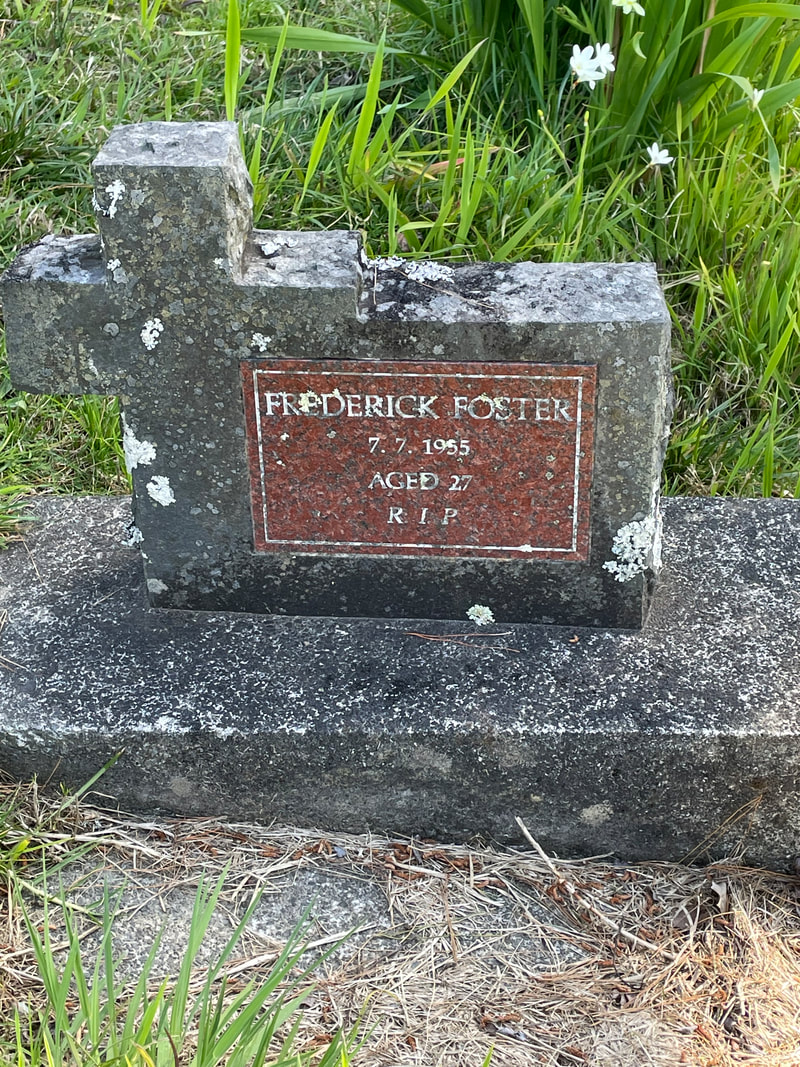 Frederick Foster lurked in a quiet seat across the Auckland milk bar from the woman he wanted to be with. He had a drink in front of him and spoke to no one.
But he also had a gun with him. Foster was desperately in love with Sharon Skiffington. The pair had met in 1954 - Sharon was 19 and working as an usherette. Foster was 26. And married. But when he confessed this to Sharon - and told her a divorce was coming through - she broke it off with him. Foster had been born in England where he had married a girl called Sylvia in but they had separated and he had emigrated to Australia in 1953, then come on to New Zealand. He had also told Sharon about other girls - called Rita and Pauline. He even invented a girl called Shirley - all with the intention of making Sharon jealous. But when Sharon turned him away, Foster came up with another plan. He would fire a gun to frighten her On March 28, 1955, Sharon was at a milk bar in Auckland sitting at a table with a drink. Foster had followed her and sat at a table near the door. When she got up to leave he raised a shotgun he was carrying in a paper bag and shot her. A brave commercial traveller Walter Brown grabbed Foster by the neck and took the gun, holding him until police arrived. Sharon died in hospital shortly after. At his trial Foster revealed his mad plan to shoot the gun near Sharon - for publicity - and hoped it would rekindle her feelings for him. He denied wanting to kill her. He said he was guilty of being in love. But the Crown painted a picture of a man obsessed with sex and unscrupulous with women. It took the jury one hour and 17 minutes to find him guilty. Shortly before his execution his mother Alice flew out from England to ask for clemency but it failed. Foster was hanged on July 7, 1955. Oddly he had his appendix removed only a few days before he was executed - the wound had not even healed. Unlike a great many murderers, Foster has a headstone clearly marked - many have nothing to mark the spot where they lie. Foster is buried at Waikumete Cemetery in Auckland, not too far from where Sharon lies. |
AuthorFran and Deb's updates Archives
September 2025
Categories |
 RSS Feed