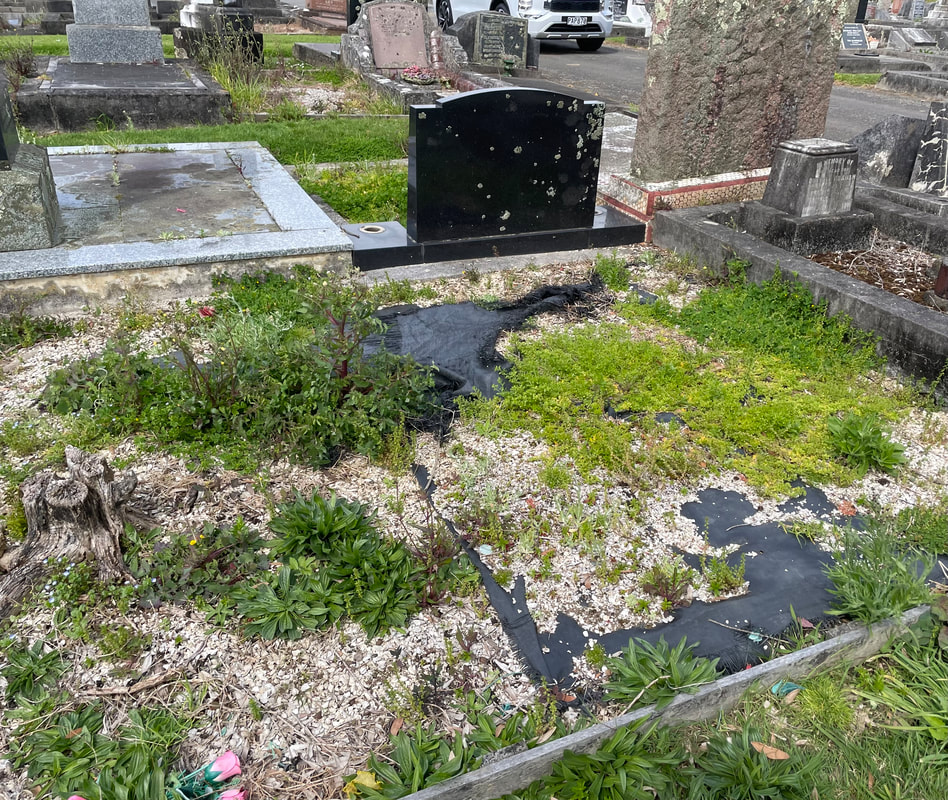
 In the burial register at the Mangere Lawn cemetery is an unusual name and an equally unusual occupation as one of the earliest burials.
Charles Thomas Brillianso was said to be an acrobat, but that doesn’t begin to explain his life and story. In fact Charles came from a family of performers - which started in Europe and ended here in New Zealand. His father William - called Wilhelm - was from Berlin in Germany and was also a performer. Europe had a long history of circus folk - whole families who spent their lives travelling and entertaining under a Big Top. Wilhelm and his wife Emma had Charles in Kwazulu-Natal in South Africa in 1876. By 1891 Charles and his partner Dick Hayes had their own circus and were touring New Zealand, although the seven horses they relied on for their performance had trouble coming through quarantine. They were able to rejoin the circus early in 1892. Their huge tent could hold 2000 people and the show featured globe walking, dancing ponies, plate spinning, juggling, clowns, contortionists and a trapezist from around Australia, South Africa and England. While not hugely popular in Auckland, the circus usually showed to sell out crowds around the country. The stars of the show were the horses. Charles himself was indeed an acrobat - but he was so many other things, bareback equestrian, high wire artist and tumbler. He was able to leap on to a horse while at full gallop. He performed with several circuses while in New Zealand. Charles was born in Kwazuliu-Natal in South Africa in 1876, shortly before his father died in April that same year. He married Emily Childs and had two children, Charles who died young and Ruatara, who was born in Auckland and also was a showman. In 1895 Charles suffered an accident while performing, badly injuring his leg and putting an end to his career. He was in hospital in February 1896 having contracted what the papers called inflammation of the lungs. Charles died on March 6, 1896 and is buried in an unmarked grave, one of the earliest burials at the Mangere Lawn Cemetery.
0 Comments
 Was Victor Penny really the inventor of a death ray or was he just someone who liked to reinvent himself?
In 1935, a couple of small articles about an assault on a Takapuna bus depot night attendant in June led on to an extraordinary story in which the New Zealand government might have been fooled into thinking one man could create the ultimate weapon. Victor Penny was an amateur radio enthusiast. The assault left him badly injured and Penny was taken to hospital and then unusually, he was under police guard. What was so important about this man that he needed a police guard? Then suddenly Penny vanished. What happened next was something out of a science fiction movie. Penny had said he had discovered something important during his amateur experiments - a kind of ray that could destroy an enemy - taking out whole armies and even bring down planes in flight. He claimed he had been contacted by foreign agents, threats were made against him and that an enemy state might have been responsible for the assault. In secret, he was whisked to Wellington and ended up on Somes/Matiu Island, a former quarantine site also used during World War One for holding suspected aliens. He was provided with sleeping quarters - surrounded by barbed wire and with armed guards and was allowed no visitors. His apparently long suffering wife Kathleen was later allowed to join him but had separate lodgings. But what he was working on is still a bit of a mystery. Then, in March 1936 Penny was suddenly sent home - with nothing to show for his time. And Peter Fraser - who would shortly be elected Prime Minister - made a disparaging comment in Parliament that: "Penny had been claiming for years he was the inventor of a death ray. We found him under guard and still searching for his mythical death ray at a cost to the country of £1000...a child could have seen there was nothing in it." So who was this man? Victor George Marcus Penny was born in 1897 to mechanic father George Penny and his wife Mary Ann Trim in Christchurch, Kent in England. The family came to New Zealand in 1914. Penny married his first wife Kathleen emily Penny in 1923 and is best noted for working a variety of mundane jobs, bus driver, and at the police commissioners office in Wellington. Kathleen died shortly after Penny came back from the island in 1939 and the next year he married Grace Bryce. He worked at the Post and Telegraph in Auckland and then in 1943 was living in Mount Eden working as a radio engineer. But after that the pair left for the South Island where they initially lived in Clutha at a presbyterian manse and Penny appears to be a minister. And later the pair were in Middlemarch. Penny died in 1970 and is buried in the Green Island Cemetery in Dunedin. He never did tell about anyone about his death ray experiments. Photo by Nik. 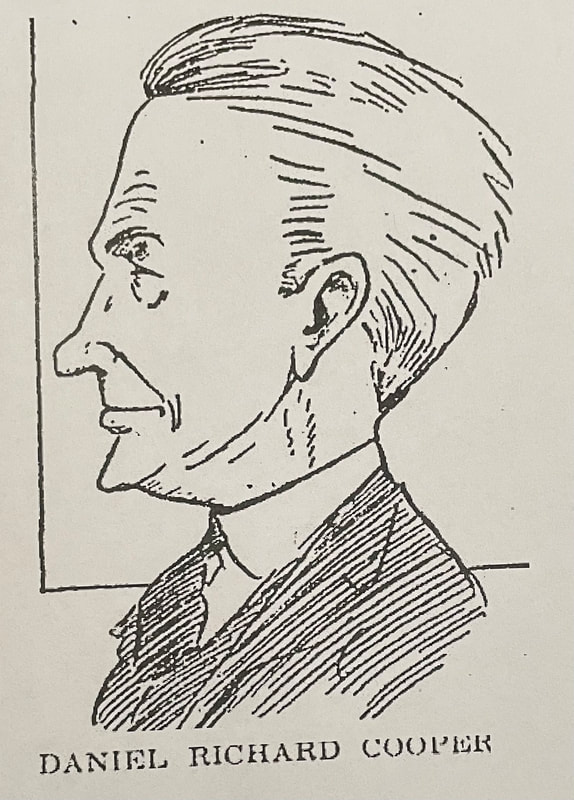 One hundred years ago Wellington - and the country - was spellbound by the trial of Daniel Richard Cooper, abortionist and baby killer.
People queued for entry to the trial, some packed lunches so, if they got a seat, they would not have to leave. They goggled at the exhibits - which included the tiny skeleton of a baby - in court and held their breath when the jury returned. The headlines had been screaming for months after police became suspicious of Cooper and the women who had been living at his 19 acre property in Newlands in 1922. When Cooper - who had been running a health business from a Lambton Quay office - was arrested along with his wife Martha - they were held on a charge of illegally detaining a child. That quickly turned to murder after the discovery of a female baby of less than a month old buried in their back garden. It got worse when two more baby bodies were found, although a doctor was not able to determine sex due to decomposition. This year, for the first time, the file on Cooper has been released publically from New Zealand Archives. Cooper was born in Otepopo - now called Herbert - near Oamaru on October 18, 1881 to George James Cooper and his wife Jessie. He had worked as a builder before marrying his first wife Marion. They had two children before Marion died in the eighth month of her third pregnancy. There had been rumours about Cooper before, that he was having an affair, that he performed illegal abortions and now, that he had poisoned his first wife. He married again quickly, to Martha Elizabeth - who he had met before Marion had died. The couple moved around a bit, but in 1919 they came to Wellington. After a short stint in Island Bay they moved on to a farm in Newlands. And Daniel - who had no medical training or licence, opened a practice on Lambton Quay. He sold remedies for things like hair loss and women’s complaints - a code for performing abortions. An illegitimate pregnancy could ruin a woman and any way out was better than a child. So Daniel would arrange the procedure or he would say he could find parents for the child. Several women came to stay with him and his wife at their property. He charged them rent and a fee for adopting out the children. But it was all a scam - one called baby farming. It was already a sensitive topic in New Zealand after Minnie Dean had been convicted and hanged about 28 years before. The Crown opted to proceed on one murder charge - that of a baby girl of Mary McLeod and William Welsh. It took the jury only just over an hour to find him guilty. But his wife - facing the same charge - had claimed she knew nothing about it and was nothing more than a drudge in her own household. She was found not guilty. The trial also threw up several revelations - like that Daniel had had his mistress - Beatrice Beadle living with them. On June 16, 1923, Cooper - who had been protesting his innocence was due to go to the scaffold. Thirty minutes before he finally admitted some part in the deaths of the babies and said his wife was innocent. Shortly after 8am Cooper was hanged, the last man to be executed at the Terrace Gaol. Martha - moved back to Dunedin, went back to her maiden name and remarried. Cooper was buried in an unmarked grave in Karori Cemetery. The bodies of two of his victims were held at the New Zealand Police Museum until 2015 when the remains of several infants were finally buried at Makara Cemetery. Drawing of Cooper in court from The Truth.  The women of aviation in the second world war often did not get the same accolades as fighter pilots but their job was hard, dangerous and often overlooked.
But without them, many things that needed to be done, would have had to be taken by men. One was Jane Winstone. Jane was born in Whanganui on September 1912 to chemist Arthur George Winstone and LIna Storme Clapham. She began flying at the age of 16 as a hobby becoming a foundation member of the Whanganui Aero Club, going solo at 17 and became the country’s youngest female pilot. Jane left school to work in her father’s chemist shop but continued flying, often in pageants around the country. In 1934 she and three other women pilots flew their de Havilland Gipsy Moths to meet aviatrix Jean Batten during her tour and flew with her. It was through flying she met fellow pilot Angus Carr MacKenzie. They got engaged and in 1940 he joined the Royal New Zealand Air Force and became a commissioned officer. Jane was also keen to help the war efforts and offered her services to the Air Transport Auxiliary (ATA) in Britian. ATA ferried aircraft from factories or maintenance units, delivered and collected mail, signals and secret documents and transported personnel on urgent duties She was accepted but had to make her own way to Britain to have medical and flying tests. Just as Jane was leaving for England she got word that her fiance was missing on a raid over Essen. His body was never recovered. She continued on passing her tests - one of five New Zealanders among the 90 women who served with the ATA. (They were called Atta Girls) She had to learn how to fly many different aircraft. It was definitely dangerous, mostly they flew solo and radio contact was forbidden. They also had to keep watch for hazards. Jane flew Supermarine Spitfires, Hawker Hurricanes and even a Gloster Gladiator used in film. She often delivered them to airbases for other pilots. It was during a flight in a Spitfire on its way for maintenance on February 10, 1944 that her plane engine failed and she spun into the ground. She was 31 years old and held the rank of lieutenant. She was buried in the local cemetery - Maidenhead - in a section set aside for ATA deaths. She was one of 16 women from ATA killed during the war. A retirement villa in Whanganui is named after her. Photo by the Wanganui Chronicle.  His Honour Justice Henry Barnes Gresson placed a little black cap on his head on October 28, 1862, as he sat in the Supreme Court in Dunedin.
It was a fateful moment. Putting on the black cap meant someone was about to be sentenced to death, an odd tradition from England, supposedly from the Irish caip bháis or cap of death, It was historic - the first (reported) murder trial and death sentence passed in Otago. And the man was John Fratson - whose murder of Andrew Wilson, was considered one of the first in the colony. Wilson, who was 25, had left Dunedin to look at some land near the Clutha district - after all, the possibility of land was why so many came to New Zealand. But a short time later when his friend Richard Leary hadn’t heard from him in a while, he went looking. He discovered that Andrew had been seen in the company of a John Fratson who lived in a hut near the river. Richard returned to Dunedin and told the police who went to look for Fratson. They found him trying to make his getaway. He, his wife and two children were on the ship Gothenburg, about to sail for Melbourne. But initially no one knew where Andrew was. The winter of 1862 was unusually severe. And the Molyneaux River was very low. It took some time but Andrew’s body was eventually found with his head smashed in and an axe, found to be Fratson’s, was found with the body. The theory was that Fratson had invited Andrew into his home but then murdered him, No newspaper report mentions why Fratson committed murder but it was clear he and his family - a wife and child - were living in extreme poverty, while Andrew had at least enough wealth to buy some land. The inquest found that Fratson should stand charges and the trial took place quickly. As Fratson’s wife and child sat in the back of the court, the jury took very little time to find him guilty. And Justice Gresson sentenced him to death almost immediately as Fratson sobbed. It must have been quite the moment for Gresson, who had been born on January 31, 1908, in County Meath, Ireland. He became a lawyer there then emigrated with his family in 1854, landing in Nelson and taking an overland track to Canterbury. For a time he was a prosecutor but was appointed a judge in 1857 and became the presiding judge for the South Island. That would have meant the trial of Fratson would likely have been the first murder in the area and the first time Gresson had put on the little black cap and ordered an execution. He later gave up the post of judge when Parliament decided the Minister of Justice could order judges to move to different courts. He turned to farming. Gresson had married Anne Beatty in 1845 and they had two girls and a boy. Gresson died on January 31, 1901 - his birthday - and is buried in the St Barnabas Anglican Cemetery in Canterbury. Fratson however is not listed among those executed in New Zealand after his sentence was commuted to a life sentence in December 1862 following a petition to overturn his death sentence. Photo from The Press. 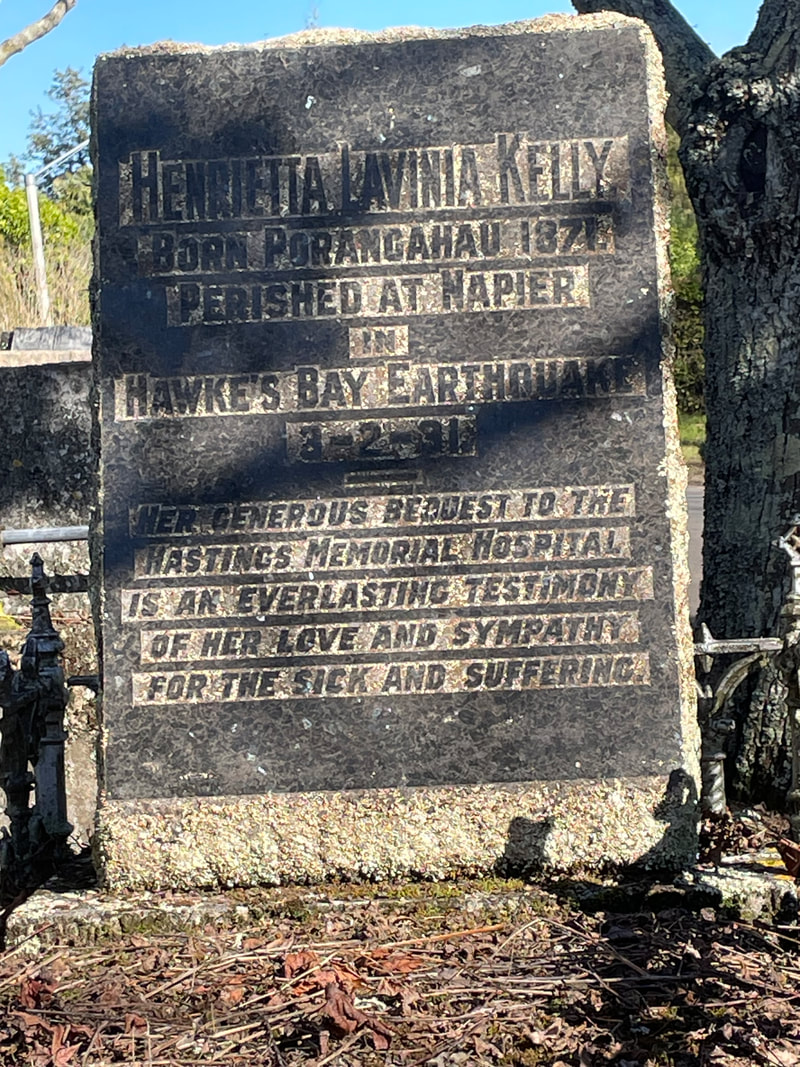 Most people don’t know that the Hastings hospital is actually a war memorial or that one woman’s last wish helped turn it into the hospital it is today.
It was in 2015 that the name Hawkes’ Bay Fallen Soldiers’ Memorial Hospital was restored in full after nearly 100 years. And most people don’t know that a great deal of how the hospital is now was because of a 1931 earthquake victim whose body disappeared after she was last seen in her room by the balcony of Napier’s beautiful Masonic Lodge. It is suspected that there are victims of the 1931 earthquake not properly memorialised and we know there are some whose bodies were not found. One is Henrietta Lavinia Kelly, who had been living in what was called room J on the first floor of the lodge for nearly a year. Her room had a window and a door opening onto the balcony. She had been seen the day of the earthquake but after, with the lodge in ruins and fire rampaging through the middle of Napier, she was never found. But Henrietta’s name should be remembered for what she did after she died. Fundraising for the hospital had started in 1919 and in 1927 the foundation stone was laid. It is inscribed “Hawke’s Bay Fallen Soldiers’ / Memorial Hospital / erected 1927 / by the people of the district / in everlasting remembrance / of our honoured dead/ 1914-1918.” The hospital was opened on Anzac Day 1928. After the 1931 earthquake it became a general hospital. Henrietta was born in around 1871 in Porangahau. Little is known about her early life. But in the 1928 electoral rolls she was living in Knight St, Hastings with Elizabeth Bishop, whose maiden name was Kelly. Elizabeth had been the wife of well known stock agent Thomas Bishop. They had seven sons - only one of whom - Herbert - survived. There are no records of daughters. It was Herbert who tried to find Henrietta in the aftermath of the earthquake. Thomas died in 1888 and left Elizabeth with a small fortune. His will left everything to Elizabeth and after her his children “including daughters.” It’s unclear how Henrietta is related. She might be a daughter whose birth is unregistered. Regardless she had quite the estate and when she died she left her entire estate - £35,000 - bequeathed to the Hastings Fallen Soldiers Memorial Hospital, in Hastings. It amounted to over $1 million then. Her estates were tied up but instructed to be applied to the hospital. “For any such purpose as rebuilding, building additions to the present block, in maintaining the hospital, "or in any other manner for the benefit of the hospital." Because of her the hospital was expanded. And the expanded hospital - taking it from 20 beds to 50 - was opened in 1935 as a general hospital with a maternity and Karitane section attached. Henrietta is buried in the Havelock North Cemetery.  It took 10 minutes for the tornado that ripped through the suburb of Frankton in Hamilton to reduce whole streets to rubble, injuring many and killing three.
It had been a rainy day on August 25, 1948, and it was nearly lunchtime when the roaring began. The little town of Frankton Junction was built around the railway station and the industrial commercial area - most men were workers and women were homemakers. In many ways it was a very traditional suburb. None would have expected their world to be turned - quite literally - upside down. The tornado seemed to come from a nearby wooded area and it headed right through the commercial part of Frankton. Within minutes the tornado cut a swath 200m wide through the suburb. One woman was home with her two children, just setting the table for lunch when a huge dark cloud turned day into night. Taking her children she headed to the front door only for the tornado to pick up the entire house, hurl it across the road and drop it. By sheer luck, while the rest of the house was badly damaged, the hallway she and her children were in was intact. Nevertheless the damage was extreme - sheets of corrugated iron were catapulted through houses, 150 houses completely destroyed, along with 50 business premises. Roads became a wilderness of smashed cars, downed telephone poles, twisted wire and furniture flung far afield. In the aftermath another woman showed a newspaper reporter the ruin of her home but for a china cabinet - complete with all its contents completely untouched. As it passed the tornado went through two hospitals, a school grounds and the gas works. In Lake Road, Julius Kitchen and his wife Beatrice were home. The tornado lifted their house and flung it across their section to the railway line beyond. Joseph was knocked unconscious when a door hit him. But Beatrice was found dead beside the railway line with a blow to the head. Their neighbour Mary Jane Dillicar was also killed. Jack Kaa Smith, an engineer’s apprentice died when the garage he was working at was hit. A door was flung on to him and despite getting to hospital he died a short time later. Along with the dead were 80 injured and five needed hospital admission. The damage caused was worth more than £1 million, equivalent to well over $77 million today. Mary Jane Dillicar, nee Tretheway, 76, is buried in Hamilton West cemetery Beatrice Kitchen, 67, 78 Lake Road is in Hamilton East cemetery while Jack Kaa Smith, 15, is in the Ngaruawahia Cemetery. Picture by Noaa Zus. 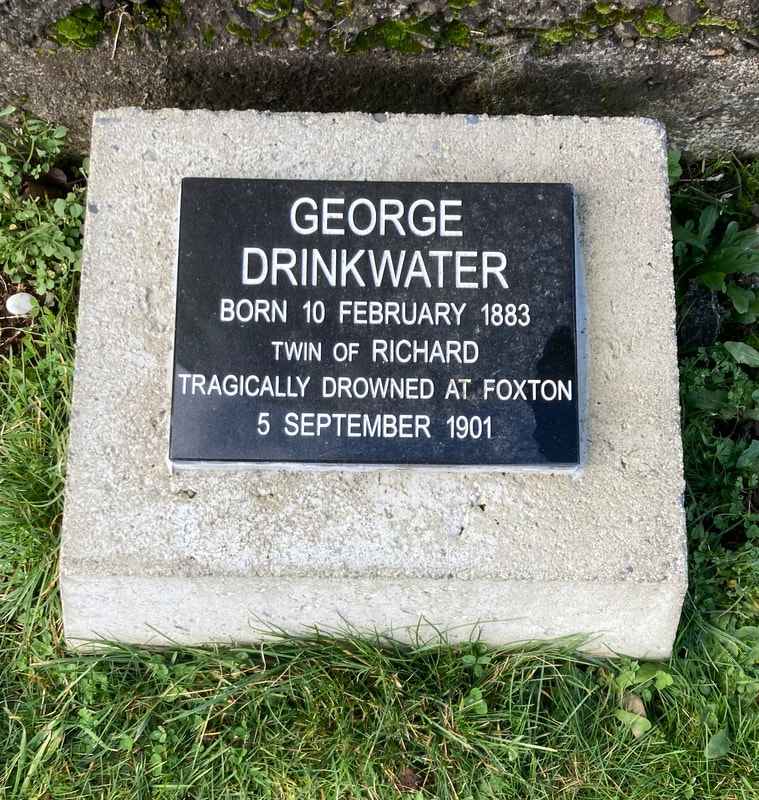 Drowning was once so common it was referred to as “the New Zealand death.”
New Zealand is a skinny country - most of us are only a couple of hours from the sea, a major river or a lake. And for those coming from British and European countries as new immigrants, it was nothing like what they were used to. Here fording a river meant literally walking through one, or riding over it or being ferried in small boats or in carriages prone to tipping over. Official figures show that by 1870, just a few decades after the arrival of European settlers, rivers in particular had been responsible for 1115 recorded drownings. Floods are also the most common natural disasters in the country. Settlers had to deal with thick wilderness, unabridged rivers and almost uncharted coasts. William Curling Young was born on February 21, 1815, to George Frederick Young - a director of the New Zealand company that undertook to bring settlers to New Zealand - and Mary Young nee Abbot. He came to New Zealand in 1843 on the Mary Anne landing in Nelson. William wrote home about the conditions he was living under - a type of tent house - which within a few weeks burned down. But his letters stopped abruptly in August. He had drowned trying to cross the Wairoa River after spending the day looking at sections of land. The river was simply too much for him and he was swept away, ending up in a deep hole. He was also unable to swim. He was buried in the Haven Cemetery in Nelson along with Henry Angelo Bell, his friend who drowned with him. In our cemetery walks we have come across so many headstones that say downed. Like Tom Lester Cooper who drowned in the Whanganui River while swimming in 1909, or Charles A’Court who drowned in a river in Martinborough in 1931 or Rev Samuel Douglas who drowned near Napier in 1893. Even in Deb’s own family the New Zealand death struck. Henry Drinkwater was our very first story - with his wife Sarah. Their 17-year-old son George Drinkwater drowned during a whitebait fishing trip on the Manawatu River near Foxton on September 5, 1901. He and a friend had been in a boat when a rowlock broke and the boat capsized. George tried to swim ashore but his heavy clothes dragged him down and he drowned. The inquest - like so many drowning deaths - found it was accidental. George left not only the rest of his family, but also his twin brother Richard. George is buried at the beautiful Dannevirke Settlers Cemetery not far from his parents’ graves. With special thanks to Sharyn from the Friends of the Settlers Cemetery who helped us put up a plaque for George - who had no marker at all - and for all the work they do maintaining one of the best kept cemeteries we have ever seen.  When it comes to inventions, New Zealand is right up there with the rest of the world, the electric fence, the egg beater, bungy jump - all famous ones.
But there is one that you are all using whose inventor’s name is barely remembered. And all because he forgot to get a permanent patent. John Eustace had been born in 1855 in Helston, Cornwall and came to New Zealand on board the Chile in 1862. Not a big lad, he nevertheless had a quick mind despite a lack of formal education. Initially he worked on a cherry farm and then help print and deliver some of the first issues of the Evening Star. At 12 years old he became a blacksmith’s striker then began an apprenticeship as a tinsmith - starting by making tin match boxes. He married Martha Emma Hoskings and they settled down, having three daughters and one son. In 1896 he started his own tinsmith business making kettles, trays and other goods. He was kept busy during the South African War with huge orders. It was during the early 1900s that he was asked to find a way to making paint cans that did not leak. He said it took him a sleepless night trying to figure it out but the next day he created an airtight lever lid for a paint tin. That lid is still in use today. It was so successful that orders began flooding in. not just from New Zealand but all over the world. He took a patent out with some help from painter Robert Fergus Smith for “An invention for hermetically closing tin boxes with th 3 lid without soldering." and began the process of creating a die to mass produce the tins. Except he did not know the patent - an interim one - ran out after six months and from then it was a free for all, with companies all over the world producing their own lids. Smith and Smith, the company that had asked him to make the lid in the first place, promised they would only buy their lids from him and did so while he and his son ran the company. It enabled him to expand the factory and employ many men. At one point he was called an idiot who had lost a fortune - but Eustace replied that ‘Well, I’m happy, I’ve got a good family, I get three feeds a day, I can only wear one suit at a time what would I want with a fortune?’ John died on August 2, 1944 and is buried in Andersons Bay Cemetery in Dunedin. Picture by Sven Brandsma.  It’s impossible to predict how someone might die. And every year the way people meet their end gets weirder and weirder.
About 450 people a year die falling out of bed, 150 by falling coconuts and 24 suffered death by champagne corks. Some seem so strange that it’s hard to believe, like the couple trampled by their own camels while the owner of the world’s longest beard tripped over it and broke his neck. Then there are ones that make you roll your eyes. Like the lawyer who tried to demonstrate that a victim could have shot himself by picking up the gun and accidently shooting himself. Or the owner of a wool mill who fell into the machine and was wrapped to death in 800 yards of wool. Yes, some are (tragically) hilarious. How they died is immortalised in the stories. And sometimes this is reflected on their headstones. Mel Blanc - the voice of Porky Pig - says That’s All Folks. William H Hahn Jnr’s reads I told you I was sick. Frances Eileen Thatcher’s reads Damn, it's dark down here. Then there are the types of memorials. Jules Verne has a sculpture of himself climbing out of his grave and Harry Houdini has a bust of his own head. On visits to cemeteries we have found creepy decapitated angels, a gravestone with a window in it (no we don’t know why), crosses made of rusted iron, or slowly eroding wood. Then there are the ones with no headstone at all. It’s not uncommon for those found guilty of murder or have committed suicide not to have a headstone and even to be buried outside the normal bounds of a cemetery. Some however have poetry, wise sayings, words of love and then some have an epitaph that leads to a story. Like the headstone of John Riddall which not only says dearly beloved husband of Ada but also Who met his death whilst skylarking. (so Ada might have been a bit exasperated.) Riddall was 32 when he died - he had been at the Carlton Hotel in Wellington’s Willis Street. He had been sitting on a railing of a balcony on the fourth floor when he overbalanced and fell on April 26, 1919. Riddall had been a grocer’s assistant and relatively new to Wellington. He had been president of the Auckland union of grocers assistants three years before. He is buried in Karori Cemetery. |
AuthorFran and Deb's updates Archives
September 2025
Categories |
 RSS Feed