 We want to wish everyone a Merry Christmas and a Happy New Year. For all those travelling - be safe and enjoy time off if you have it.
To all those essential workers working over the breaks -we hope it’s a quiet one. Thank you to everyone who got in touch and commented on our stories. We’ll be back in the New Year with more stories of New Zealand firsts, weird history and extraordinary Kiwis. From Fran, Deb and Cricket (who refused to be in a photo).
0 Comments
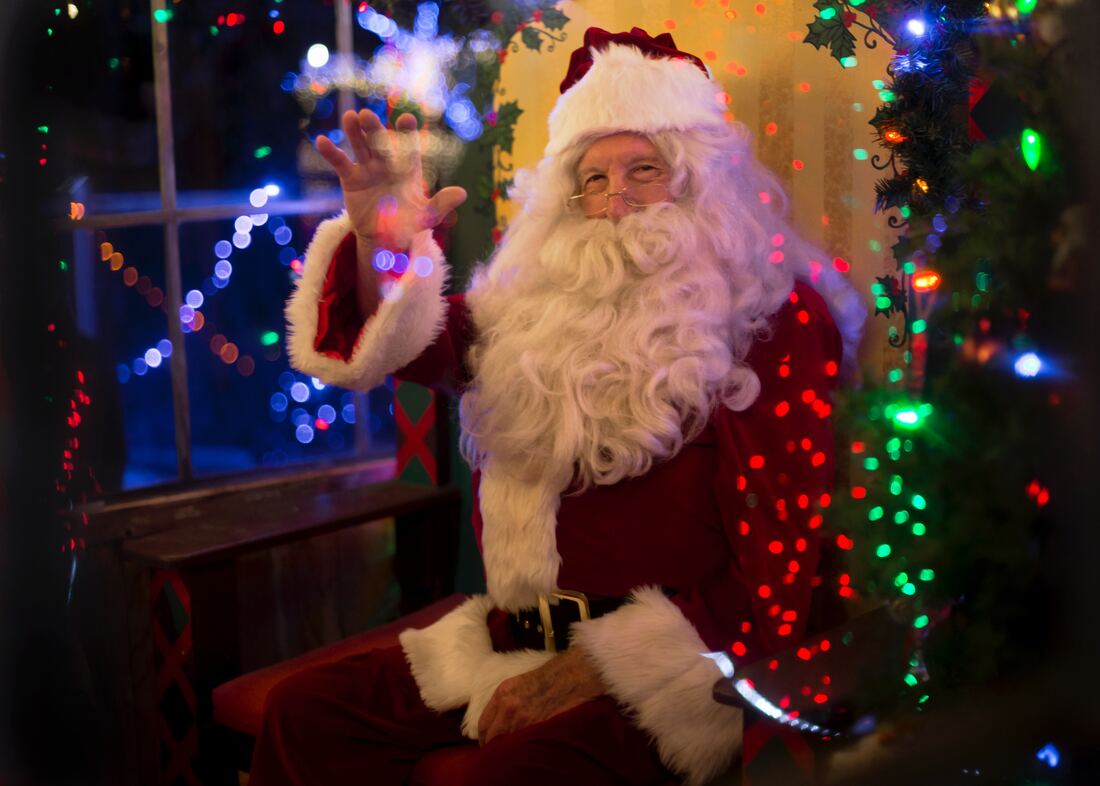 Do you remember your first Christmas parade?
Seeing Santa all dressed up on a float, the excitement - or as an adult, watching how excited the children were? Well, it all started in Wellington with what is believed to be the first Santa parade in New Zealand in 1905. The George and Kersley store, the Economic, wanted to advertise their in store Santa and invited local children to watch Santa arrive at the railway station. It led to many other stores doing similar things. In the first years Santa arrived by car or truck but after a few years department stores began to compete with how Santa would turn up and how fancy it all was. In the 1930’s Christchurch store Armstrong’s had their Santa arrived on an elephant while Farmers in Auckland and the DIC in Christchurch had theirs arrive by plane (although he came from the airport in a car). But in 1937 Farmers in Auckland came up with a stunt that nearly ended in disaster - both in terms of danger and in terms of public relations. A plan was formed for Santa to parachute into the Auckland domain and distribute presents for the kids. But Santa - parachutist George Sellars - was to jump from just 300 metres after standing on the wing of the plane. It was so low so spectators could see him before he jumped. Sellars had made odd landings before, once on to the roof of a car and another time on to a cow! It started ok, his parachute opened but he was off course and headed for the massive glass roof of the Winter Garden. By some miracle he managed to alter course and landed heavily between two hothouses, narrowly missing two gardeners. Manager of Farmers Trading at the time Robert Laidlaw who was watching thought he was going to be the first man to kill Santa Claus. But Sellars rallied, adjusted his beard, and got on with handing out presents. Sellars had been born on April 14, 1910 in Balclutha to George and Alice Sellars. He worked as a fitter in the railways but had an accident that left him with an odd walk. He gained a pilots licence in 1931 then went on to become New Zealand’s first parachutist. He made many dangerous jumps - the Santa one was only one of many - but the last was on July 2, 1938 at the opening of the aerodrome at North Beach Westport. He jumped from 2000 ft but his parachute never opened and he fell to his death. Sellars is buried at Anderson’s Bay cemetery in Dunedin. This is our last story for the year. See you in 2024! Photo by Tim Mossholder.  Everyone knows the tale of the Titanic. Unsinkable, the biggest ship of the time, hit an iceberg and sunk and spawned story after story along with movies.
Of the 2224 on board, 710 survived. But there is one rarely told story about the New Zealander who wasn’t on it. There were only a few links to New Zealanders on the big ship. One was Charles Eugene Williams who was travelling second class whose mother and sister lived in Wellington. He was initially listed as missing but survived. And Donald Campbell who was married to a New Zealand woman and did not survive. But the famous New Zealander was James Arthur Frostick - who wasn’t on the ship at all. But he was meant to be. A Christchurch business man, he had booked for the Titanic’s maiden voyage while on an extended business trip abroad but in the end business engagements meant he cancelled at the last minute. Who knows if someone else took his place? Frostick didn’t tell his relatives or friends who all thought he was on board. It was a day later he sent a telegram to tell them he had “missed the tragedy.” Frostick was a well known businessman - one of the owners of Skelton, Frostick & Co boot manufacturers. The factory was in Hereford Street and employed over 250 workers. He had been born in Norfolk 1857 and educated at a private school then went on to study boot making and manufacturing. At 23, he was appointed manager of English Factory, a large company in Norwich. However he decided to try his luck in New Zealand and in 1884 came to Wellington with his second wife and family before heading to Christchurch to take over management of Lightband, Allan and Co. After five years he founded the firm Skelton, Frostick and Co creating one of the biggest companies of its type. He was an ex president of the Canterbury Chamber of Commerce, Employers Federation, Industrial Association, was a member of the Lyttelton Harbour Board and National Efficiency Board. He had been the chairman of the entertainment committee for the 1906-1907 Christchurch Exhibition. HIs first marriage in 1879 to Sarah Cubitt ended with her death within a year and he remarried to Leanora Favyer in 1880. He married a third time in 1929 after Leanora death, this time to Emma Clarke. A keen organ player, he was also president of the Royal Christchurch Musical Society. Frostick died on March 7, 1931 aged 74, and is buried in Bromley Cemetery, Christchurch. Pic by Zlataky.  When we say warbirds we now mean planes from the wars.
But once upon a time it meant pigeons. Yes, those sometimes called feathered rats and often infest cities Pigeons were an invaluable means to sending messages and proved their worth over and over again. In fact, 32 pigeons have received the Dickin medal for gallantry - originally set up as an award to the animals that served in wars. They flew under fire and from huge distances to deliver messages that were desperately needed. There is nothing new in the idea. Julius Caesar used pigeons to send messages. And in the First World War they came into their own, so much so that it became illegal to kill a homing pigeon. New Zealander Norman Crompton’s life was saved by a homing pigeon in the Second World War. The flight lieutenant and his crew were forced to ditch their Martin Baltimore Bomber off the coast of Libya in 1943. Crompton was the pilot and he and his men managed to get into two small inflatable life rafts with no food or water and no way of signalling for rescue. What they did have was George. A messenger pigeon also sometimes called Tyke. He had been hatched in Cairo and seconded into military service. Bomber crews often carried messenger pigeons. George had survived in his special carrying canister although he was covered in oil and soaked with water. The crew cleaned him up as much as they could then attached a message with their location to his leg. HIs first attempt at taking off ended when he dropped straight into the ocean and had to be rescued. After letting him dry out in the sun they tried again. And George took to the air and flew with the men cheering him on. The game little bird flew over 100 miles in poor visibility and made it to a Royal Air Force pigeon loft where his message was discovered. As a result, the Navy were dispatched to find the men, who were all recovered safely. It was the first time in the Second World War that a pigeon saved the lives of men in the Mediterranean sea. George and two other pigeons received the first Dicken medals. Norman Crompton was born in 1917 to William and Charlotte Crompton. He survived the war and returned to New Zealand where he worked as a salesman. He died on September 1982 and is buried in the Taupo Cemetery. Picture by Sneha Cecil.  Milford Sound has all that gorgeous scenery and as soon as Donald Sutherland saw it he knew tourists would pour in.
So he took it on himself to explore and build the first hotel, living as a virtual hermit for years in the Sounds without anyone else around in the 1880’s. He discovered what came to be called Sutherland Falls which for a brief time was considered the highest in the world at what he thought was over 1000 metres. But later surveys showed they were 580 metres - still a wildly impressive sight. Sutherland was an adventurer and explorer and at one stage was considered the hermit of Milford Sound. Born about 1844, in Wick in Scotland to father Donald and mother Isabella, he dreamed of an exciting life. At 16, he joined a militia unit and volunteered for war. After fighting in Italy, he boarded the Prince Alfred to come to New Zealand working his way as a mariner. But on arrival in Dunedin he jumped ship and Sutherland went gold hunting at Gabriels Gully. He had little success so headed north and joined the Waikato militia. After serving he was granted land at Pukerimu but abandoned it and fought for a few more years. After a time working on a government steamer he decided to settle in Fiordland. On his own and with only his dog (called Johnny Groat) for company he sailed to Milford Sound, exploring the area, settling near Bowen Falls. In 1878, he and another explorer James McKay looked for gold in the area and scouted for a route between Milford Sound and Queenstown and in doing so on November 10, 1880, became the first European to see the falls that were later named after him. When McKay left Sutherland was the only permanent resident of Milford Sound. Sutherland liked to see and try new things, he sailed the coast - Sutherland Sound is named after him - and tried to climb Mitre Peak. For years he lived alone and in isolation, only meeting the government steamer called in and his observations of the area would be sent to a geologist. He made infrequent visits to Dunedin and in 1890 married Elizabeth Samuels and they purchased land in the Sound and built an accommodation house for tourists who visited the area in the summer. The couple were later joined by his nephew William and their home, called The Chalet became the first place in the area catering to a now well developed tourist trade. He died at his home on October 24, 1919 and is buried there. Picture of Sutherland (and his dog) from Te Papa’s collection 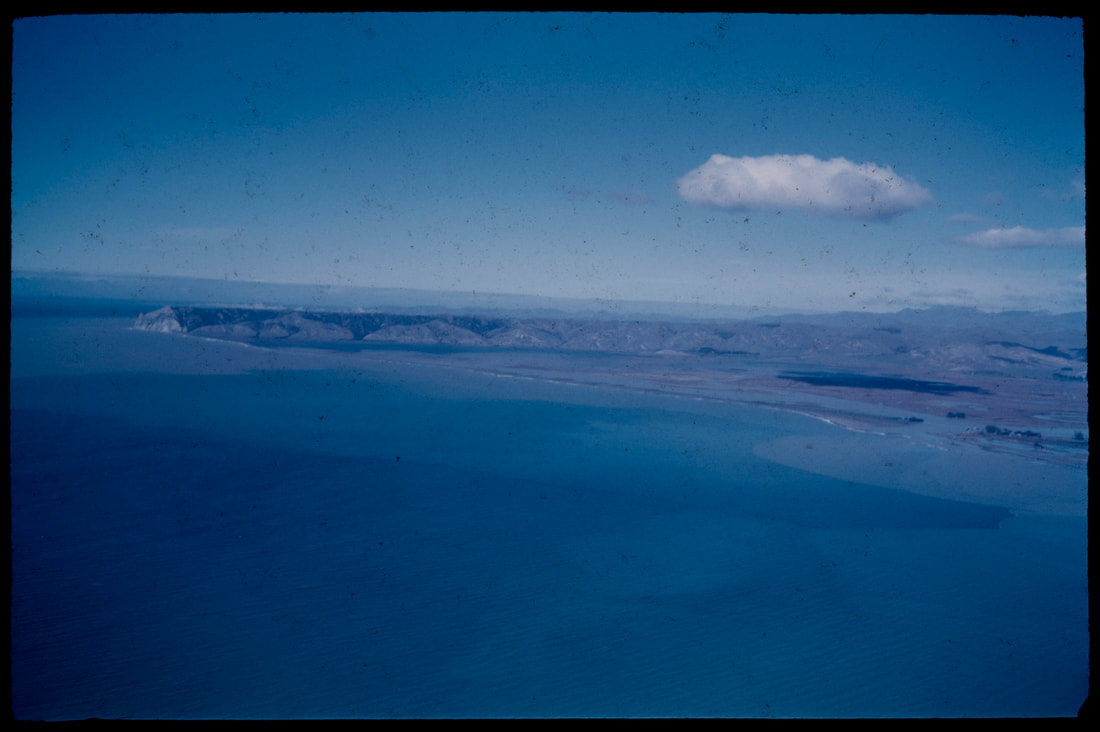 It was supposed to be a nice day out. A trip on a launch to the Wairau Bar, a gravel bar where the Wairau river meets the sea in Cloudy Bay.
It would have been an exciting excursion for those on board the 3 tonne launch Maritana. They went out after lunch and were due back near 5pm - when many would be making their way to church on a Monday evening on October 8, 1906. It had been a good day and the launch was crowded with people. Just as the Maritana approached the landing point, it hit a submerged stump about 100 metres out, throwing about 20 people backwards off the boat and heeled over. There was a frantic rush to get people out of the deep water, many in the water were children. One passenger managed to rescue several, only to get cramp and have to be rescued himself. Hundreds of people gathered on the shore, distressed but unable to do much to help as they watched. In all, 10 people drowned. There was no passenger register and confusion about who had been on board and if anyone was still missing. Nine bodies were recovered within a few hours and police continued to drag the water for bodies by torchlight until midnight. By the next day, all but the body of one boy had been recovered. He was Westby Patchett, son of George Patchett, the owner of the launch. His body was later found. George Patchett had been born on June 6, 1863, in Muston, Melton Borough, in Leicestershire, England to John and Elizabeth Patchett. He had married Sarah Susan Dry in 1885. Westley, 9, was one of the youngest of their many children. George died on October 25, 1938 and is buried in Omaka Cemetery in Blenheim. Westby is also buried there as are a number of the people who drowned that day. Picture of the Wairau Bar from Te Papa’s collection.  With the reopening of Parliament this week, we will see changes. But somethings are unchanging and traditional, one being the role of Black Rod.
The Black Rod itself is the ceremonial staff of office and technically applied to what was New Zealand’s upper house of parliament which used to be called the NZ Legislative Council. The role was kept even after the council was abolished in 1950. The Usher of the Black Rod summons the members of the house to the Governor-General’s presence to hear the speech from the throne. Traditionally this is done by the entry to the House being barred until the Usher of the Black Rod knocks three times on the door. The rod used was presented to Parliament in 1931, made of polished black ebony topped with a golden lion rampant holding a shield - a gold sovereign is set in the base. It is rarely used now, due to it’s fragility with other rods used in its place. The current Black Rod is Sandra McKie - the first woman to hold the position in New Zealand. But the first was Arthur Thomas Bothamley who held the role for 45 years. Arthur was born in Surrey, England in 1846 and was one of 17 children. He had poor health and by 1868 he had moved to live in Australia before coming to New Zealand the next year. Here he joined the civil service as a clerk. It would have been considered a very good stable job. Between 1892 and 1937 he was the Gentlemen Usher of the Black Rod. A sportsman, he was a founder and first captain of the Tainui Canoe Club as well as a talented and keen photographer. He was well known at the time for his photography exhibitions as well as his paintings, some of his watercolours being the Alexander Turnbull library collection. He married Elizabeth Poulton in 1876 and one of their sons Charles went on to be a clerk at Parliament as well. Arthur was given the Imperial Service order in 1924. He died on December 17, 1938 aged 92 and his funeral was held at St Paul’s and was attended by nearly every member of the Parliamentary and State Department staff. He is buried at Karori Cemetery. Photos were taken by Arthur and are now in the possession of Te Papa.  Frank Hughes faced his firing squad with his eyes open and without a blindfold.
In the end he met his death bravely, even if his actions during his stint in France during the First World War led to a charge of desertion. The men from our troops who were shot were often deeply troubled, terrified, out of their minds with shock, ill, or unable to cope with the horrific surroundings they found themselves in. A good part of Frank’s problem was drink. Frank was born in Gore on June 11, 1888, and worked in Wellington as a builder’s labourer. But with the outbreak of World War I he joined up, enlisting in the New Zealand Expeditionary Force, leaving with the 10th Reinforcement and arriving in France in April 1916. He then joined the 12th (Nelson) company, 2nd battalion, Canterbury Regiment. Frank liked to drink and it quickly got him into trouble. By July he had already been brought before his commanding officer three times for ill-discipline. Less than a month later he was found guilty by a Field General Court Martial for absenting himself without leave. He earned a one years’ imprisonment, but this was suspended on review and he got a warning. He rejoined his unit in the horror of the trenches only to promptly disappear again. This time it took 11 days for military police to catch up with him, sleeping in an abandoned house. Frank thought he had been away for six days and had gone into the house for a sleep. He went before another Field General Court Martial for desertion on August 12. He blamed it all on alcohol. He said he got light-headed and wandered off, wandering around town. He had continued drinking throughout his absence. Frank was found guilty and sentenced to be shot. The day of his execution he was taken from his cell to an orchard and put against a tree. He declined a blindfold and at 5.30am the men from the New Zealand Pioneer Battalion fired. Frank Hughes was the first New Zealand man executed in the First World War but not the last, 27 others were also executed during the conflict. He was buried in the Hallencourt Communal Cemetery. In 2000 the New Zealand government gave Frank - and others - posthumous pardons although it was not without controversy. Picture by Rob Pumphrey. 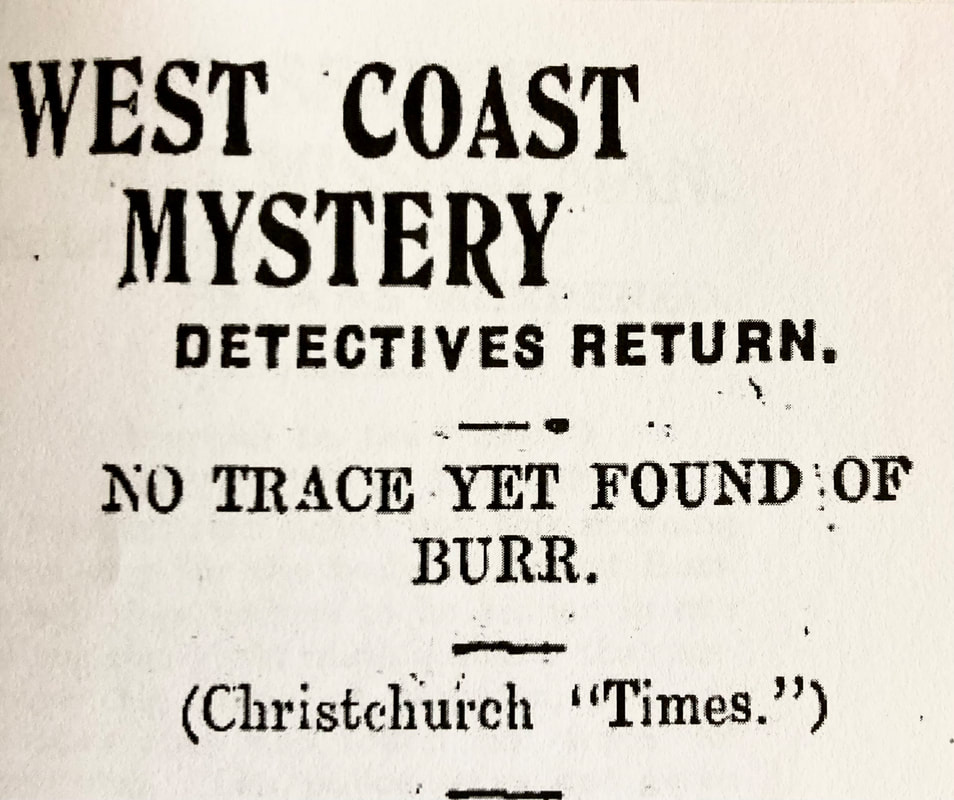 In Ernest Burr’s workshop were a series of wooden toys that he was making for his children.
But there was no sign of Ernest himself at his West Coast home. Despite investigations and any number of theories, nothing has ever been found of him. He had separated from his wife Teresa in August 1930 after an argument and she had taken their three children to go and live with her brother. Then on November 7, Ernest was found to be missing from his home on the West Coast with no real sign of what might have happened. Police had to be brought from Christchurch to investigate and search parties scoured the area. No sign of him has ever been found. Ernest Mansfield Burr was born in 1901 at Kumara, on the West Coast. He married Teresa Hynes in 1923. Ernest worked as a locomotive trolleyman at the Ogilvies mill in Marsden. Ernest’s home was tidy, with food in the pantry and one suit missing. In the bedroom above the headboard were little flecks of blood. The bed had been stripped of its bedclothes. It was enough for the police to consider foul play. However there was not enough to mean much and police could not even tell if it was human blood. A second bed in the house looked like it might have been slept in. Despite the investigation, police could not say with any certainty if Ernest had been murdered. There had been odd signs at the house when police arrived, the doors were tightly locked and the windows had been nailed shut which was considered unusual. He had spent the day in Greymouth with a friend and returned home around midnight telling his friend he was going away the next day. A neighbour reported hearing odd noises at dawn of the next day. It was four days later that one of the neighbours rang Ernest’s one of brothers (he had eight) to report him missing. He was an ordinary hard working man with no known enemies. Ernest was also an experienced bushman - and the area around where he lived was wild and also filled with abandoned mines. One of the theories was he just up and left after his wife left him and yet another was that he had harmed himself. But months on - and then years on - nothing more was ever found and if it was murder, no one was taken to account. He likely died on November 4 or 5, 1930 - and the whereabouts of his grave is unknown.  Harry Atkinson had a wild idea. He thought, when people got to a certain age, at the end of their working life, they should get money.
That’s right. A pension. And when Harry was considering it, it was new and innovative. New Zealand was not the first country to come up with it - Germany had already introduced a pension scheme that was much like today’s Kiwisaver. In the early 1880s, Colonial Treasurer Harry Atkinson proposed a needs-based insurance scheme paid fro by levies on workers which would allow a modest orphans, widows, sickness and old age benefit. It was radical and got a very cool reception from his Parliamentary colleagues. Harry Ablert Atkinson had been born on November 1, 1831 in Broxton in Cheshire in England to John and Elizabeth Atkinson. John was an architect and stonemason with very progressive ideas. He raised all his children to be self-reliant and independent even to the point of choosing their own religion. Harry became interested in New Zealand by knowing others planning to immigrate and in 1849 he and his brother Arthur set out aboard the Sir Edward Paget. Harry had plenty of skills, he could cobble and worked in a sawpit. He married Ameila Jane Skinner in 1856 and set up as a pioneer farmer. He was a hard worker, setting up a dairy, supplied firewood and contracted to deliver mail. He joined the local provincial council and served for many years. He fought as a captain of the Taranaki Rifle Volunteers. In 1861 he was elected to the House of Representatives then left briefly when his wife died in 1866 but was back in 1867 after marrying Annie Smith. He was Colonial Treasurer from 1875 to 1891. In July 1882 he asked Parliament to consider a national insurance scheme - the forerunner to pensions. But he had trouble getting anyone interested. Harry was premier three times and in 1888 he was awarded a knighthood. He worked to the end - in June, 1892 he presided over the first council session then returned to the Speakers Room, where he died. On November 1, 1898, the Old Age Pensions Act Harry had championed, came into law. It was both ground breaking and very limited. There was a strict criteria for who could have it, including that men and women had to be of good moral character and had been leading a sober and reputable life for at least five years. Harry is buried at Karori Cemetery. |
AuthorFran and Deb's updates Archives
September 2025
Categories |
 RSS Feed