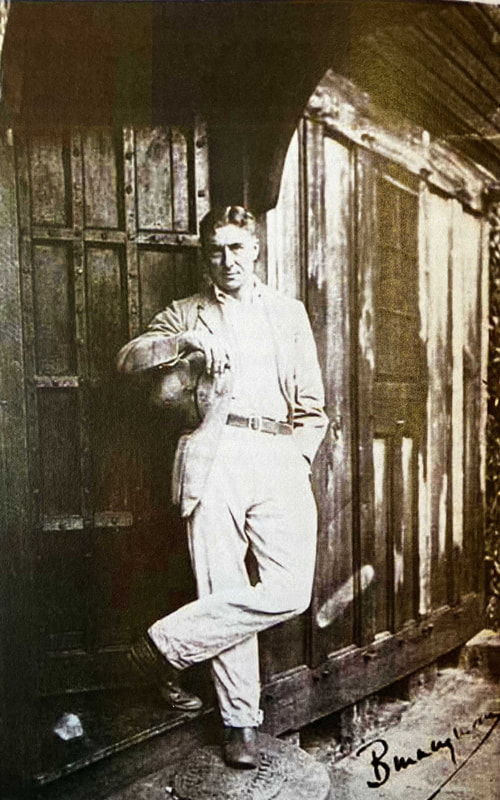
 Ewart Scott Grogan met Gertrude Watt in New Zealand and fell in love.
But it wasn’t as easy as that. Her father wasn’t impressed and didn’t think he was the sort of man who had proved himself. So Grogan set out to do just that in spectacular fashion. Grogan had been born in 1874 to William and Jane in England - and was the first of 21 children. He initially went to Cambridge University but dropped out to fight in Zimbabwe’s war of independence on the British side. It was after that he came to New Zealand and met Gertrude, a Kiwi who was born in Harvest Bay. And with his future love on the line, Grogan said he would become the first man to make the Cape-to-Cairo journey. He travelled to Cape Town to start - at age 24 - and it took him two and a half years. During his travels, Grogan had been stalked by lions, hippopotamuses and crocodiles; pursued by headhunters and cannibals; and plagued by parasites and fevers. He returned home a popular sensation. He was then made a Fellow of the Royal Geographical Society and met Queen Victoria. He wrote a book about his journey From the Cape to Cairo; the First Traverse of Africa from South to North. And he got to marry Gertrude in England in 1900. They went to Kenya in 1904 and travelled to Nairobi where he became a settler in the Kenyan community and made a series of real estate purchases and began looking for business opportunities. Grogan became involved in what became known as the Nairobi Incident when his sister and a friend alleged being shamefully treated by three rickshaw drivers and he punished the men by publicly flogging them. It was internationally reported including that one of the men had been killed, although that was untrue. He and two other men were tried and convicted. He went to prison for a month and was fined. He continued his business interests and helped build the first deep water harbour in Mombasa. He reported for duty during the Second World War and was appointed Belgian liaison officer and carried out reconnaissance across the Congolese border. Later in the war he was promoted to lieutenant-colonel and put in charge of three prisoner of war camps in Gilgil and Nairobi. His business interests included a hotel, ranches, a saw mill, a rice mill and a coffee farm. In 1943, Gertrude died from a heart attack and Grogan, founded the Gertrude's Garden Children's Hospital in her memory. He died in 1967 and is buried in the Maitland Cemetery in Cape Town.
0 Comments
Leave a Reply. |
AuthorFran and Deb's updates Archives
September 2025
Categories |
 RSS Feed