 One of the first international volunteers to be killed in the Spanish Civil War was a Kiwi.
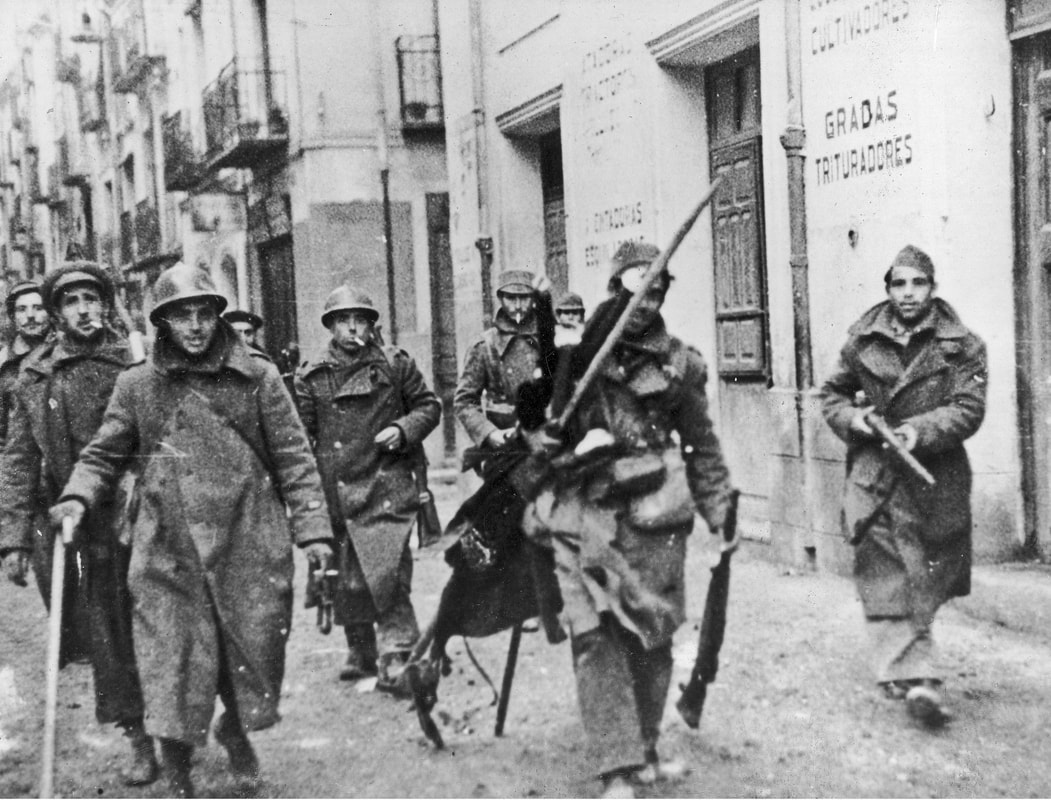
Griffith Campbell MacLaurin started his life as a scholar and ended it as a soldier. Born to Kenneth Campbell MacLaurin and Gwladys Rogers Jones in October 1909 in Auckland, his family was scholarly. An uncle was a professor of mathematics at Victoria University and another was an analytical chemist. Griff was educated at Hamilton High School and Auckland Grammar, a top history student, skilled debater and a crack marksman with the grammar school’s officer cadets. He gained an MA and was admitted to study for an honours degree in mathematics but began to struggle with his social life. It was a trip to Germany in 1933 that changed his life. He was horrified at what he saw under the new Nazi regime and it turned his conservative political opinion to the left. But he also discovered alcohol and what would then be considered subversive literature and barely scraped through his studies. He managed to get fired from his first teaching job so opened a bookshop which became a success with left wing sympathisers. He became a communist and when the general secretary of the British Communist Party told him they were getting up a small group of volunteers to head to Spain, Griff agreed. The Spanish Civil War between the democratically elected government and nationalist rebels became a battle between competing ideas with Nazi Germany and Fascist Italy supporting the rebels. The Soviet Union - and communists world wide - supported the government. Which was how Griff ended up being involved. He had also been trained as a cadet to use a light machine gun which was useful. He and others like him were attached to a French unit of the International column. On November 8, 1936, he marched into Madrid with the other soldiers and volunteers from all over Europe. Two days later he was fighting, helping to defend a city. He and another Kiwi volunteer Steve Yates were killed on November 1, 1936, while manning their machine gun to cover a retreating unit in the Casa del Campo. Madrid was to hold out until early 1939. Four more New Zealanders would die in the war in Spain, the forerunners of the thousands killed fighting fascism in the Second World War. As Griff was not considered a member of any New Zealand armed force he is not memorialised for his military action however he is on the online cenotaph record. Sadly, there are no known records for where he was buried and his grave site is unknown. It was an unfortunate truth that some who fell in battle were buried where they fell and the whereabouts was lost or later moved and no records made.
0 Comments
Leave a Reply. |
AuthorFran and Deb's updates Archives
September 2025
Categories |
 RSS Feed