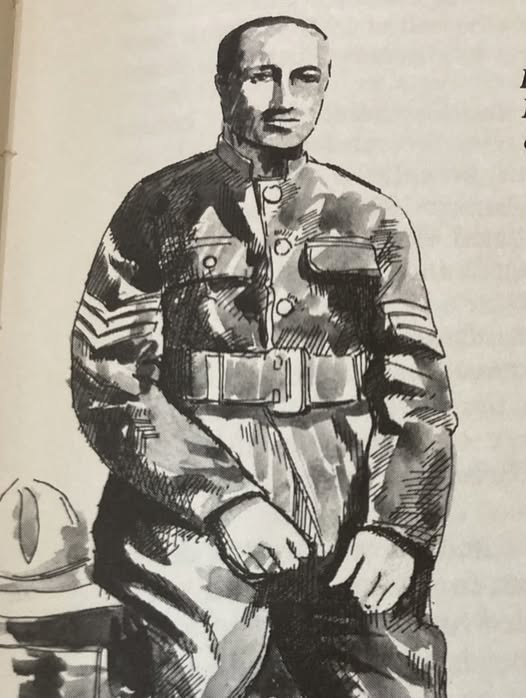
 Across the horrors of No Man’s Land at the Somme a Kiwi lay in wait. He had a gun at the ready and was known as a crack shot.
A glimpse of a head and Dick Travis shot, taking out another enemy soldier. Dickson Cornelius Savage was born on April 6, 1884, to James Savage and Frances Theresa O’Keefe in Opotiki. After a few years of schooling he left to become a shepherd, drover and farmhand excelling in horse breaking. But an argument with his father saw him leave and head to Gisborne. He moved again to Southland after he was believed to have got a girl in trouble where he took the name Richard Charles Travis. He worked there for a while then enlisted in the 7th (Southland) squadron of the Otago Mounted Rifles Regiment in Invercargill. He sailed in December 1914 and landed in Egypt and immediately snuck off to Gallipoli. He was returned and given 14 days detention. It would set a theme. He was a rule breaker, but always for a good cause. Dick did take part in the final weeks of the Gallipoli campaign and was particularly noted for scouting. An injury to a knee led him to transfer and he went to France in March 1916. He hated sitting and waiting so alone and at night, he would undertake scouting trips into no man’s land, mapping out the area. Senior officers quickly saw how valuable his information was. A few months later he got a special mention for a daylight search for wounded New Zealand raiders and the recovery of equipment. Travis displayed 'conspicuous gallantry' on 15 September 1916, eliminating several German snipers during the Somme offensive, for which he was awarded the Distinguished Conduct Medal. He made sergeant and was given command of the battalion's new sniper and observation section. 'Travis's Gang' became proficient in scouting enemy defences and capturing enemy troops for interrogation. He was casual about rank and dress regulations but meticulous about careful planning, as well as daring and resourcefulness of his anti-sniper work and lone patrols. Travis was awarded the Belgian Croix de guerre on 15 February 1918, and the Military Medal in May 1918. On 24 July 1918, in broad daylight Travis destroyed an impassable wire block in front of the enemy lines prior to the attack. He then captured two enemy machine-guns, shooting down 11 Germans. He was killed by shellfire the following day, and was buried at Couin in France on 26 July. The entire New Zealand Division mourned his loss. For his 'most conspicuous bravery and devotion to duty' on 24 July, Travis was posthumously awarded the Victoria Cross. Lest We Forget
0 Comments
Leave a Reply. |
AuthorFran and Deb's updates Archives
September 2025
Categories |
 RSS Feed