 Ernst Dieffenbach thought Wellington was a bad idea. As far as he was concerned it was not fit to be a colony city.
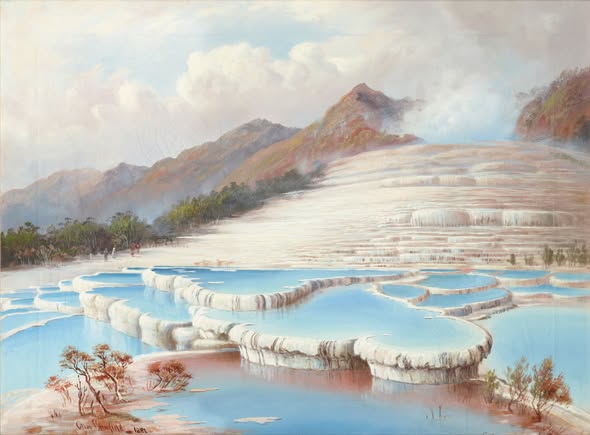
Born Johann Karl Ernst Dieffenbach in Giessen in the Grand Duchy of Hesse in Germany on January 27, 1811, he had trained in the field of medicine and was a student during a time of great discoveries in the physical sciences, along with political reform which led to him becoming a political fugitive in Switzerland. After he was jailed there for two months for duelling he was expelled (although not before gaining his degree) and headed for England. It was there he met prominent scientists like Charles Darwin and took a position with the New Zealand Company as a naturalist. In 1939 he sailed for New Zealand on the Tory. Once here he began exploring, travelling through the Marlborough Sounds, the Hutt Valley, Taranaki, the west coast of the North Island and even spent four weeks on the Chatham Islands. He is considered one of the first European men to see the Pink and White Terraces. He also climbed Mt Taranaki. Dieffenbach became increasingly critical of the New Zealand Company’s land purchase scheme. His first look at what would become Wellington convinced him that they were selling unsuitable land. He also argued with them about his reports in which he meticulously recorded things like distances, temperatures for the new settlers. He is considered the first trained scientist to live and work here and he sent a huge number of specimens back to the Royal Botanic Gardens, the Kew and the British Museum. He is believed to be the person who coined the term greywacke for the sandstone of New Zealand mountains. In 1841, he wanted to make a complete scientific survey of the country once his contract with the New Zealand Company ran out and he convinced the governor William Hobson of it. But it was rejected when Hobson asked for funding. Dieffenbach returned to England where he published a book, Travels in New Zealand which gave accounts of life here and observations about the plight of the Māori before the rising tide of European settlement. He could see that the Māori way of life was threatened by the arrival of colonists. He worked as a translator and scientific jack-of-all-trades and tried to return to New Zealand but was unsuccessful. He was able to return to his birthplace, Giessen and eventually was nominated to the national assembly there but declined, instead becoming associate professor of geology at his old university, going on to be director. Dieffenbach married Katharina Emilie Reuning in April 1851. They had two daughters, Klara and Anna. Ironically his book helped promote more people to come to New Zealand which was absolutely not his goal. He died of typhus in 1855, probably on 1 October, and is buried in the Old Cemetery in Giessen.
0 Comments
Leave a Reply. |
AuthorFran and Deb's updates Archives
September 2025
Categories |
 RSS Feed