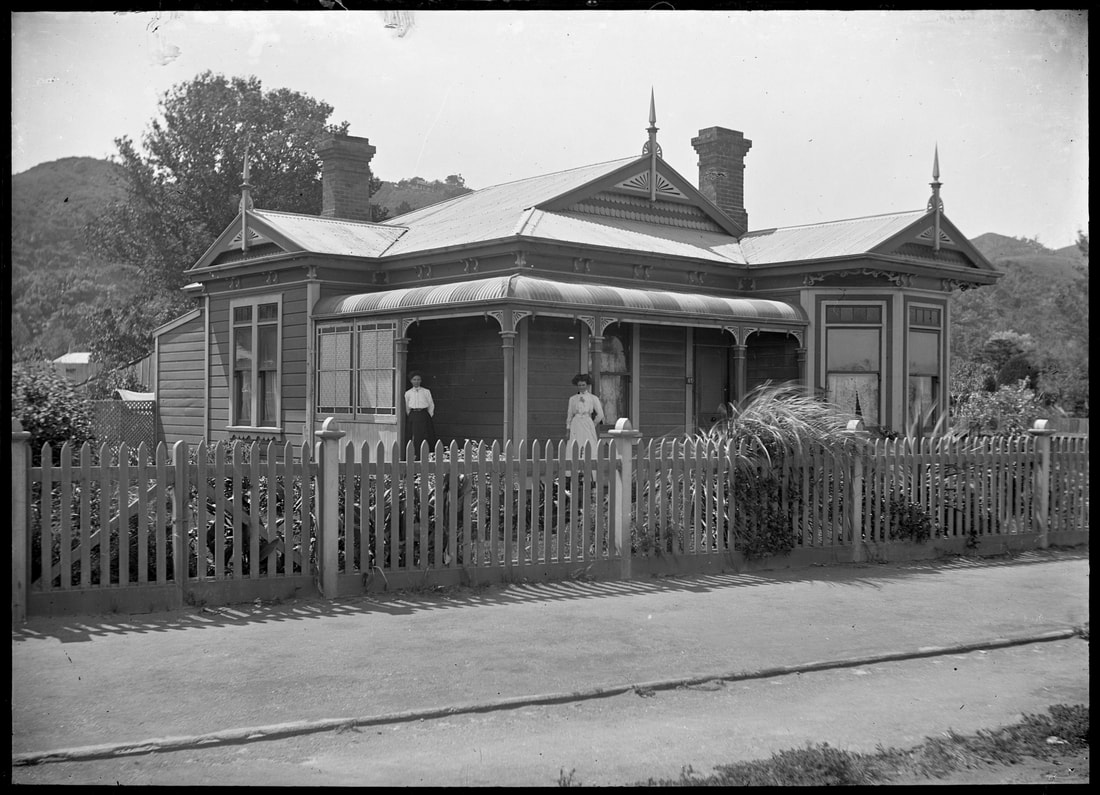
 All of us have seen one, there are examples of the great New Zealand bungalow in every town.
Two or sometimes three bedrooms, a front porch and often a bay window. Usually made with a weatherboard style finish. It is considered the most prevalent housing design in the country and many of them have survived, often with modifications like the porch being enclosed for more room. The reason we have so many of them is due to Samuel Hurst Seager. Samuel was born on June 26, 1855, in London to Jane Wild and Samuel Hurst Seager snr, coming to New Zealand in 1870. They settled in Christchurch where his uncle Edward William Seager was the superintendent at Sunnyside Asylum. HIs father started a building contractor firm and after his death Samuel continued it. In 1877 he built the first permanent Canterbury College buildings to the design by B W Mountfort’s who he then worked for as an architectural draughtsman. He studied at Canterbury College. He went back to London to study further and on his return to Christchurch won a design competition for the Queen Anne-styled Christchurch municipal buildings. In December 1887 he married Hester Connon and he settled into a job as a lecturer. In 1899, he designed and built a home for his brother in law in Cashmere. It introduced the design of a bungalow. In part it combined an English arts and craft movement with the idea of the California bungalow. It was an unique residential development of timber cottages in a garden setting. In partnership with Cecil Wood from 1906 until about 1912, the workers' dwelling they designed were built as part of the 1906 Heretaunga settlement in Petone, while their model worker's dwelling was exhibited at the 1906–7 New Zealand International Exhibition in Christchurch. Seager also campaigned for better standards in World War One memorials organising designs and became the official architect for battlefield memorials and he designed the ones at Longueval and Le Quesnoy in France, Messines in Belgium and Chunuk Bair in Gallipoli. He also became internationally acclaimed for lighting in art galleries as well as advocating for the preservation of historic buildings. He moved to Wellington in 1929 then to Sydney where he died on October 5, 1933.. There are memorials to him in every city in New Zealand, where a bungalow still sits. Picture from the Godber Collection, Alexander Turnbull Library.
0 Comments
Leave a Reply. |
AuthorFran and Deb's updates Archives
September 2025
Categories |
 RSS Feed