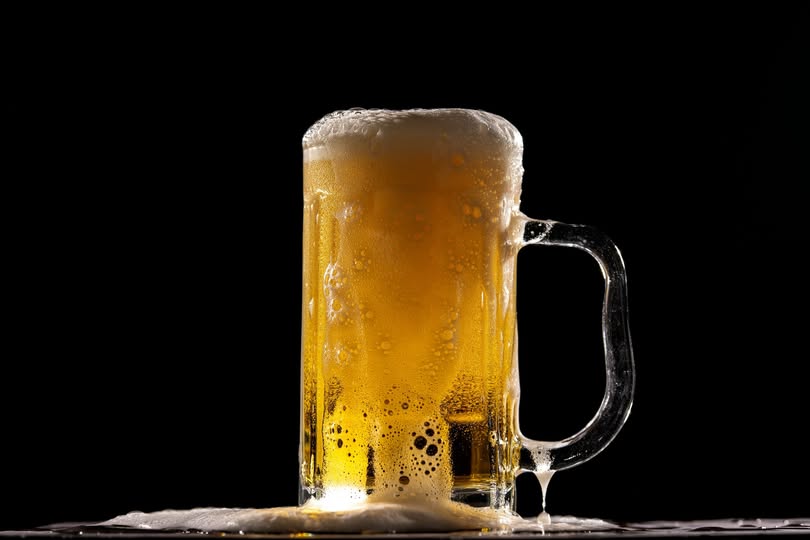
 We all like a good beer, especially on a hot summer's day. But have you ever heard the story about how beer - or rather too much of it - led to a New Zealand Prime Minister?
The election of 1893 was hotly contested and in particular in the Waimata electorate, where Richard Monk won. But there were swiftly allegations of bribery. In particular that one polling place - Tuapaki - was offering beers to voters and the allegations said the beer was in return for votes and that at one hotel - the Falls Hotel in Henderson - people were shouted beers and told to vote by Ernest, the son of Richard Monk. It led to an inquiry in the Supreme Court in which one witness said there was ‘oceans’ of beer. A lot of the talk was about who had done what, were the votes actually bought if the beer could be considered refreshments? There were similar allegations about money being offered although it was unclear whether that was for the beer or for the votes. It caused quite the fuss. Even if it could be considered innocent it looked bad and newspapers of the day covered the inquiry in great detail. In the end the election result was overturned and a by-election ordered. William Ferguson Massey had lost the election in Franklin in the same election. But he was asked to stand again for the byelection. He stood and won - and the man who would be one of our greatest prime minister entered Parliament. Massey had been born in Ireland on March 26, 1856 to John and his wife Mary Anne. His family came to New Zealand in 1863 although Massey stayed behind to finish schooling and came out in 1870. The family were farmers and Massey worked on farms before leasing his own 100 acre property. He married the daughter of a neighbouring farmer, Christina Allen Paul in 1882. His original wooden farm house burnt down and he bought another home in what would become Massey Road in Mangere. In his first term in Parliament Massey was in opposition to the Liberal government of the day but he was a conscientious worker. In 1909 he announced the creation of the Reform Party which in 1911 won more seats than the Liberal Party but did not hold outright power. The Liberals held power for a year until they lost a vote of confidence. Massey was sworn in as Prime Minister in 1912 and guided New Zealand through the war years, only retiring in 1924 when cancer forced him to give up some of his duties. He died in 1925 and was buried on 14 May at Point Halswell at the entrance to Wellington Harbour. Massey University was named for him. Picture by Engin Akyurt.
0 Comments
Leave a Reply. |
AuthorFran and Deb's updates Archives
September 2025
Categories |
 RSS Feed