 Ever since we brought you the story of Carl Weber - whose name was given to a little Southern Hawke’s Bay township, we have come across others whose names are familiar to us, even if their stories aren’t. So we thought we would tell you a few. Here's one.
James Heberley was a whaler, boat pilot, settler, mountain climber and liked to forecast the weather. But it was how he did it that captured attention. Every time he was asked about the weather he said it would get worse. Eventually he was nicknamed Worse Heberley - then Worser. Which led to that name being given to Worser Bay in Wellington, where he had lived in the pilot’s house which still stands today. Heberley was born in Wyke Regis, a coastal town in Weymouth, England on November 22, 1809 to Johann and Elizabeth Hebley. The spelling was later changed. Johann himself was a master mariner and it did not take long for James to set out to sea, running away at the age of 11. He started sea life as a captain’s apprentice and cabin boy, sailing out of London. He kept a diary (now at the National Library) of a great deal of his life. The early section of the diary recounts Heberley's experiences as a captain's apprentice and cabin boy on vessels sailing out of London to many destinations including Hamburg, Sydney and the West Indies. Much of the later narrative describes whaling and the life of a whaler in Cook Strait and the Marlborough Sounds. Accounts differ of when he arrived in New Zealand, either 1825, 1827 or 1830. But by 1830 he was living in Queen Charlotte Sound where he knew Māori chief and war leader Te Rauparaha and witnessed many fights. He was a whaler at Te Awaiti and Port Underwood and later became a ship’s pilot for the New Zealand company, piloting the Tory into Wellington in 1839. In 1842 he married Maata Te Naihi Te Owai at Cloudy Bay. She was also known as Te Naihi Te Owai, Mata Te Naehe or Te Wai Nahi. She was the daughter of Aperhama Manukonga and granddaughter of Te Irihau. Heberley spoke Māori well and was often included in negotiations over land. After Maata's death in 1877, he went on to marry Charlotte Emily Nash. Heberley, along with Johann Karl Ernst Dieffenbach became the first European men to climb Mount Taranaki (Mount Egmont), standing on the summit on Christmas Day, 1839. His account of this climb is in the National Library. Local Māori thought they were nuts to do it. In June 1843 Herbely gave up his role as a pilot operating in Worser Bay and began fishing and returned to whaling. His death at the age of 91 in 1899 was just as dramatic as the rest of his life. He went missing from his Picton home and was ultimately found in Picton Harbour - according to one account “standing upright in the water, his feet just touching the bottom, his eyes open and his walking stick in his hand, the water just covering his head. The only thing giving a clue as to his whereabouts being his hat, which was floating on the water nearby.” He is buried in Picton Cemetery. His descendants have been celebrated Māori carvers and many have retained their connection to the sea. Have you ever wondered how somewhere got its name. Tell us and let's see what we can find.
0 Comments
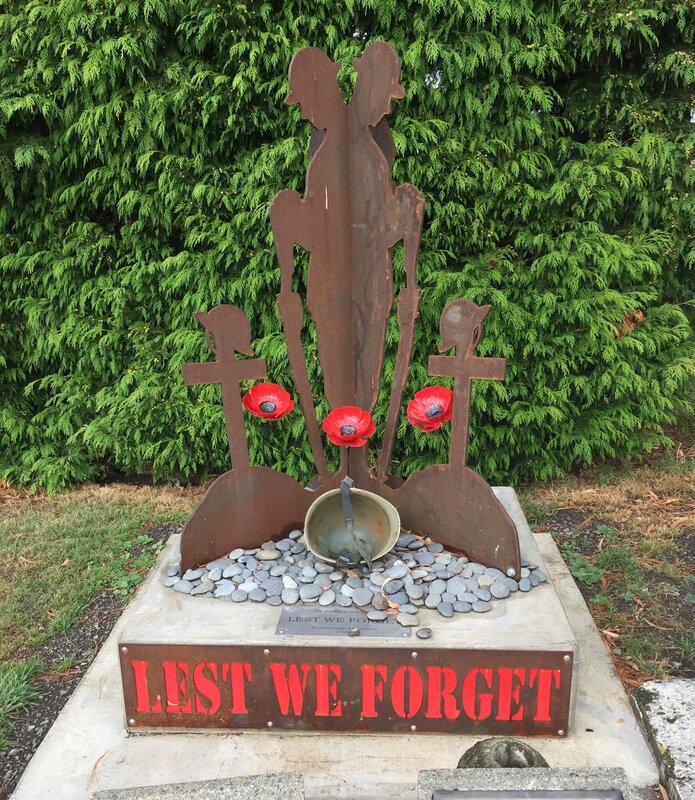 Featherston’s war graves hold many sad stories but a poignant one is about the grave of the only woman buried among them.
Mabel Helen Howard technically never went to war. But she was on the front lines of a battle she tried desperately to win. Mabel was the daughter of John Henley Whishaw and Catherine (sometimes spelled Katherine) Elizabeth Whishaw - both from what was then the Russian Federation. She was born on March 26, 1884 in Kakaramea in South Taranaki before the family moved to the Wairarapa. The family, which included her eight brothers and sisters, lived at Stoneridge in Featherston. It must have been a quiet rural existence. Mabel qualified as a nurse in 1909 and worked for a time as a midwife at St Helen’s in Auckland. At the start of World War One Mabel was 31. She became a military nurse at the Featherston Military Hospital in 1916. In April 1918 she was promoted from staff nurse to sister. Only three months later the 1918 influenza epidemic started. It swept through the camp and by November that year 2500 men were sick. The hospital was overwhelmed but Mabel kept working, ministering to all she could. At the height of the epidemic however she succumbed herself and died on November 10, 1918 at the age of 34. She was buried at Featherston Cemetery. But she wasn’t the only loss to the family. Tragically only three weeks before she died, her younger brother Bernard Guthrie Whishaw died in Cairo, Egypt of malaria and pneumonia. He had been with a machine gun squadron and is buried at the Cairo War Memorial Cemetery. She had previously lost another brother, Harry Guthrie Whishaw, in 1916 who was killed in action at the Battle of the Somme in France where he is buried. All three of the Whishaw children are named on the Featherston War Memorial None of them ever married. Wairarapa NZ includes a walk about the Whishaw family: https://wairarapanz.com/see-and-do/family-war 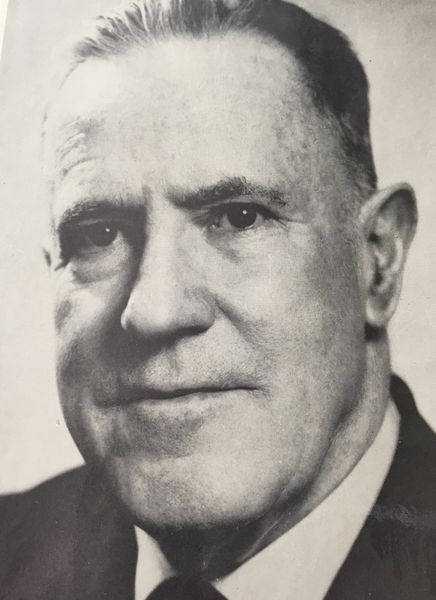 Dr Philip Patrick Lynch was involved in some of the most famous and notorious murder trials in New Zealand.
Luckily for him, he was Wellington’s first full-time pathologist rather than on trial. Lynch went on to write a true crime book about the cases he had been involved with - No Remedy for Death. Its fascinating contents include the story of Wellington’s Mt Vic tunnel ghost - Phyllis Symons, a poisoning by cake and the last man to be hanged in New Zealand. His father, Thomas William Hall Lynch, was born in Milton, Otago, son of an Irish immigrant, and his mother, Katherine Walsh, in Dunedin. Lynch was born in 1894 in Oamaru and caught polio when he was a year old, leading to a permanent partial paralysis of both legs. It did nothing to hold him back, and after his family transferred to Timaru following his father’s job - a railway worker, Lynch went to school before setting out for Wellington to take up a cadetship with the Public Works Department. He had planned to become an architect but, as he said himself in his book, he wanted to do more, so went on to study at Victoria University. He graduated with a degree in science, which led him to medicine. Lynch accepted a position as pathologist and bacteriologist in 1924 at Wellington Hospital and married his wife Cecilia and set up their first home in Hataitai. Later, living in Khandallah, he remembered the phone going often as the police called him out to crime scenes. He went into private practise in 1932. His own words describe his cases better than we ever could, "There were cases in which the body I examined carried bullet holes, contained poison, had been axed or bashed, had been incinerated, was probably hung, was dismembered. Some were exhumed before I examined them.” In 1954 he received a CBE - Commander of the British Empire and in 1966 he became chancellor of Victoria University and a portrait of him in that role is part of the university’s art collection. For 30 years he was considered the Crown’s principal witness for matters of death. Lynch died on July 25, 1978 and is buried in Karori Cemetery. 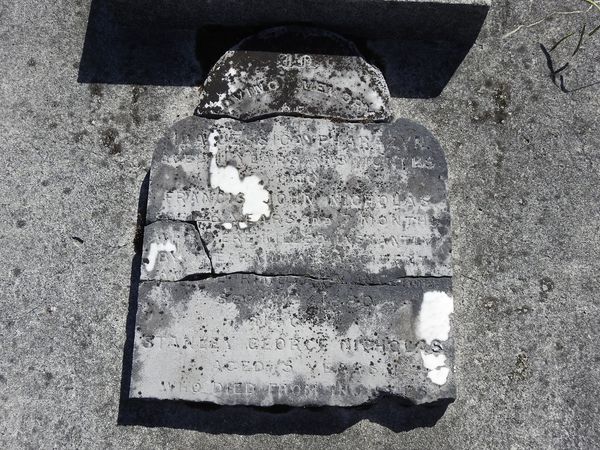 The imposing Remutaka range between Wellington the Wairarapa was the scene of a terrifying train crash in 1880 when a severe gust of wind blew two passenger carriages off the tracks, plummeted one down a steep ravine and left the other dangling precariously over the edge. The accident claimed the lives of four children. On Saturday, September 11, the Wairarapa to Wellington train left Greytown at 8.30am. Aboard and seated in the second carriage were John Quin, proprietor of the Greytown Hotel, his wife and five-year-old son William, and four other children. In Featherston, twins Ida Jessica and Ella Grace Pharazyn, aged 11 years and three months and their friends six-year-old Francis John Nicholas and his brother Stanley George Nicholas, aged five, boarded the front carriage. All four were travelling to Wellington to stay with the Pharazyn girls’ aunt. With a compliment of about 30 passengers, the train left Featherston and continued on its journey to Wellington. At Cross Creek station, at the foot of the Remutaka range, the regular engine was replaced with a Fell Engine - specially designed to negotiate the steep incline on the Wairarapa side of the hill, which rises 265 metres in four kilometres. The Fell Engine was placed behind the two passenger cars and the guard’s van and in front of two goods wagons loaded with timber and finally the brake van.  As the little train travelled up the incline the wind gusts strengthened. About 1200 metres from the summit, at a point known as Siberia, a massive north-westerly gust blew the two passenger carriages and the guard’s van off the tracks. The passenger compartment of the first carriage plummeted into the ravine, while the second carriage was left hanging over the edge. (The location of the accident is depicted in a diorama [pictured] which can be found at the Fell Engine Museum in Featherston - a great little museum to visit if you are passing through the town.)
Injured and dead passengers from the front carriage were scattered about the ravine lying amongst the shattered debris, while in the second carriage, survivors were forced to clamber up the almost vertical car to escape. The only thing preventing the second carriage from plunging into the ravine and crushing those below was the coupling to the guard’s van. Attempts to help the injured were hindered by the extreme winds, which at times forced rescuers to crawl up the tracks holding onto the rails. From the first carriage, both Pharazyn girls survived the crash, but were badly injured, however, Ida died as she was being carried up the ravine by fellow passenger Peter Hickson. Francis Nicholas was killed instantly in the crash suffering fatal head injuries. His younger brother Stanley died on October 2 from his injuries. In the second carriage, young William Quin was crushed when the upended carriage threw the other passengers forward and on top of him. The inquest into the accident found no fault on anyone’s part, but recommended that wind shields be constructed on the line. Ida Pharazyn and the two Nicholas boys are buried in Featherston Cemetery, while William Quin lies in an unmarked grave in Greytown Cemetery. The injured: Ebenezer Bishop, carpenter, Greytown Alfred Blakesley, farm manager, Taratahi James Crouch, labourer, Featherston William Donald, settler, Featherston Walter Dunn, Tauherenikau Henry Dunn, Tauherenikau Rev. C H Gossett, Masterton Robert Hare, farmer of Masterton Peter Hickson, farmer, Masterton Margaret Hodge, hotel keeper’s wife, Morrison’s Bush Miss Hodge, Morrison’s Bush Alfred Jackson, saddler, Greytown Michael Madden, retired blacksmith, Wellington William McKenzie, shepherd Mr Montgomery, settler, Greytown Ella Pharazyn, Featherston Mr Phillips, navvy, Greytown Mrs Phillips, Greytown Mrs Pye, widow, Greytown Ellen Quin, Greytown John Quin, Greytown Robert Riddick, carpenter, Featherston  From his exile on a small rock off Matiu/Somes Island Kim Lee could see the city he had previously called home but he never made it back. A Chinese immigrant, he had a fruit shop in Newtown before he was dumped on the island after he was accused of having leprosy. He came to New Zealand in about 1893 and worked as a market gardener in Lower Hutt and between 1895 and 1903 ran a fruit shop in Adelaide Road. But in 1903, he was reported to the Health Department as having leprosy. He had red lesions on his face and dull sensation in his legs. At the time leprosy was hugely feared, almost to the point of hysteria. It was highly contagious with little known treatment. It was often brought to the attention of the Inspector of Nuisances (who we have previously written about) with members of the Chinese community often accused. Racism against Chinese was rampant, complete with editorials in newspapers and finger pointing. Along with the frequent accusations of disease was anger that the Chinese were undercutting the prices of other fruit and vegetable sellers. It was so bad that the then Director-General of Health often had to comment that it was not true. Kim Lee tried to hide but once caught he was sent into quarantine on Matiu/Somes Island, able to see Wellington but unable to return. Matiu/Somes was often used as a quarantine station and during wars as an interment camp. Even then, the few other quarantined residents complained and Kim Lee was sent into a further exile - to Mokopuna - called Leper - Island about 50 metres offshore. He lived in a cave on the eastern side and was given wooden packing crates to make shelter and furniture. On good days the lighthouse keeper would row out with supplies and on bad days a flying fox was used to send him rice and fruit. The Evening Post reported "Since his confinement on the island the man has been well fed and exercised, and made to take daily baths in the sea, with the result that the leprous symptoms are gradually leaving him, and he is likely to be discharged cured.” Instead, after nine months in quarantine and six months exile, Kim Lee died. He was 56. It’s unlikely Kim Lee even had leprosy - his death certificate lists his death due to heart failure, an enlarged liver and acute renal failure. It seems more likely he had tuberculosis or an auto-immune disease or even malnutrition. Indeed, newspaper reports at the time said he was nearly cured but died of internal complications.
It is not even certain that his name was Kim Lee or if that was just what he was called once he came to New Zealand. Like many Chinese immigrants he likely had family in China. He is buried on the island but has no headstone. On Christmas Day 1891 Pahiatua couple Annie Naylor and William Sedcole celebrated their wedding. Within a week of the celebrations two of their guests were dead and about 25 suffering acute symptoms of poisoning … but who was the poisoner?
The guests first ate together after the wedding at what was then described as the ‘wedding breakfast’ - what we would now call the reception after the event. Following the meal many guests went on to the bride’s parents’ the Naylors’ house for a dance which continued till the early hours of Boxing Day. The night of the dance Mrs Naylor tidied up after the meal and cut several slices of leftover roast lamb, put them on a plate and left the plate in the scullery in their house covering the meat with a cloth. Later that night she saw a man near the scullery door and when she called out to him he walked away towards the road and left the property. She checked the scullery and found the cloth covering the meat had been turned back, but thought one of the dance guests must have helped themselves. The following day, the wedding guests were invited back to the Naylors’ house for refreshments. The refreshments included leftovers from the Wedding Breakfast, including the cold roast lamb, potatoes, French beans and plum pudding. All went well until Sunday morning when almost all of the guests from Saturday awoke with frightful vomiting, abdominal cramps, intense diarrhea and a peculiar taste in the mouth. The local chemist was sent for and he diagnosed “biliousness” resulting from overindulging the previous day and prescribed accordingly. Mrs Naylor later told an inquest that on that Sunday morning she had thrown the leftover lamb from the night before to the cat and dog, both of whom became sick. Despite the treatment from the chemist, the condition of the guests continued to deteriorate and police were informed. Dr Davenport, from the nearby town of Woodville was called in, and he diagnosed arsenic poisoning. The doctor gave the stricken guests medicines to induce vomiting. A number of the patients were also by then suffering from rigidity in the jaws. On Tuesday morning Dr Hosking, from Masterton, was also called to Pahiatua to help. He first visited Peter Dickson, a resident of Masterton, who was unconscious and died withing a few minutes of the doctor’s arrival. Dr Hosking then went to call on Joseph Moore, who was also reported to be in a precarious condition, but upon arrival found he had died 30 minutes earlier. The remaining 23 patients’ conditions gradually improved and they all eventually, but slowly, recovered. All of the guests who attended the Saturday refreshments, except the bride who ate nothing, became ill. Those guests who ate only at Friday’s Wedding Breakfast remained well. At the inquest into Mr Dixon’s death, the Government analyst Mr Skey testified that he had found arsenic in the deceased’s stomach and liver and in his vomit. Skey said he had also tested a number of items of food taken from the Naylors’ house, but had found no traces of arsenic. Among the items found at the Naylors’ was a packet of rat poison called Rough on Rats, a product that was almost purely arsenic. The possibility that the sliced lamb had been poisoned with arsenic was raised at the inquest. Skey said he had tried rubbing arsenic into sliced lamb and it gave no visible appearance and, as arsenic had no taste, it could easily have been eaten without anyone knowing it contained the lethal poison. Among the prime suspects was James P Clark who ran a drapery store in the town. It was reported that there had been conflict between the Clarks and victim Peter Dickson and his wife. At the inquest, evidence was given that three weeks before the wedding Mr Clark’s sister Maggie had said about Mrs Dickson if she had a chance she “would poison the old bitch”. The Clarks and Maggie had been invited to the wedding, but had not attended. Mr Clark later took a defamation case against Mr Naylor for implicating him in the poisoning and won. He was awarded 100 pounds in damages. Peter Dickson is buried in Masterton Cemetery and Joseph Moore in Mangatainoka Cemetery. The perpetrator of this 130 year-old tragedy remains a mystery to this day.  Even now, over 100 years since Louis Chemis was convicted of the murder of Thomas Hawkings, there is real doubt whether the right man was caught.
There was definitely no love lost between the two men, over a legal issue. And Hawkings certainly seemed to be going out of his way to avoid someone. But Chemis never admitted he had killed Hawkins and went to his own grave without the truth coming out. Hawkings' body was found face down on the road near his home in Kaiwharawhara late on the evening of May 31, 1889, after he failed to return home on time. He had been shot twice and stabbed 21 times. Money and some legal papers were taken. The police investigation ended with the arrest of Louis Chemis five days later. The trial was a sensation, but controversial. There was a great deal of prejudice against Chemis, who was an Italian immigrant. The jury heard a large amount of information, including who Hawkings had argued with (several people). But what appeared the most damning were little pieces of paper. Fragments of The Evening Post newspaper were found in the shotgun wounds, pieces of a wad used in the gun. A date - May 23, was readable. The same newspaper was found torn in Chemis’ home. The torn pieces in the wound exactly fitted the torn portion found in his house. There were also other incriminating things, like a recently fired gun in his possession and a stiletto knife similar to the weapon that stabbed Hawkings But here’s the problem. Despite the police zeroing in on Chemis early on and searching his house, they did not initially uplift several key items - including the gun. It was only picked up on the second search the next day. Had it been fired in between? There was no blood found on the knife or anywhere else. He could not have been the only person in Wellington with a newspaper - torn or otherwise. Chemis’ lawyer fought tooth and nail - pointing out inconsistencies in the Crown case but to no avail - Chemis was found guilty in short order at the Supreme Court in Wellington. He was, of course, sentenced to hang, but the sentence was later commuted. There was a public outcry over his case. Indeed three police officers were charged with perjury over it, however, only one charge went ahead and even then it was thrown out. Chemis was released as part of Queen Victoria’s Diamond Jubilee amnesty list in 1897. He served his sentence and was released, but it plagued him, leaving him unable to find reliable work. In a last tragic twist he took his own life, going up to a remote area of Mount Victoria with alcohol, putting dynamite and a detonator in his mouth and lighting it. Mr Hawkings (and later his wife) were buried in the Bolton St Cemetery. They were later disinterred for the expansion of the motorway and a memorial put up. Chemis is buried in Karori Cemetery.  James Cox would likely not be remembered for anything.
He wasn’t famous and lived a normal - if impoverished - life for his time. Except for one thing. He kept a diary. He recorded his life in early New Zealand in great detail, at a time when those living at the bottom of society usually did not. The surviving portions - about 8000 pages and 800,000 words - covering from about 1888 to early 1925 - are at the Alexander Turnbull Library in Wellington. James was born October 11, 1846, at Snodshill in Chisledon, Wiltshire, England to prosperous farmers William Cox and Fanny Jefferies. His childhood ended suddenly in 1863 with the death of his father. Then 17, he ran away from home with a cousin, Richard Jefferies (later a well known naturalist and writer), and they planned to walk to Moscow, but returned home after making it to France and not being able to speak the language. James was a clerical assistant at the Great Western Railway Company and never married. Then at the age of 34 he abruptly emigrated to New Zealand, landing in Christchurch in 1880 and lived there until 1888. After a long period of unemployment he moved to the North Island and ended up in Foxton. He landed a job fibre washing at a flaxmill which meant standing in cold water for hours on end, but, as happened to many, ended up with respiratory problems and prone to infections. The mill closed and he spent his money on a last six-month holiday before taking a job at a new mill, but after an acute infection became vagrant. He wandered for many years, begging for food and picking up small jobs. He worked a job with an agriculture contractor few years but became unemployed again when the business collapsed. Living mostly in Carterton he was too proud to ask for charity and did not apply for a pension. In 1918 he had surgery for cancer and went to Carter Home, a charitable institution for elderly indigent men. No matter where he was, he wrote his diary, often in pencil since he had no pen or ink, and often on strips of paper. Now he is remembered by his diary - and a ghostly Twitter account titled James Cox’s dairy. He died on July 19, 1925 and is buried in a pauper’s grave in Greytown Cemetery. His headstone was installed by Wairarapa historian Adele Pentony-Graham in 2013. For a man of many words, his headstone only had three words along with his dates. James Cox. Itinerant.  As you zip along State Highway Two past the Petone Railway Station you might catch a glimpse out of the corner of your eye of a big cross.
It’s the memorial to those buried nearby. Korokoro Cemetery was established in 1854 with land donated to the Roman Catholic Church by Te Atiawa chief Hōniana Te Puni-kōkopu. It closed just over 100 years later in 1957 when the land was taken for roading and the widening of State Highway Two. Rows of graves and headstones were removed and the remains reinterred. An Act of Parliament was required to authorise laying a drain through the cemetery, the removal and reinterment of certain human remains, the removal of headstones, monuments and grave surrounds, the levelling and planting of the grounds and the erection of a common monument. While about 44 bodies were reinterred, the rest, on the hillside, remain to this day, although they are covered by scrub and hard to see even up close. Instead, the cross visible from the road was put up and names added to it, although some names have been lost and not recorded. The land is still under the care of the Catholic Church along with the Petone hapu of Te Atiawa deciding on joint guardianship or kaitiakitanga of the cemetery. Some of the names on the cross are of families known in Wellington and the Hutt; Neazor, Villars, Wrigley, Cudby, Bolton and many, many more who helped settle the Hutt. George Cudby was the son of John Cudby, who arrived in New Zealand in 1843. The family ran a carting and coaching business from Petone. Both were at the opening of the first railway line. William Neazor came from Limerick in Ireland, did some gold mining on the West Coast but settled in the Hutt Valley and ran a boarding house that was gutted by fire in 1908. He was also a juror on an infamous murder trial of Andrew Somerville for killing Arthur Herbert. Alongside the towering cross is a much smaller memorial for three men killed in the first World War, military driver Athelstan Edmund Bunny who died of illness on the Western Front, James Casserly who died some years after returning from the war and Joseph Connor (William Neazor’s nephew) who died from his wounds after being discharged. Do you know of one of these ‘hidden’ cemeteries?  One of New Zealand’s last swagmen was known to all as Russian Jack - but his real name might be a mystery.
His actual name was often said to be Barrett Cruman - but it has never been known if it was really his name or it was taken because he spent time as a crewman on a ship. Born in Latvia in a small village called Alexandria on March 26, 1878, he only did a few years of education before working in scrub-camps then joined the merchant marine, working as a seaman. He arrived in New Zealand in 1912 on the British steamer Star of Canada, but off the coast of Gisborne the ship was wrecked and he was swept ashore. He worked on coastal ships for a while but then took to the land working as a scrub cutter and a farm hand. Then one day he took to the road. For the next 53 years Russian Jack wandered around the North Island. He was best known in the Manawatu and Wairarapa. He just avoided being in Hawke’s Bay during the 1931 earthquake. He called himself Russian Jack - or Ivan in his native tongue. In Masterton the statue of him by artist Kenneth Kendall shows a shorter man with a deeply tanned face, a drooping moustache, most often wearing a wide brimmed felt hat and a walking stick. He smoked a pipe that he usually put out by jamming a cork in the bowl. Russian Jack carried several large sugar bags and a cut-down kerosene-tin billy, along with tins of dripping which he rubbed on his chest and neck to protect against ailments. He had a number of rough bivouacs around the North Island that he kept ready for his next visit. He wore newspapers layered in between his fraying clothes and a pair of boots he fixed over and over again. He was remembered as a man of honour, being good natured and courteous. It was only in the mid-1960’s he gave up the life. In his 80’s he was deaf, having trouble walking with one foot becoming deformed. He was admitted to hospital with frostbitten feet in 1965 and spent the next three years in Greytown Hospital, dying on September 19, 1968, aged 90. It was a life he had chosen, one that made him happy and in his words, "Man oh man I vos FREE! Free to have a beer, have a smoke, – happy what you can call all the time, you know. They was free days." Russian Jack was buried in the Greytown Cemetery, given a funeral from the proceeds of a pension he never collected in life. |
AuthorFran and Deb's updates Archives
August 2025
Categories |


 RSS Feed