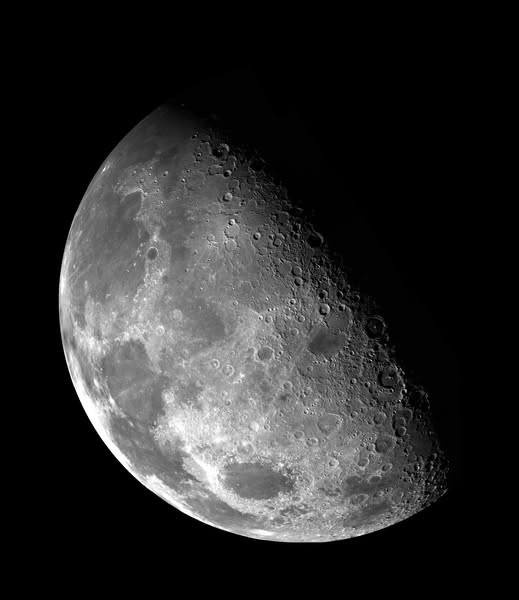
 Charles Gifford could rightfully be called the New Zealand moon man.
It was his theory that craters on the moon were caused by impacts of meteors that proved to be the correct one. Before that, it was believed the craters were caused by volcanic activity. Gifford was born aboard the ship Zealandia of the Cape of Good Hope on April 18, 1861 to Sarah and Algernon while on their way to New Zealand. They were headed to Waitaki parish where Algernon was to be the clergyman. They settled in Ōamaru where Charles (whose first name is actually Algernon but called Charles) attended the grammar school. Still in his teens, he was sent to England for more education, and obtained a degree in mathematics. After coming back to New Zealand he got teaching posts. He was influenced by professor of chemistry and physics at Canterbury College Alexander Bickerton who had an idea of an impact theory. He published a number of papers about the idea. In 1895 Charles was head of the science department at Wellington College where he was hugely popular. In 1901 he married Susie Jones in Ōamaru and they had three children. He was enthusiastic about astronomy and was responsible for establishing the college’s observatory. He began writing articles for The Evening Post then reprinted them in a booklet called In Starry Skies. He lectured publicly and halls where he talked were often crowded. He owned his own telescope set up in a small observatory on his property at Silverstream, near Wellington. In 1924 and 1930 he published two hallmark papers in the New Zealand Journal of Science and Technology demonstrating mathematically that meteoric impacts were responsible for the formation of lunar craters. Gifford also took a keen interest in gardening, field geology and contemporary economics. He was also a respected explorer and one of the early photographers of much of the back country within New Zealand's South Island. In 1939, Mount Gifford in the South Island was named in his honour. He died at his home in Silverstream on February 27, 1948. The funds from a society he had started was gifted to the Carter Observatory and used to purchase telescopes for schools. The Gifford Fund of the Royal Astronomical Society of New Zealand funds lectures by astronomers around the country. He was cremated at Karori Cemetery. Photograph by NASA.
0 Comments
Leave a Reply. |
AuthorFran and Deb's updates Archives
September 2025
Categories |
 RSS Feed