 One of the most unlikely celebrities in Wellington’s history was a man who didn’t want to see anyone.
Called the Hermit, he lived in a cave on the coast where Island Bay meets Houghton Bay. And for a moment in time his cave was a tourist destination as people went to gawk at the man in the cave. Records are a bit patchy about the man himself. Those who visited him often saw him propped up on an elbow, answering questions in a bored tone and refusing money or food. But there was one question he wouldn’t answer - why he was there. Instead when he got sick of people, he often set fire to some seaweed to smoke them out of his cave. Those who got to know him said his name was Charles or William Persse and that he was well educated and came from a banking family in the north of Ireland, having become estranged from his relatives. He is believed to have come to New Zealand in 1878 but why he chose a cave is open to debate even today. One of the first mentions of him was a newspaper report in 1879 of a police officer who had found him naked and half starved. He had some kerosene, some water, soap and a piece of ship's sail he used as a bed along with a bible his mother had given him when he was a child. He told the police he lived off fish, boiled seaweed and moss off the cave walls. Indeed, he became a fixture in Wellington, he lived in the cave for 17 years, appeared in court on charges like vagrancy and was hospitalised more than once with serious respiratory illnesses. It was in 1984 that the authorities began talking about extending Queen’s Drive which would drive him out of his cave, which upset locals who saw him as a novel part of the community. He was hospitalised in August 1898 with bronchitis and it was thought he would survive despite Wellington Hospital superintendent Dr John Ewart initially thinking he might not. But in September that year he was recovering and was offered assistance by the Benevolent Society and he asked politely to go to Brisbane where he had relatives. They paid his way although it was later rumoured he went back to Ireland. His cave was eventually boarded up and then partly destroyed. An oil painting by Petrus Van Der Velden is in the collection of Te Papa. He appears to have vanished from New Zealand’ memory after that. John Ewart who treated him devoted 20 years of his life to Wellington Hospital. Ewart died on August 5, 1939 and is buried in Karori Cemetery. Painting from Te Papa by Petrus Van Der Velden
0 Comments
 Cafe Chantant in Dunedin’s famous Octagon was a rough and ready place.
It had a bad reputation and was well known to local police. In the Ross’s Building, the cafe was one of three shops - one untenanted and the other a milliner’s - along with numerous rooms rented to various people. One of them was editor of the Otago Witness, Robert Wilson. The milliner was his wife Sarah Ann’s shop. He and his whole family were in the building the night it caught fire. In the early morning of September 8, 1879, a neighbour noticed the fire and raised the alarm. As many as 50 people were thought to be sleeping in the rooms behind the cafe. The fire started in a second floor sitting room and spread quickly. It destroyed the only stairwell in minutes. The shoddily built structure with narrow hallways hampered efforts to get out or anyone to get in to help. People did try desperately to get out. At least one man, finding himself cut off, jumped about 30 feet to the ground. He was rushed to medical attention but died a short time later. Of Robert Wilson’s family, he, his wife and the children Frederick, Lawrence, Robert Jnr and Sarah all died. Two little girls - Lillie and Louisa survived. Also killed were John Swan, Margaret McCartney, John Taylor and George Augustus Martin. Two other bodies were recovered - but remain unidentified to this day. The fire brigade took far too long to respond and they were heavily criticised at an inquest held soon after. But the inquest jury found the fire was a wilful act by William John Waters but that they did not believe he intended to kill anyone. Nevertheless the coroner sent Williams to trial. Williams - also known by the names Walter Clair and William Woodcock or more likely Woodlock - had moved to Dunedin with his brother’s wife and child. He was charged with arson and with the murder Robert Wilson. At trial at least one witness said they had heard Williams say how easy it would be to set a fire. He had over £5000 in insurance, but despite this it took the trial only 38 minutes to find him not guilty. Much later he received some of the insurance money. Waters died on October 14, 1911 and is buried in the Port Chalmers Cemetery with his wife Maggie. Photo by Ricardo Gomez Angel.  The iconic Norfolk pines on Napier’s Marine Parade were the brainchild of mayor George Henry Swan.
He had a vision for Marine Parade after many, many years of problems with the ocean, pounding right up to houses and storms sweeping away anything on the foreshore. Planting began in 1888 and originally there were 82 of the trees which now tower over the parade. The trees, as well as being decorative, had a purpose - they were designed to stop sea spray coming from the ocean. Many also had benches built around them for walkers. The 1931 earthquake changed the foreshore, raising it considerably and altering the development that would be done. Now work would not have to compete with the encroaching sea. The seawall had already been built by the time the earthquake hit but now the land beyond the seawall could be reclaimed. The gardens and rock gardens were the first to be completed and later things like the Soundshell - and much later - in 1954 - the equally iconic statue of Pania. The trees of course survived the earthquake and even now drivers travel beneath the shade of the massive trees. Swan had been born in 1833, in Sunderland, England, and went to Australia in 1854 before settling in New Zealand in 1857. He had initially trained as a chemist but became interested in photography. Arriving in Wellington he became a photographer then moved to Napier where he opened a studio which continued until 1870 when he sold it to his assistant. He then became a large shareholder and managing director of the Hawke’s Bay Brewing company and in 1869, it purchased the White Swan Brewery in Hastings which he ran for many years. He became Mayor of Napier in 1885 and served until 1901 (at the time being the longest serving mayor in New Zealand). As mayor, he started process for the public salt-water swimming baths as well as the changes to Marine Parade. He was also chairman of the Napier Hospital Board, and of the Hawke's Bay United Charitable Aid Board for many years, and a member of the Napier Harbour Board for seventeen years. He represented Napier in the House of Representatives from 1890 to 1893. Swan married actress Frances Stopher in 1884. There is a bust and plaque in the wall of the pool on Marine Parade dedicated to Swan. He died in Whanganui on July 25, 1913 and is buried at the Old Public Cemetery in Whanganui.  Lieutenant Commander William Edward Sanders’ VC citation was brief. “In recognition of his conspicuous gallantry, consummate coolness and skill in command of one of HM ships in action.”
The weird vagueness was deliberate, he was in command of a mystery ship - called a Q-ship. Born in Auckland, February 7, 1883, to Edward Helman Cook Sanders, a bootmaker from London and wife Emma, he was called Billy. He went to Takapuna School and lived on the North Shore, developing a love of swimming and sailing. He took up a seafaring life in 1899 as a cabin boy on the small coastal steamer Kapanui, then the Government steamer Hinemoa, before joining the Auckland-based Craig Line and was the first mate of the Joseph Craig. He was aboard when the ship wrecked in the Hokianga Harbour in 1914. In 1916, he was commissioned a sub-lieutenant and his naval service began with mine-sweeping but he quickly volunteered for the submarine-decoy ships called Q-ships. The German U-boats were wreaking havoc on shipping in the Atlantic and a way was needed to counter it. Q-ships were heavily armed merchant ships, with hidden weaponry, designed to lure submarines into an attack to prevent them going after vulnerable merchant ships. Sanders - a sub-lieutenant at the time - faced down three u-boats while becalmed and without engines or wireless. They managed to sink one and avoid torpedo attacks. Sanders was promoted and given the command of the Prize. She had been captured once and then refitted as a mystery ship. On April 25, 1917, Sanders set sail and five days later the alarms sounded and the men rushed to their stations. A nearby submarine opened fire on the ship. The submarine was under the command of Count Spiegel von und zu Peckelsheim. He was suspicious of the ship. Decoy boats - made to look like they were fleeing - left the Prize and were picked up by the Germans. Among them was a Captain Burroughs who later provided a detailed account of the battle. The Prize was badly damaged, her engine room on fire. Sanders was perfectly cool . As it became clear how badly off the Prize was, the submarine edged closer. For 40 minutes everyone was still and silent on the Prize and as it came into range Sanders ordered them into action, opening fire with everything they had. The submarine began to steam away but a shell hit her, apparently sinking her. German survivors were picked up and the Prize headed away. However the sub managed to survive and limped back to Germany. Meanwhile the Prize was repaired and put back to sea with now-Lieutenant Commander Sanders. But by then, the Prize was a prize indeed, being sought by German U-boats. And on August 14, 1917, the Prize was acting as a decoy for a submerged sub it was towing when it was sighted by U93. Sanders attacked but the Uboat ran, returning to stalk the Prize through the night until it fired a torpedo that sank the Prize. Sanders had received his VC shortly before he took the refitted Prize back out. The medal was later given to his father and is now in the Auckland War Memorial Museum. A memorial to Sanders is at O’Neill’s Point Cemetery in Belmont, Auckland. 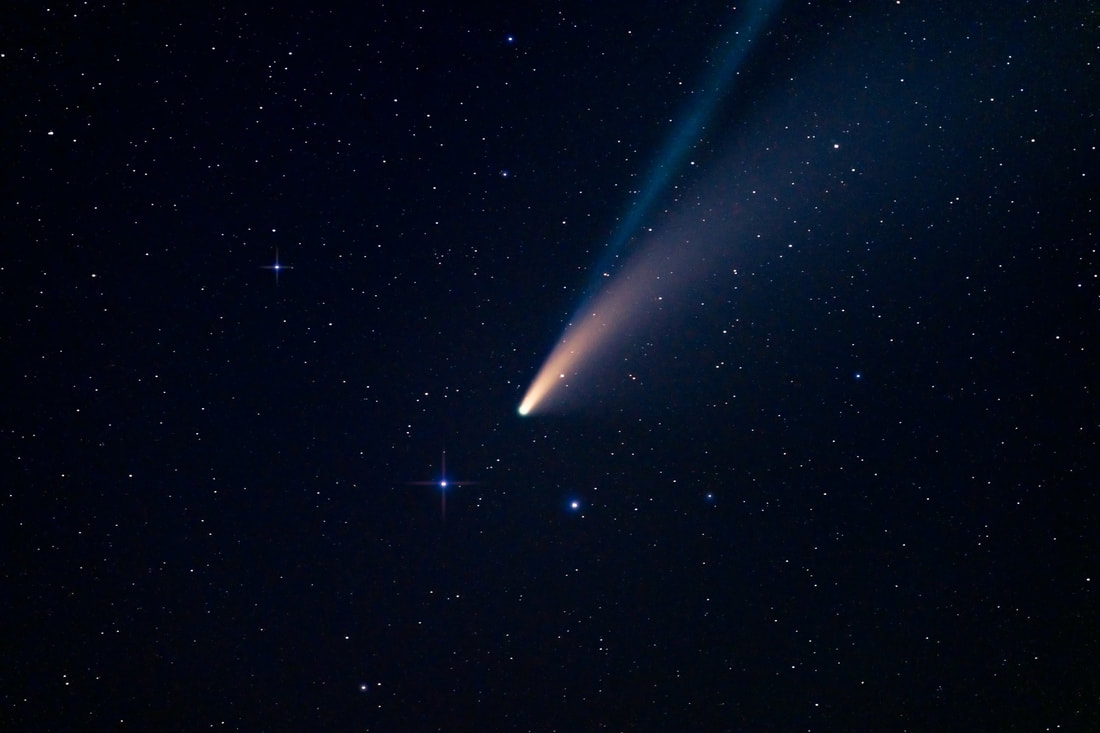 John Grigg was a music teacher and businessman, but it was his hobby in his spare time for which he is best remembered. John discovered comets.
Born in London, England on June 4, 1838 to James and Ruth, he received an excellent classical education with a particular interest in music, math and science. He sang, played numerous instruments and was qualified as a music teacher early in his life. He married Emma Mitchell in 1858 and they came to New Zealand in 1863. But Emma died in 1867 leaving John with four young children. The next year he moved his family to Thames and set up a furnishings business. Later he added a music shop. He established the Thames Choral Society and composed music for it. In 1871 he married Sarah Ann Allaway but the marriage was tragically short-lived - Sarah dying during a miscarriage in 1874. He married a third time - to Mary Jane Henderson in 1887 and had four children. John had developed a fascination with astronomy as a teenager and in 1874 and 1882 he became captivated by the transit of Venus across the face of the sun. He retired at the age of 56 to devote himself to it full time. He owned his own refracting telescope and constructed an observatory for it in Pollen Street. And began comet hunting. In 1902 he made his first discovery, a comet now known as Comet 1902 IIP/Grigg-Skjellerup. A year later he found his second and his third in 1907. He was beaten to a fourth by an Australian amatuer astronomer. John received rewards for his discoveries and is also known in the field of astrophotography for taking pictures of comets. He died in Thames on June 20, 1920. He is buried in the Shortland Cemetery in Thames.  In 1910 moose were released in Fiordland. The idea had been to create a type of large game reserve for hunters.
Sir Joseph Ward, who had been Prime Minister, had arranged for the shipment - from Canada. The first release failed fairly quickly but then 10 more moose came to New Zealand on the ship Ulimaroa. The four males and six females created a fuss - they were highly prized and had to be carefully tended, including being doused with water several times a day. So they were released in Fiordland National Park and were to be left for over a decade to breed. But it never came to anything. Red deer also became part of the landscape and competed heavily with the tiny population of moose. Nevertheless they bred and in 1921 they were well established. But then it was assumed they died out. But legends persist and sightings are common. Photos have been taken over the years, a clear one from 1927 at the Seaforth River and then in 1952 a photo was taken of what could only be a moose standing on a river bank. Despite believing they had died out, several were shot in the 1950’s then it was again believed they were extinct in New Zealand. But the rumours came again and again. In the 1970’s there were signs, including a cast antler. Then, in 2001 and 2002, DNA from hair was established before there were browsing signs. Then, only two years ago, a former Canadian hunting guide on a helicopter flight was stunned to recognise a moose in the Doubtful Sound area. Those 10 original moose were cared for when they arrived by Frederick Moorhouse who had been the one of the original staff members of the Tourism Board, which marketed New Zealand to the rest of the world. Frederick was later the Conservator of Fish and Game in Rotorua - such an expert that he officially escorted dignitaries on fishing expeditions - the Duke (later King George VI) and Duchess of York and the Bishop of London. Along with being the man who cared for the moose, he was responsible for trout stocks around the country as well as the importation of wapiti, horned owls, black tailed deer, racoons, snow geese and Canadian geese. He was also in charge of the agricultural and pastoral section at the world’s fair in St Louis. Moorhouse retired in 1928 and died in 1929, leaving his wife Emma, a son and daughter. He is buried in Te Henui Cemetery in New Plymouth. Picture by Shivam Kumar. 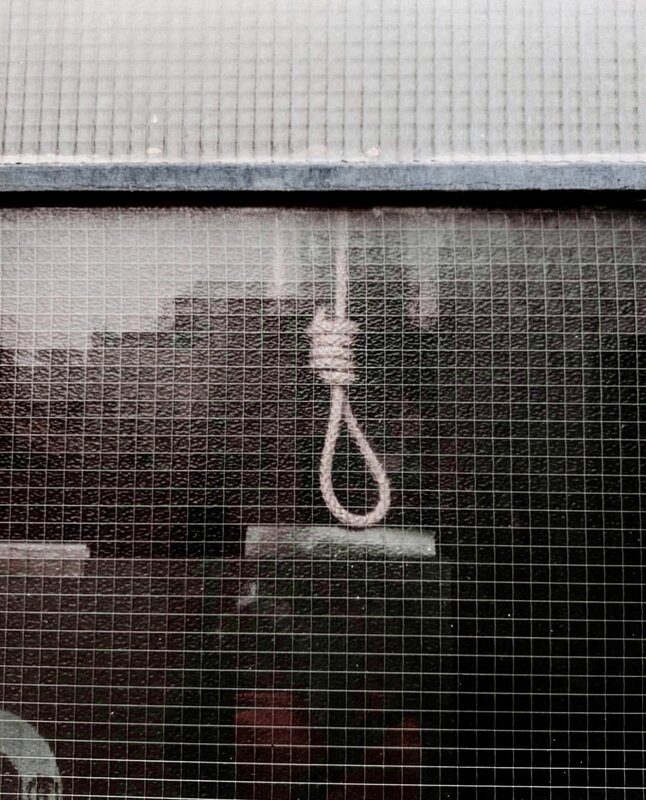 John Branks’ wife Rachael tragically died after the branch of a tree he was felling landed on her.
The pair were early settlers, coming to New Zealand from Scotland in 1840 aboard the Bengal Merchant, ending up living in a cottage on the Old Porirua Road just down the road from the St John’s Anglican Church. John worked for the landowner Thomas Drake. They began raising their family, William, Catherine and John Jnr. John was in the throes of buying some land to secure their future when the branch fell on Rachael breaking both her legs. She was the first patient admitted to the new Colonial Hospital in 1847. Fifteen days later Rachael died after contracting tetanus. John was left with three young children, which must have been hard. How the next two years passed is not known. But the next records on the Branks family was the terrible news that he and his children were dead. Murdered. Police found all of them had been hacked to death with an axe. John was on the floor and the children on the bed. Wellington was horrified and a £50 reward was offered. In a short period of time Henare Maroro was arrested. Maroro was an angry man. He had been in prison previously for four months - although it's unclear what for - and he wanted that time back. He had vowed to get back at pākehā and the Branks family were who he came across. It didn’t take long for a court to find Maroro guilty and he was sentenced to death. At the time executions were carried out in public and Roman Catholic Father Jean Baptiste Comte attended Maroro at the Wellington jail and took his confession. He admitted the killing, which he carried out alone and without anyone else telling. He had no idea who John Branks was. In April 1849, Maroro was taken outside the jail where a scaffold had been put up. About 500 people gathered to watch as he was hanged. Maroro was to have been buried in the prison but since it was destroyed by an earthquake, it was decided to bury him elsewhere. Like a great many murderers, his final resting place is a guess but it would most likely be the Bolton Street Cemetery or Mount Street cemetery given the year. John, Rachael and their children are listed in New Zealand Cemetery records on the St Paul’s Church of England burial register and are listed as being buried in the Bolton Street Cemetery. The family are also shown as buried in one grave in the St John's Anglican cemetery in Johnsonville. Photo by Tamara Gore.  For a short time the tragic crash of ZK-AGK Kākā, a Lockheed Electra with 11 people on board was New Zealand’s worst air disaster.
A National Airways Corporation plane (later Air New Zealand), it took off from Hamilton heading to Palmerston North on October 23, 1948. It was a regular route and this time had Commander Max Hare and Second Officer Brian Russell at the helm. There was nothing unusual about the first flight. The plane refuelled and took on 11 passengers before beginning the flight back. It headed toward Whanganui, a dog leg that took it clear of several large peaks. The plane was noted on the Whanganui beacon about 1.38pm in heavy cloud and rain. Thirty minutes later there was no sight of it and it was declared missing when it failed to land in Hamilton as scheduled. A massive search began, badly hampered by the weather and by the fact there was no clear idea where it was. It was three deerstalkers who said they heard a plane near Mt Ruapehu that led to the discovery of the crash site about 900 metres from the summit. All bodies were recovered. A board of inquiry later said it was pilot error. New Zealand was only beginning to recover from that news when the Lockheed Loadstar ZK-AKX Kererū went down with 15 people on board on March 18, 1949. The flight had left from Whenuapai heading to Paraparaumu then on to the South Island. The plane, captained by Commander Richard Warren Bartley had been in regular radio contact. At 9.37am the Paraparaumu control tower heard the plane was two minutes out. But it never arrived. Twenty minutes later search aircraft were in the air. Heavy cloud made it difficult to see but just after midday the burning wreckage was found in the Tararua foothills. Searchers went in on foot hoping for survivors but on arrival the next day it was quickly clear the Kererū had exploded on impact and they began the horrible task of bringing back the bodies. Onboard the Kākā was Lindley Andrews, William Bell, Frederick Follas, Merton Heywood, Margaret Kunz, William Mumford, Gertrude Pease, Roderick Phryn and Trevor and Helen Collinge and their infant son Keith. George Maximilian Hare, a former Royal New Zealand Air pilot is buried at the Rangiora East Belt Cemetery while Brian Russell is in the Archer St cemetery in Masterton. Onboard the Kererū was Noeleen Bell, Rogers Boys, Gladys Cattin, Frederick Jeffcott, James June, Edward Phillip James Keeler (Briell), Robert Kennedy, Edna Perkins, William Perkins, Andrew Ryland, Frank Stephens, Edward Thurgood, Joan Treweek and Donald Wilson. Pilot Richard Bartley is at Waikumete Cemetery in Auckland. Both times the lack of air navigation beacons was highlighted during inquiries. Photo of a Lockheed Electra by Ivo Lukacovic.  This is an unusual grave story. For a start it's not about a person - although a whole generation of kiwi kids might disagree.
It’s about beloved icons whose incredible story is so full of twists and turns it’s a little hard to believe. Every day in the afternoon a distinctive television show’s theme began to air. “Here's a house. Here's a door. Windows: one, two, three, four. Ready to knock. Turn the lock. It's Play School!” Yes, we are talking about Big Ted, Little Ted, Jemima, Manu and Humpty. For nearly all of them this ‘grave story’ ends with those beloved characters safely stored at New Zealand’s national museum Te Papa. But for Little Ted it’s a far more dark sinister tale, full of plot twists. Little Ted - or at least a bit of him - is at the Otago Settlers Museum. His body in fact. It’s charred and decapitated. And there is no trace of his head. So what hideous crime allowed this to happen? On the final day of filming of the show in New Zealand, the crew were playing pranks. Among them was stuffing Little Ted’s head with explosives. Before there are too many gasps of dismay - this version of Little Ted was an old, already retired one. Several were always kept on hand so that no one version got too worn out. Predictably the head got blown off and for many years tales were told about what happened to it. But in 2009 a phone call to a reporter came from a man who claimed he had the head. He refused to give further details and it wasn’t until years later that another investigation by another reporter tracked down a man who claimed he had the head. (There is no way of knowing if it was the same man both times). And he got a result. This time a photo of a little bear head was sent to the reporter along with a newspaper of the day as “proof of life.” As it happens several searches for any of the other versions of Little Ted to preserve him have come up with nothing - or at least nothing public. So the beheaded version is apparently the only one of the original left. Where the head will end up is anyone’s guess.  Twelve years after he died, Alexander Doull’s body was exhumed in 1964, a drastic step for anyone to take.
Suspicion had fallen on his widow - Margaret Murray Doull - after the death of her sister Janet Belle Greenhorn, believed to have been poisoned with arsenic. Janet had been in Oakley Mental Hospital in 1964 before leaving to move in with her sister Margaret in Takanini, Auckland. Within months she was dead. Margaret was born Margaret Murray Hutchinson on May 13, 1912 in Timaru to John Edward Hutchinson and his wife Helen. She had an older brother Ian and of course, Janet. She married Alexander George Doull in 1935 and they quickly had four children. It can’t have been easy for her. She was bright, ambitious and intelligent and had once considered becoming a doctor. But instead she was a clerk at the Auckland Electric Power Board while her husband ran his farm. It was hard work and Alexander became ill and depressed, withdrawing from the world more and more. By 1951, the farm was running at a loss and it was transferred into her name. And in January 1952, Alexander died. At the time the cause of death was given as influenza. Margaret married again - William John Jackson - but unknown to her, he was already married and ended up being charged with bigamy then imprisoned for six months. She took in boarders to make money for a while but when Jackson was released from prison they headed to Australia. From journals she wrote it was clear she was sleeping with multiple men. By 1963, she was back in New Zealand (Jackson died in 1962) and took in her sister. Janet became ill and Margaret said it was flu. Janet died on August 22, 1964, and after the police were called in, Margaret was charged with murder. Pathology tests said Janet died from repeated doses of arsenic. And Margaret was shown to have bought the poison. It led to Alexander’s body being exhumed and Margaret being charged with his death. She denied both but it took the jury just over an hour to find her guilty and she was imprisoned for life for murder. Janet was cremated and her ashes scattered at Purewa Cemetery while Alexander was buried in Maunu Cemetery in Northland. Where Margaret went after her prison sentence (or if she did) is not known. But she had already said she had a lover waiting for her. |
AuthorFran and Deb's updates Archives
September 2025
Categories |
 RSS Feed