 In the mud lay thousands of dead and dying men. Many of them Kiwis.
In the course of one day, October 12, 1917, in the village of Passchendaele, in Flanders, Belgium, 843 New Zealanders were killed or injured. It was the single worst day of fatalities in New Zealand’s history. The battle was part of a campaign lasting four months involving troops from Britain, Australia, New Zealand, Canada, France and Belgium. The idea was to capture and hold the high ground at Ypres including the Passchendaele ridge. The offensive began well enough in the early morning of July 31, 1917. Then it began to rain, turning the ground to a muddy quagmire, reducing visibility and making forward movement impossible. The artillery could not even see the men they were meant to be supporting, moving forward. On and on the attempts were made to continue the all out assault. The troops would move forward and dig in and the Germans would counterattack. On October 12, the New Zealanders began their attack. The thick mud meant they could not bring their heavy guns forward and the soldiers ended up pinned down in the boggy ground. Among the men was Alfred Benjamin Booker. Born in Eltham, New Plymouth in 1895 to dairy farmers Benjamin and Caroline (Carrie) Booker. He worked at a local farm before enlisting with the New Zealand Expeditionary Force in 1915. He initially went to Egypt before sailing to France. Wounded at the Battle of the Somme, he recovered, enough to leave only to catch mumps and return to hospital. He went back to his battalion to take part in the attack on Bellevue Spur. Alfred was a stretch-bearer. It took the bearers three days to clear the wounded on October 4, often carrying the men miles to safety. It was worse on October 12 - they could take hours to get back, coming under fire from shells and gas, wading through mud and craters. Alfred was badly wounded and died three days later. He posthumously received the military medal: For conspicuous gallantry and devotion to duty as a stretcher bearer during the operations against Passchendaele Ridge on 12th and 13th October 1917. This Rifleman tended and carried in wounded day and night without rest and with utter disregard for the enemy snipers, machine gun fire, and shelling. With the utmost bravery and cheerfulness he went again and again into the fire-swept zone, thereby saving many lives. He is the hero we remember tomorrow on ANZAC Day. Alfred is buried in the St Nicholas Church Cemetery in England. Picture by Chris Sansbury.
1 Comment
 Who doesn’t remember Crown Lynn pottery?
It was in every home in the country in its heyday. And we are willing to bet a lot of homes still have some. Of all the patterns that Crown Lynn made, the most recognisable is a simple white cup and saucer with a blue logo on it. The famed New Zealand Railways cup, in which tea was served on the trains. Crown Lynn was started by Rice Owen Clark (we’ve previously written about him and his bigamy trial) in 1854 when he bought land at Hobsonville and started making pipes. It moved to New Lynn in 1925 and under Tom Clark - a great grandson - began making a large number of other things. In 1941, he built a kiln and the next year began making tableware. As it happened the war meant only essential goods could be imported and that did not include things like plates and cups. Under a directive from the Ministry of Supply, the factory began making coffee mugs and plates for American forces in New Zealand and in one year made 1.5 million. But they had a flaw - the handles broke off too easily. As production increased though, so did the quality and Crown Lynn gained a reputation for sturdy reliable products It was then that Crown Lynn was contracted by the New Zealand Railways to create tableware, leading to the iconic cup and saucer. After the war the company began experimenting with glazes and encouraging employees to think of designs. One of the new designers was Frank Carpay from the Netherlands who had studied industrial design and met (and impressed) Pablo Picasso. He started his own commercial pottery business but after it failed he wrote to the then mayor of Auckland John Allum asking for the name of a pottery company he could apply to. Allum passed the letter on to Tom Clark who was recruiting. Carpay arrived in New Zealand in 1953 and began working on one off designs. However they were not commercially popular and he lost his job in 1956. He continued to live in New Zealand and began exhibiting paintings, gave demonstrations of pottery and did commissions, teaching at Howick District High School. He began developing screen printing techniques and working in fabric design and printing. His designs incorporated Maori designs, including rock drawings. Later he branched out into beach towels and beach wear but the business failed. Franciscus Hubertus Johannes Carpay was born on July 13, 1917, and died on September 12, 1985 and is buried in Waikumete Cemetery.  Winter is on its way with its cold temperatures.
Most of us have ways of dealing with the cold weather - but spare a thought for the residents of Eweburn, now Ranfuly, on July 17, 1903. That morning many woke - early since it was a farming community - to a starting minus 25.6 degrees celsius. A cold southerly brought heavy snow followed by clear skies, light winds and intense frosts. The top of the snow layer became much colder than the relatively warm earth, which no longer heated the air because of the insulating layer of snow. The Hakataramea River froze solid and blocks of ice floating down the Waitaki River formed a temporary dam near Kurow. A creek north of Kurow froze where it ran across the flat road surface. As more water flowed down over the ice, it too froze, until a barrier of ice a metre and a half high blocked the road. Potatoes, onions, oranges and apples froze as hard as stones, eggs burst and meat had to be cut with an axe, though it tended to splinter. Communications went down as telegraph poles iced over, and remote communities got cut off. In all, about a million sheep froze to death. For a while the story was lost to local legend until Reverend Daniel Bates was appointed as a temporary clerk to help process the climatological records. Daniel Cross Bates was born at Spalding, England on June 9, 1868 where he was educated before going to Australia where he became a minister of the Anglican Church. He was ordained at Newcastle in 1892 and came to New Zealand in 1898 where he was the vicar at All Saints’ Church in Invercargill. He trained with David Kennedy at Meeanee who had started his own observatory there. Bates served with the 9th New Zealand contingent in the Boer War, rising to Chaplain-Colonel. After an injury meant he lost his voice, he left the church and joined the Colonial Museum as reliving director - taking on much of the climatological work. Weather forecasting was carried out by the Weather Reporting Office and Bates became assistant to its director. He was also the Director of Meteorology for the Army, specialising in military aviation. Bates ended up being appointed consulting meteorologist to the government. He played a considerable part in the discussions leading to the establishment of the Wellington Zoological Gardens at Newtown in 1905. Bates died in Wellington on August 7, 1954 and in buried in Karori Cemetery, Photo by Rosan Harmens. 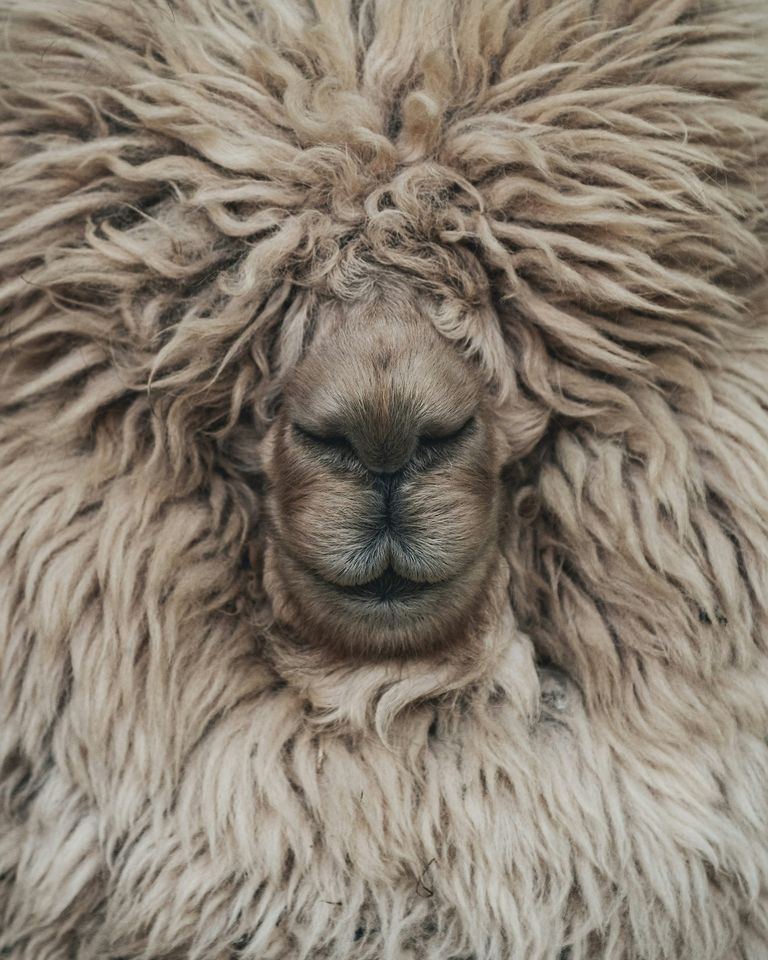 The odd sheep with even more wool than normal puzzled New Zealand farmers. The sheep were Romneys and while that was fine, every few births threw up a sheep which was - not to put too fine a point on it - hairy.
What no one knew was why and how it could be stopped. It was also a concern because Romney wool got good prices. The hairy sheep had more wool and it ended in a black tip - not something anyone wanted. Shortly after the launch of the Massey Agricultural College in 1928, its principal began working on the problem. He opted to employ Dr Francis William Dry, a Leeds university graduate who was applying a new science - genetics - to sheep breeding. Dry and his wife Florence Wilson Swinton came to New Zealand to begin working it out. Meanwhile staff at Massey worked on a kit that farmers could use to determine the hairiness of fleeces. But instead of immediately working on how to breed this out of sheep, Dry began looking to breed sheep with the same characteristic. He asked for the hairy sheep to be donated to a study. He got some but he was sure there were hairier sheep out there so he put on his gumboots and got searching. He found one outrageously hairy sheep on the Longburn farm of N P Neilson. Farmers were now worried. What if the hairy sheep got out and bred further? Would it destroy the quality of the Romney stock? So the order was made to destroy Dry’s stock. Instead, it was hidden away - this turned out to be a multi million dollar idea. Dry’s friends suggested he name the sheep after himself - which led to the name Drysdale sheep. One of Dry’s professors visiting from England saw an opportunity. And Dry ordered tests be done on using the different wool in uses like carpet. In the 1960’s the new Drysdale sheep became a commercial breed specifically for carpet making. Demand has dropped over the years and now the Drysdale is considered a rare breed. Francis Dry was born in Yorkshire on October 23, 1891 to Frank Dry and Mary Avis Corke. He died in Palmerston North on July 14, 1979 and was cremated at Kelvin Grove Cemetery. Picture from Georgi Kalaydzhiev.  Richard Shumway came to New Zealand with the best intentions - he was a Mormon missionary - instead he was harbouring a killer.
He arrived aboard the steamer Zealandia in Auckland from Vancouver, the guest of honour at a hui for Maori mormons. He arrived on April 8, 1913, and received a traditional Māori welcome, complete with hongi. He was sweating and sneezing and suspected he had measles - which would have been bad enough, but he didn’t. He had smallpox, which he caught in Sydney. We rarely hear about smallpox anymore - it was mostly wiped out worldwide by 1980 making it the only human disease to have been considered eradicated. But over hundreds of years it has killed well over 500 million in history. The symptoms included fever, muscle soreness, headache and fatigue in the early stages, making it hard initially to differentiate it from flu and cold. But in time the first lesions appear on the skin, in the mouth, tongue and throat. They would grow and erupt. It had a fatality rate of about 30 percent. Survivors often had scars all over their body, most noticeably on their faces. Within days of Shumway arriving it was spreading around the top of the North Island. By May, headlines were beginning to report scary stories of those infected, although there was also some doctors who thought it was chicken pox. By the time anyone started to take it seriously, those infected had already began spreading it to others. And by the end of the year 55 had died - all Maori and another 2000 were infected. A vaccination was available - and a mass programme was set up. Initially it was considered a Maori disease - a yellow flag was raised by the Public Health Department over the home of a sick person. And many were required to carry a certificate to say they could travel by train only if they had been vaccinated. Isolation camps were set up and the fear began to spread along with the disease. By the end of that year it was largely under control, although periodic headlines still scared the public. Shumway was born on December 20, 1889, in Arizona to Ann Stanifird and Levi Shumway. He ironically survived smallpox and left New Zealand. He died on April 27, 1942 and is buried in the Taylor cemetery, in Navajo County, Arizona. Photo from Immunize.org.  While few people would remember the names of Alfred and Walter Burton - their legacy lives on in museums.
It is because of them we have so many photos of early New Zealand, its geography and its people. Both were born in Leicester in England to father John and mother Martha. John himself was a prominent photographer in England, patronised by Queen Victoria and the Royal family. In 1856, Alfred came to New Zealand where he was initially employed as a printer. After spending a little time in Sydney he went back to England where he married Lydia Taylor. Brother Walter had also recently married to Helen Jemina Draper and came to New Zealand in 1866 and set up a photography studio and then convinced his brother Alfred to join him. He needed help with the amount of work coming in. Photography was time consuming (imagine sitting still for long moments while the photo was taken rather than the split second it takes now.) They became partners in the Grand Photographic Saloon and Gallery in Princes Street, Dunedin. Walter concentrated on portraits but Alfred travelled extensively, especially Fiordland, the Southern Lakes and South Westland. It was no easy undertaking, all travel had to be done on horseback, carrying heavy equipment, and crossing things like rivers had its problems. It was in 1869 that they managed to commission a type of travelling van with collapsible roof that could be used as a mobile darkroom. The first panoramas of Dunedin were produced in 1873 from the top of Bell Hill. They created a photo montage effect to advertise the business and included portraits of James Cook, Queen Victoria, Julius Vogel and other prominent people of the time. But in 1877 their partnership dissolved after arguments over Walter’s heavy drinking so Walter went back to Europe hoping to learn new techniques while Alfred took over the firm. Walter returned to Dunedin to open a new opposing studio but he was not businessman. He drank heavily, kept his customers waiting, bungled photos and often lost his temper. In 1880 an inquest found he killed himself on May 10 by swallowing potassium cyanide - a chemical used in developing photos. Alfred meanwhile travelled around the Pacific Islands and New Zealand taking photo after photo as he went. In 1886, when Mt Tarawera erupted and destroyed the famous Pink and White Terraces he travelled the area to rephotograph the destruction compared to his previous photos. There was often world wide demand for their prints. He retired in 1898 and when his son Henry was suddenly killed after a fall from a horse, Alfred never picked up a camera again. Thomas Muir and George Moodie, prominent photographers in their own right, who had been employed by the brothers, continued to run the Burton Brothers firm, prospering from the enormous postcard boom of the early 1900s. Alfred died on February 2, 1914. Walter is buried in Dunedin’s Southern Cemetery while Alfred is in the Northern Cemetery. A huge number of their photographs have since been gifted to Te Papa and produce a photographic record of early New Zealand. Including the ones we have used here.  It’s always a tragedy when someone dies young and doubly so when they had already proved they were capable of greatness.
Agatha Adams Monfries was 30 when she died in 1911 and unusually for her time, She was a medical doctor. One of the earliest New Zealand females doctors. And by the time she died she had been in charge of a national institute, specialised in the care of women and children and become the beloved local doctor of Taumarunui. Agatha Helen Janes Adams was born in 1880 to Robert Noble and Jane Ellen Adams in Otago. Her father was from Dunedin and had married his Scottish emigrant wife. Robert was the publisher of the Otago Daily Times and Otago Witness. Agatha attended Otago Girls’ High School and qualified for a scholarship. She was in good company, from Otago Girls’ there were 9 girls who went on to pursue medical careers between 1896 and 1906. Agatha’s brother Robert had himself become a doctor and likely encouraged Agatha to go to Otago University. She graduated aged 23 and began practising specialising in diseases of women and children. She was proactive in getting involved in things like meetings of The Society for Promoting the Health of Women and Children, offering her services as a medical advisor to an orphanage and locum for a local sanatorium for consumptives. In 1907 she was appointed medical superintendent to Karitane Infants’ Home by special recommendation of Dr Truby King, the founder of the institution. Agatha married Reverend James Inch Monfries in 1909 aged 28 in Wellington. They went to Taumaranui and Agatha became the first female doctor there and medical officer for Taumarunui Hospital but there was too much to do and she gave that up after a year. However she kept the appointment as the Native Health officer for the district. Along with her job she was church organist and Sunday school teacher. On February 19, 1911 Agatha gave birth to her first child who was stillborn, then two days later she died of peritonitis. She was 30. She was a huge loss to the local community and was hugely mourned. The Maori community gathered at the manse the couple lived in, bringing with them an aute (a type of mat which was an emblem of love and grief for the deceased) which was draped over the coffin and a wreath which was then placed upon the coffin. Agatha is buried in the Taumarunui Old Cemetery and while there is no mention of her son, it is supposed he was buried with her.  In museums around New Zealand are stunning paintings of Māori, portraits done by one of the country's leading artists, Goldie. But his amazing work also contributed to his death.
Charles Frederick Goldie was born to David and Maria in on October 20, 1870 in Auckland. David was a timber merchant, later mayor of Auckland and a strict primitive methodist who resigned as mayor rather than toast the visiting Duke and Duchess of Cornwall with alcohol. Maria was herself an amateur artist who encouraged Charles and while at school he won several prizes from the Auckland Society of Arts. After leaving school Goldie studied with Louis Jon Steele, an English born New Zealand artist and surgeon while working for his father. His first exhibition impressed Governor of New Zealand Sir George Grey with his still life paintings. After a trip to Paris to study Academie Julian for a grounding in drawing and painting he returned to New Zealand in 1898. He began sharing a studio with Steele and they collaborated on a large painting. After parting ways Goldie set up his own studio and he began to make field trips to sketch and photograph Māori and paid some to sit for him in Auckland. Most of his subjects were elderly Māori with Ta Moko. He dedicated his life to painting Māori chiefs and leaders, and began living on marae and spoke fluent Te Reo. Goldie wanted to preserve the heritage of Māori i people. In 1920 he married Olive Ethelwyn Cooper during a trip to Sydney. They never had any children. Ironically his health began to deteriorate due to lead poisoning, a common complaint with artists, from the use of lead white used to prepare canvases. It was common for him to lick the ends of paint brushes to get a fine point. At the time he was not producing much work and was encouraged by resume painting in about 1930 and by 1934 and 35 he exhibited at the Royal Academy of Arts in London and in France. He stopped painting in 1941 and died on July 11, 1947, and is buried in Purewa Cemetery. Goldie is considered one of the most important New Zealand artists and most of his paintings have topped half a million in sales while several have been over $1 million. Picture from Te Papa’s collection.  In Wellington gaol in 1867 an unprecedented event took place. Prisoner Fanny Glover became the first woman to give birth in prison.
It prompted a petition for her release even though she had pleaded guilty to her crime. Bigamy. Fanny had married William Glover in June 1861 in Christchurch. He was a farm labourer in good financial condition. She had three children to him in only a handful of years. Only one survived. Fanny, who had been Fanny Craythorne, complained many times of “ill-use,” a polite term used in courts for several different kinds of abuse. Her sister Mary Ann Manning heard these complaints often but never saw any signs of it. She had been at Fanny’s wedding ceremony. But by 1867, Fanny was living in the Wairarapa with Robert Gibbs as his housekeeper and calling herself Fanny Gordon. Gibbs, a publican in Greytown, knew about Fanny’s other husband but on May 15, 1867, they both went into the registrar of births, deaths and marriage office and were married. Fanny signed the register with the surname Gordon and said she was a widow. By the time all the evidence was produced to the Supreme Court in Wellington, she changed her plea to guilty but by then the jury was considering the case. They quickly returned a guilty verdict. At the time Fanny was more than seven months pregnant. The judge sentenced her to nine months hard labour on September 1897. In December newspapers reported she had delivered a healthy daughter in prison. In January a petition was forwarded to the Colonial Secretary’s office asking for clemency but a report from the surgeon who looked after prisoners said there was nothing in her surroundings that posed a danger to her or her child. Fanny served her time and was released. Fanny had been born Frances Craythorne in Leicestershire, England in 1843 to William and Mary Craythorne. The whole family came to New Zealand in 1857. After her release from jail, Fanny remained with Robert and had four children by him, three daughters and a son. She died aged 90 in Upper Hutt and on March 25, 1934 and is buried at Karori Cemetery. Picture by Micheile Henderson.  Once in a while we come across a story and then just stare at each other in disbelief. So when we found out about New Zealand’s exploding trousers epidemic it was sort of stunned silence.
But yes, New Zealand did have an epidemic of exploding trousers, it was a real thing. In the 1930’s farmers began complaining about their trousers bursting into flames. It turned out there was a very specific cause and it had to do with ragwort. Ragwort is a common weed that grows all over the place. It was also poisonous to livestock. So the Government recommended that a particular weedkiller was used - sodium chlorate. As the farmers were spraying around their land, the weedkiller was getting on their clothes. With most trousers being wool or cotton - it was reacting with the organic fibres. Exposed to heat - like bright sunlight - or naked flames the trousers were seen smoking and even actually burning. At least one person ended up needing treatment for burns from their trousers. A Mr Charles Price from Oakura ended up in hospital suffering burns to his legs and hands. It prompted the chief chemist of the department of agriculture to write a report that ended up in the Journal of Agriculture warning about it and saying waterproof clothing should be worn if using the weedkiller. Hard as it is to believe, it was taken seriously and Massey University’s James Watson wrote an article entitled The Significance of Mr Richard Buckley’s Exploding Trousers in 2004. Richard Buckley, a farmer in the Taranaki had been drying his trousers before a fire when they loudly exploded. He was able to grab them and hurl them from the house preventing any further damage. Now, for those who say oh come on, this can’t be real, well Mythbusters took on the challenge - and confirmed that cotton overalls could indeed ignite given various factors! As for Richard Buckley - he went on to farm for many more years and died at the age of 79 on February 19, 1947, and was buried in Hawera Cemetery. |
AuthorFran and Deb's updates Archives
September 2025
Categories |
 RSS Feed