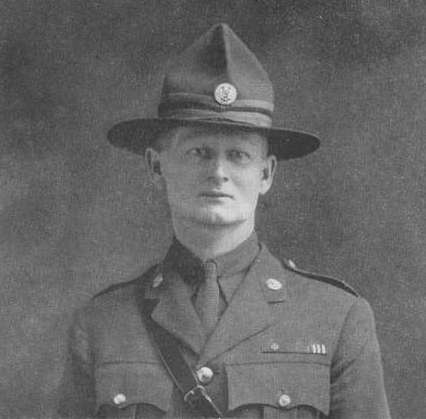
 In the space of a few weeks, one Kiwi soldier won three medals for bravery.
Reginald Stanley Judson was a boilermaker in Auckland in 1914 when war broke out and he went to enlist and was overseas in 1916, going to Egypt. Judson was born in Wharehine, Northland, New Zealand to Edgar and Emma on September 29, 1881 and trained as a mechanical engineer and worked as a boiler maker. He married Ethel May Grice at Mareretu, Northland in 1905 and they had four children. Judson served with the New Zealand Rifle Brigade and the Auckland Infantry Regiment in France but was wounded severely early on and was evacuated to England to recover. He did not return to the front until May 1918. Now a sergeant, in July he led an attack on the enemy positions at Hébuterne, a village in north France during which he rescued six men. For that he was given the Distinguished Conduct Medal. On August 16 he led a bayonet charge against a machine gun post earning the military medal. Only 10 days later he went on a series of raids on German trenches, at one oint he climbed a parapet and ordered an enemy machine gun crew of about 12 to surrender. When they fired on him he threw in a hand grenade, killed two and captured the machine gun. He was awarded the Victoria Cross. The citation said his prompt and gallant action not only saved many lives but also enabled the advance to continue unopposed. Judson had won all three medals within 33 days. He was the victim of a gas attack a month or so later and was sent to recover. He then went to officer training. He returned to New Zealand in 1919 and was discharged before enlisting in the New Zealand Staff Corps serving in Auckland and New Plymouth. After a divorce from Ethel he married Kate Marion Lewis and had a daughter. He suffered from ill health due to wounds suffered during the war - he had shrapnel lodged in his chest and abdomen - and retired from the army - going on to work at Mount Albert Grammar and tried his hand at local politics, serving on the Auckland City Council as a Citizens’ and Ratepayers’ Association councillor. He re-enlisted at the outbreak of World War Two by falsifying his date of birth and served at home. At the end of the war he moved to Mangonui in Northland to farm - working also as a justice of the peace and a coroner, retiring in the 1950s to Kohimarama in Auckland. He died on August 26, 1972 and was buried at Waikumete cemetery.
0 Comments
 When Joel Polack moved to the Bay of Island he built a magnificent home at the northern end of the beach at Kororāreka (Russell), calling his estate Parramatta. Very shortly after he built New Zealand’s first brewery.
The legend goes that the first beer brewed here was by Captain James Cook made from rimu and mānuka leaves on Resolution Island and apparently was horrible. But Polack opened the first commercial brewery in 1835. He also put up businesses and was hugely successful. However there is no record of what that beer was like. Joel Samuel Polack was born on March 28, 1807, to Solomon and Sarah Polack in London. Originally from what was then Holland, they have moved to Ireland then to England. Joel worked in the War Office before beginning to travel, going to South Africa and Mauritius, America and Australia before coming to New Zealand in 1831. Originally he lived in Hokianga and explored much of the area and began talking to local Māori about growing and harvesting crops to sell. He moved to the Bay of Plenty in 1832 and bought land and set up businesses including his brewery. Polack became the first man to take part in a duel in New Zealand when in 1837 he and his bitter rival, innkeeper Ben Turner had a gun battle on Kororareka Beach which ended with Turner being wounded. Then in 1842 they had another duel in which Polack was shot in the elbow and Turner received a bullet wound to the cheek. Polack himself admitted to having a bad temper. Polack was an advocate of an organised system of colonisation and warned that anything else would see Māori society ruined. He was well respected by Māori who called him Porake (Polack) or Waewaeroa (Long-legs). On a return trip to England, he sold some of his own land at auction - the first time land was sold in quarter acre lots - and wrote two books about his time in pre-colonial New Zealand. HIs businesses faltered during the first conflict between the British and Māori and his house was destroyed, losing all his personal writings, sketches and collection of rare paintings and books. He moved to Auckland, restarted his businesses and went into shipping, trading with America. He continued to buy land and became vice consul for the United States. In 1950 he went to North America - going into house building. It was there that he married Mary Hart. Polack died in San Francisco on 17 April 1882, and is buried in Cypress Lawn cemetery, Colma, having been moved there in 1946 from Laurel Hill cemetery. He was considered one of New Zealand’s first Jewish settlers. 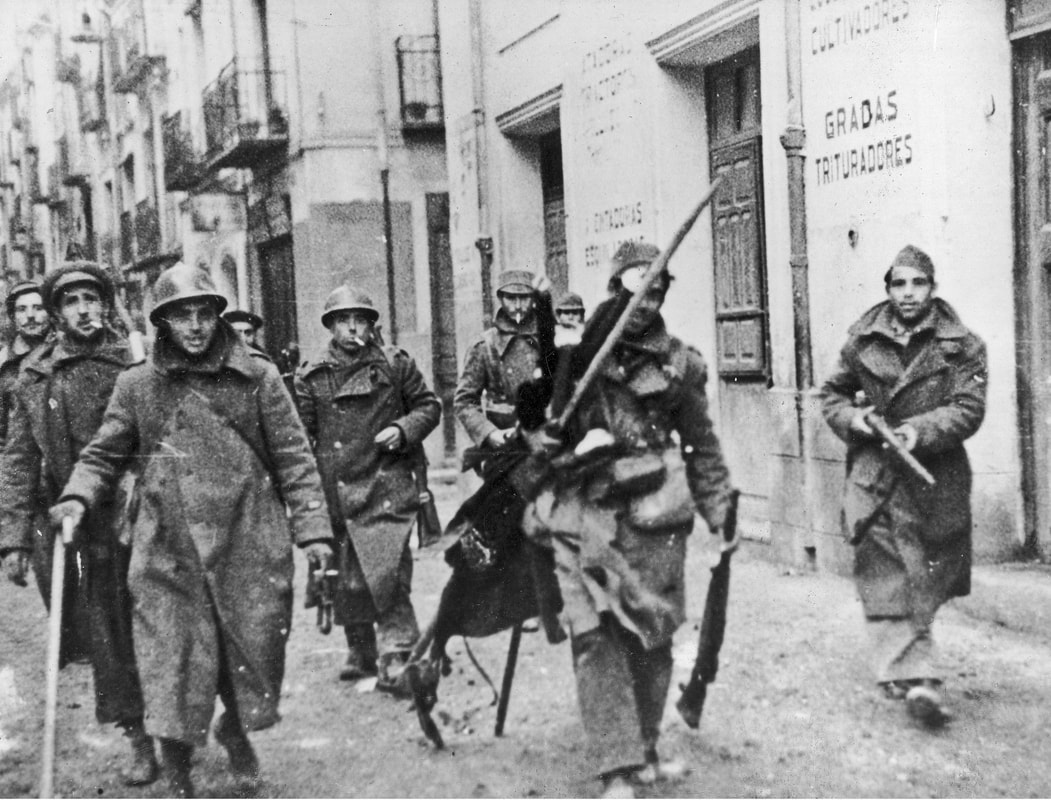 One of the first international volunteers to be killed in the Spanish Civil War was a Kiwi.
Griffith Campbell MacLaurin started his life as a scholar and ended it as a soldier. Born to Kenneth Campbell MacLaurin and Gwladys Rogers Jones in October 1909 in Auckland, his family was scholarly. An uncle was a professor of mathematics at Victoria University and another was an analytical chemist. Griff was educated at Hamilton High School and Auckland Grammar, a top history student, skilled debater and a crack marksman with the grammar school’s officer cadets. He gained an MA and was admitted to study for an honours degree in mathematics but began to struggle with his social life. It was a trip to Germany in 1933 that changed his life. He was horrified at what he saw under the new Nazi regime and it turned his conservative political opinion to the left. But he also discovered alcohol and what would then be considered subversive literature and barely scraped through his studies. He managed to get fired from his first teaching job so opened a bookshop which became a success with left wing sympathisers. He became a communist and when the general secretary of the British Communist Party told him they were getting up a small group of volunteers to head to Spain, Griff agreed. The Spanish Civil War between the democratically elected government and nationalist rebels became a battle between competing ideas with Nazi Germany and Fascist Italy supporting the rebels. The Soviet Union - and communists world wide - supported the government. Which was how Griff ended up being involved. He had also been trained as a cadet to use a light machine gun which was useful. He and others like him were attached to a French unit of the International column. On November 8, 1936, he marched into Madrid with the other soldiers and volunteers from all over Europe. Two days later he was fighting, helping to defend a city. He and another Kiwi volunteer Steve Yates were killed on November 1, 1936, while manning their machine gun to cover a retreating unit in the Casa del Campo. Madrid was to hold out until early 1939. Four more New Zealanders would die in the war in Spain, the forerunners of the thousands killed fighting fascism in the Second World War. As Griff was not considered a member of any New Zealand armed force he is not memorialised for his military action however he is on the online cenotaph record. Sadly, there are no known records for where he was buried and his grave site is unknown. It was an unfortunate truth that some who fell in battle were buried where they fell and the whereabouts was lost or later moved and no records made.  Poor Henry McKegney did not have much in life and he died a cold lonely death.
Henry was a swagman. He wandered, primarily in the Hawke’s Bay, Manawatu and Wairarapa area taking any job he could do on any station. Swagging wasn’t easy. You had to be prepared to sleep rough, to be turned away nastily and if something in the area was ever stolen, you were the first to be looked at by police. Still, it was a semi-honourable profession, with many men doing what they could to find work. The trick was always to be humble and nice, and hopefully someone might give you some bread, or tobacco or let you bed down in the barn for the night. Henry had been born in 1864 to Henry snr and wife Mary. But he knew tragedy early on. His father was killed while felling a tree in 1885 leaving four sons and then a daughter who was born after he died. Mary died in 1909 and Henry jnr went on to marry Edith Jones in 1919 in Foxton. It doesn’t look like they had a happy marriage, within a few years Henry was wandering taking jobs on stations around the bottom of the North Island. Henry got himself into trouble now and then but managed to find his way in life in a solitary fashion. They did manage to have a couple of children. By 1933 Edith was petitioning the courts for Henry failing to pay maintenance. And the court ordered that he pay however whether anyone was able to collect is unknown. Then in July 1936 Henry was found dead. John Morrison the station manager at Tuatane in Herbertville was out riding the back of the cattle run when he thought the cows were acting funny. He headed over to a patch of reeds and found Henry lying dead. His swag was by his side and his hat had fallen off. There was nothing to show how he died and there were no signs of violence. Henry had been at Bert White’s station in Porangahau a few days earlier. He had stayed the Friday night but there was no work for him and so on the Saturday he was given a bit of food and he headed off. He was found about five miles from White’s station. He was 72 and carrying a very heavy swag of about 60lb. At the inquest he was found to have a little money and papers showing that he had been working at various places around the Wairarapa region. A doctor said Henry had been under his care for a couple of years and had a severe form of heart disease and that it was likely what killed him. Henry was buried in a lonely grave at the Mangatera Cemetery in Dannevirke. 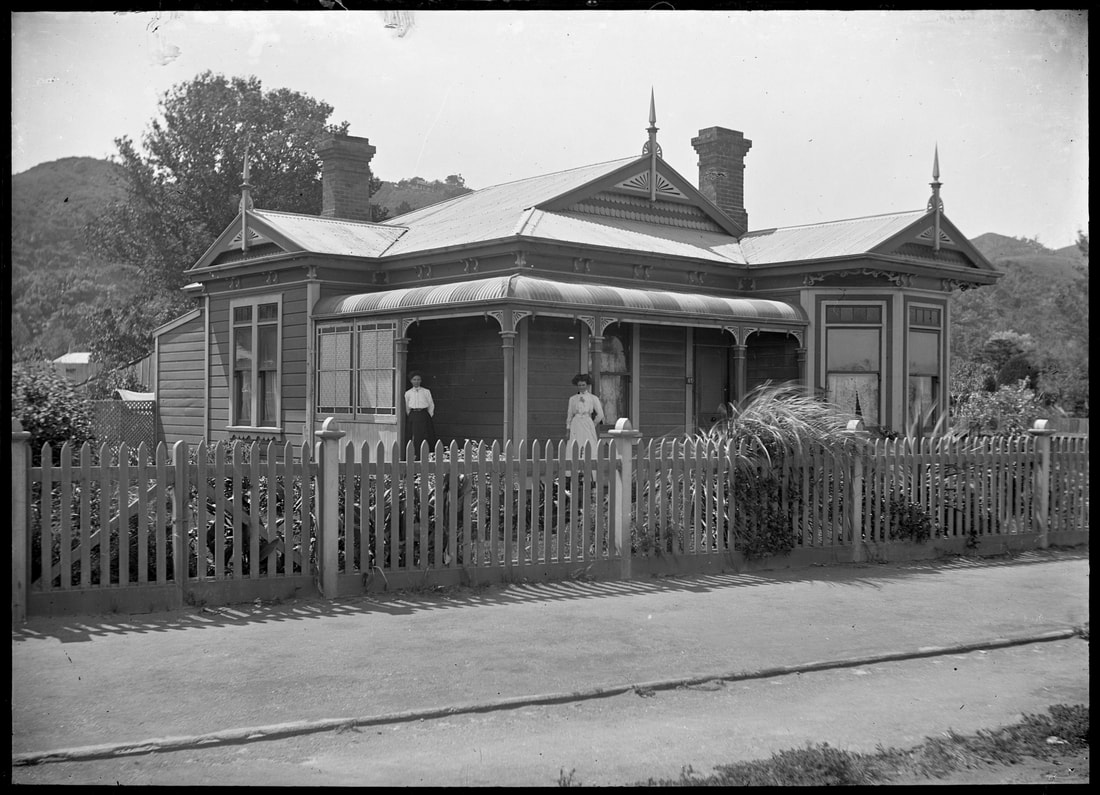 All of us have seen one, there are examples of the great New Zealand bungalow in every town.
Two or sometimes three bedrooms, a front porch and often a bay window. Usually made with a weatherboard style finish. It is considered the most prevalent housing design in the country and many of them have survived, often with modifications like the porch being enclosed for more room. The reason we have so many of them is due to Samuel Hurst Seager. Samuel was born on June 26, 1855, in London to Jane Wild and Samuel Hurst Seager snr, coming to New Zealand in 1870. They settled in Christchurch where his uncle Edward William Seager was the superintendent at Sunnyside Asylum. HIs father started a building contractor firm and after his death Samuel continued it. In 1877 he built the first permanent Canterbury College buildings to the design by B W Mountfort’s who he then worked for as an architectural draughtsman. He studied at Canterbury College. He went back to London to study further and on his return to Christchurch won a design competition for the Queen Anne-styled Christchurch municipal buildings. In December 1887 he married Hester Connon and he settled into a job as a lecturer. In 1899, he designed and built a home for his brother in law in Cashmere. It introduced the design of a bungalow. In part it combined an English arts and craft movement with the idea of the California bungalow. It was an unique residential development of timber cottages in a garden setting. In partnership with Cecil Wood from 1906 until about 1912, the workers' dwelling they designed were built as part of the 1906 Heretaunga settlement in Petone, while their model worker's dwelling was exhibited at the 1906–7 New Zealand International Exhibition in Christchurch. Seager also campaigned for better standards in World War One memorials organising designs and became the official architect for battlefield memorials and he designed the ones at Longueval and Le Quesnoy in France, Messines in Belgium and Chunuk Bair in Gallipoli. He also became internationally acclaimed for lighting in art galleries as well as advocating for the preservation of historic buildings. He moved to Wellington in 1929 then to Sydney where he died on October 5, 1933.. There are memorials to him in every city in New Zealand, where a bungalow still sits. Picture from the Godber Collection, Alexander Turnbull Library.  We all like a good beer, especially on a hot summer's day. But have you ever heard the story about how beer - or rather too much of it - led to a New Zealand Prime Minister?
The election of 1893 was hotly contested and in particular in the Waimata electorate, where Richard Monk won. But there were swiftly allegations of bribery. In particular that one polling place - Tuapaki - was offering beers to voters and the allegations said the beer was in return for votes and that at one hotel - the Falls Hotel in Henderson - people were shouted beers and told to vote by Ernest, the son of Richard Monk. It led to an inquiry in the Supreme Court in which one witness said there was ‘oceans’ of beer. A lot of the talk was about who had done what, were the votes actually bought if the beer could be considered refreshments? There were similar allegations about money being offered although it was unclear whether that was for the beer or for the votes. It caused quite the fuss. Even if it could be considered innocent it looked bad and newspapers of the day covered the inquiry in great detail. In the end the election result was overturned and a by-election ordered. William Ferguson Massey had lost the election in Franklin in the same election. But he was asked to stand again for the byelection. He stood and won - and the man who would be one of our greatest prime minister entered Parliament. Massey had been born in Ireland on March 26, 1856 to John and his wife Mary Anne. His family came to New Zealand in 1863 although Massey stayed behind to finish schooling and came out in 1870. The family were farmers and Massey worked on farms before leasing his own 100 acre property. He married the daughter of a neighbouring farmer, Christina Allen Paul in 1882. His original wooden farm house burnt down and he bought another home in what would become Massey Road in Mangere. In his first term in Parliament Massey was in opposition to the Liberal government of the day but he was a conscientious worker. In 1909 he announced the creation of the Reform Party which in 1911 won more seats than the Liberal Party but did not hold outright power. The Liberals held power for a year until they lost a vote of confidence. Massey was sworn in as Prime Minister in 1912 and guided New Zealand through the war years, only retiring in 1924 when cancer forced him to give up some of his duties. He died in 1925 and was buried on 14 May at Point Halswell at the entrance to Wellington Harbour. Massey University was named for him. Picture by Engin Akyurt. 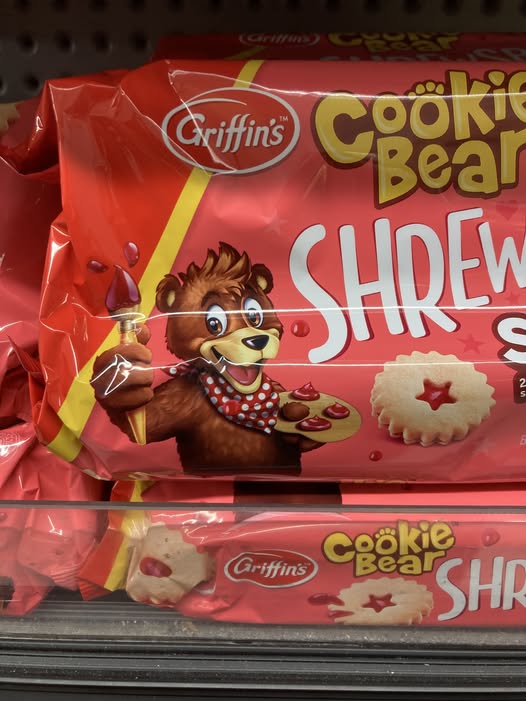 Does the phrase Dum-de-doo mean anything to you?
It was once so well known that 162,000 of us were fans. But now the ‘person’ whose catchphrase it was is vanishing.. Cookie Bear was so familiar to us as the mascot for Griffins Biscuit and whose face and polka dot bow tie was on all the Griffins biscuits. But he has been around for longer than we think. In the 1930s, Cadbury took over Hudsons - a chocolate and biscuit company here in New Zealand - inheriting the well known biscuit brand that had already been around a while. In the 1970s, Don Donovan from the advertising firm Carlton-Carruthers du Chateau Ltd thought up the idea of the bear and it was all uphill from there. Donovan himself has said he developed the idea first for television - with the first two commercials in black and white. It also included the bear’s deep voice and the dum-de-doo phrase that would go on to be his trademark. He was loved by children and their mums and Donovan said he quickly took on a life outside of the biscuits, becoming a brand in his own right. Donovan said the foundation for Cookie Bear’s success was through the Cookie Bear club - that 162,000 of us joined. Children from all around New Zealand wrote letters to the bear, which went to an internal address at Cadbury who employed four women to handle them, Donovan wrote in his blog. Every child got a card on their birthday. There were of course the uses in advertising, a children’s book written about the bear, soft toys and later a lawsuit for breach of copyright. Of all the biscuits Cookie Bear was associated with, it was the chocolate chip cookies that he was most remembered for. In 1989, Hudson’s was incorporated into Griffins and slowly Cookie Bear began to fade as a brand ambassador. Now, Cookie Bear is gone (except for the pic we managed to take in a supermarket) as he is removed from branding. Griffins announced in April that it was going to refresh its branding and packaging and that means the bear we all grew up seeing will vanish. He will stay only on the packet for the Cookie Bear mini bear biscuit snack packs. So goodbye Cookie Bear. Usually we finish our stories with where a person is buried but unless someone knows where the bear suit someone used to wear is, he is only now in our memories. 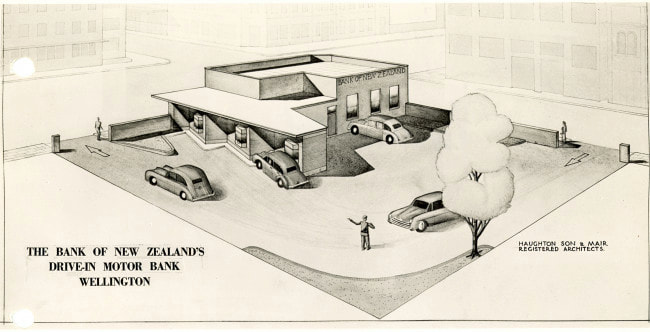 We think of banks as a necessary evil and there used to be a branch on every corner. Now some towns don’t even have a bank branch.
But once banks worked hard for customers. The Bank of New Zealand has been operating since 1861, first as a private company and later owned by National Australia Bank. It was progressive - it opened the first “Ladies” bank in Auckland on December 14, 1958 on the corner of Queen and Swanson st, catering exclusively for women. BNZ were starting to recognise women - who often had had to have their husbands permission to have a bank account - had their own needs. The Ladies bank had soft armchairs, a fish tank and writing desks. At first competitors were rude about it, but after international publicity it was lauded. The BNZ also opened the first bank in the Antarctic But in 1954 BNZ opened New Zealand’s first “motor bank” - yes, a drive in bank. On Vivian St, the bank was remodelled to allow cars to drive up to a window - armor plate glass in case of robberies - and two way speakers. A sliding drawer allowed exchanges between the teller and the customer in the car. There were several reasons but one of the primary ones was safety. We were a cash only society, and huge amounts of cash were being walked along streets, from shops taking in their daily take or businesses taking out their payroll. The drive in was to help prevent the chance of someone being robbed of the money in the streets. BNZ said customers with mobility issues would be able to bank without getting out of their cars and noted that customers were even using taxis to drive through. It also meant you didn’t need to find a car park to go into the bank. The idea was quickly picked up by other banks. BNZ’s Vivian st one was kept until 1987. The Motor bank was opened by the Mayor of Wellington, Mr R. L . Macalister who said, ‘I feel that I am helping to make banking history in New Zealand’ as he cut the ribbon. In 1966 the same bank became the first to have computers. By then the Vivian St branch had moved to a new building. Robert McLachlan Macalister was the mayor of Wellington from 1950-1956. He had come to Wellington to study law before enlisting in the military for World War I. He and two others founded the law firm Mazengarb, Hay and Macalister, one of the largest law firms in Wellington. He was considered a persuasive and dynamic councillor and mayor. Later he received a knighthood and Macalister Park in Wellington is named after him. He died at his Wadestown home on May 23, 1967 and is buried at Karori Cemetery. 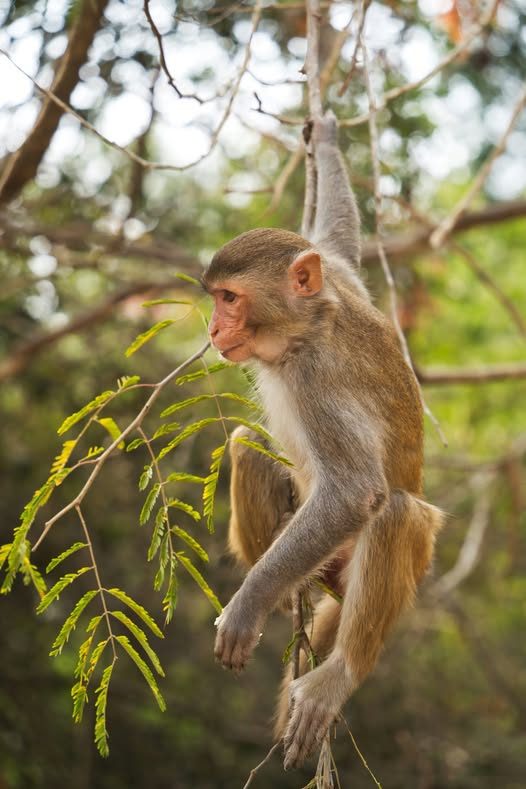 Smuggling has been an issue in New Zealand several times. Mostly it’s things like gold, money or alcohol.
But in January, 1942, Wellington had several cases of monkey smuggling. The monkeys, long tailed torque macaques - were brought in by sailors who took them into town inside their shirts, then proceeded to sell them for £1 each in pubs around town. What is not known is how many there were. At the time, while they were not illegal, there were quite a number of rules about having exotic animals as pets and they were expected to be legally imported. The macaques were native to Sri Lanka and were apparently bought there and taken on to a ship that ended up in Wellington. A man in Oriental Bay bought two and a Khandallah man bought another. But there were others and some escaped. It caused a fuss because several of the monkeys were spotted around Wellington. Two were seen in Boswell Tce and Austin St. Another was seen with a man near Parliament on a string. One family in Wellington were just sitting down to breakfast when a monkey strolled in through their door and helped itself to some food, much to the surprise of the family. This led to panicked calls to the Wellington Zoo as it was thought that the group of monkeys had managed to escape. The police got involved and there was a hunt across Wellington to find the furry escapers. At the time the curator for the zoo was Charles Jack Cutler who thought the whole thing was funny. He confirmed that none of the monkeys at the zoo had escaped and said that “Personally, I think that anyone who can put up with a pet monkey in the house for more than a week deserves to be allowed to keep it.” It also prompted an investigation by Internal Affairs as a person who wanted a monkey needed to obtain a permit. A warrant from the Minister of Internal Affairs personally must also be produced and the purchaser has to sign an agreement that the monkey will be kept in a case with a concrete floor and iron bars sufficiently small to prevent them or any of its progeny, however small, from escaping. Unfortunately the stories die away before there was any resolution and we have no idea what happened to the monkeys or if they were ever all caught or confiscated. Cutler, who was also the keeper for the elephant Nellikutha until her death, had been born in 1905 and spent many years at the zoo, at one point even living there. He died on January 13, 1967, and was cremated at Karori Cemetery. Photo by Carl Wong. |
AuthorFran and Deb's updates Archives
July 2025
Categories |
 RSS Feed